

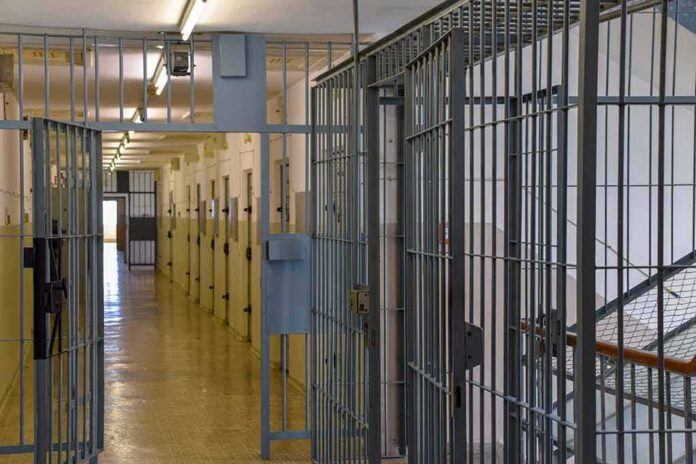
When a condemned prisoner engineers his own path to the death chamber—and later waives the safeguards designed to slow that path—the law is forced to reconcile two principles that rarely meet cleanly: the state’s duty to ensure reliability in capital cases and an individual’s power to forgo further review.
At a Glance
- James Robertson was executed in Florida for the 2008 murder of his cellmate, Frank Hart; officials pronounced him dead at 12:32 p.m. after a three-drug lethal injection.
- Robertson pursued a death sentence and later waived postconviction proceedings and appellate review, a waiver the Florida courts accepted.
- The Florida Supreme Court’s warrant schedule set an expedited timetable leading to the October 13, 2026 execution.
- The case sits within Florida’s broader surge in executions, which has led the nation in volume in recent years.
What Happened: A Death Sentence Sought, Secured, and Carried Out
Florida executed James Robertson for strangling fellow inmate Frank Hart at Charlotte Correctional Institution in 2008. After a capital prosecution and a sentencing that followed a guilty plea and waiver of a jury penalty phase, Robertson received the death penalty in 2012. The Florida Department of Corrections reported that on October 13, 2026, at Florida State Prison, the state used its three-drug protocol and pronounced Robertson dead at 12:32 p.m.; officials described the procedure as occurring without incident. The killing’s origin story—Robertson’s aim to reach death row and ultimately be executed—made the case anomalous in motive but straightforward in legal posture by the time the warrant issued.
That posture turned on Robertson’s decision to stop litigating. Florida court records reflect an October 5, 2026 order accepting his waiver of postconviction warrant proceedings and appellate review, clearing the last procedural obstacles to carrying out the warrant that set an execution for noon on October 13, 2026. Contemporaneous local reporting confirms the underlying conviction and sentence for Hart’s 2008 killing and situates the execution as the culmination of that record.
How a Waiver Works in Capital Cases
Death penalty jurisprudence treats a condemned prisoner’s desire to abandon appeals as a distinct legal act requiring its own inquiry. Courts do not simply take a prisoner at his word; they assess competence and the voluntariness of the decision, and they ensure counsel has been afforded an opportunity to advise against it. Florida’s docket in Robertson’s case shows precisely this step: an entered order formally accepting the waiver and dismissing further warrant-stage proceedings, a predicate to scheduling and completing the execution. The function is twofold. It protects the integrity of the capital judgment—ensuring the penalty’s lawfulness rests on a record purified of coercion or incapacity—while also recognizing that a competent defendant can decline to pursue every available remedy.
Waivers do not erase the underlying appellate scrutiny that already occurred. Robertson’s death sentence had been affirmed before the warrant period; the Sarasota Herald-Tribune reported that he then dismissed his lawyer and that no further appeals followed, an account consistent with the court’s acceptance of the waiver. The state, for its part, must still certify compliance with its statutory and administrative prerequisites—governor’s warrant, custody and facility readiness, and notices to parties—before an execution proceeds on the schedule the Florida Supreme Court administers during warrant periods.
The Unusual Motive and the Prison Context
What sets the Robertson case apart is not a contested factual record but the motivation he articulated: he killed Hart in order to seek a death sentence and the conditions on death row. That account, captured in years of reporting and in televised interviews, has defined public understanding of the crime. Yet motive’s strangeness does not alter the evidentiary spine of the conviction: Hart was killed by strangulation in a shared cell, Robertson admitted responsibility, and a capital sentence followed. The state’s timeline—warrant issuance, waiver acceptance, and execution—maps onto Florida’s established procedures even as the narrative elements feel exceptional.
The result is a kind of inversion of the archetypal capital case, in which police, prosecutors, defense counsel, and courts struggle for decades over guilt and penalty while a prisoner resists execution. Here, the structural safeguards—direct appeal, postconviction remedies, federal habeas where applicable—encountered a defendant who pressed toward the terminus and elected not to use them. Florida courts, bound to test competence and voluntariness, documented the waiver and allowed the executive timetable to run.
Florida’s Surge and the Policy Backdrop
Robertson’s execution did not occur in isolation. Florida has run the nation’s busiest death chamber across 2025 and 2026, accounting for a disproportionately large share of executions as other states slowed or paused activity. National and state-level reporting in this period identified Florida’s cumulative totals as leading the country and, at points, comprising roughly half of all U.S. executions for the year. The state has also compressed warrant calendars at times, setting tight filing deadlines during the final days before an execution—an administrative reality that concentrates litigation and focuses attention on the specific warrant-period issues rather than reopening the entirety of a case.
Against that backdrop, the Robertson case became a touchstone for two debates: whether a state should carry out a death sentence when a prisoner has actively sought it, and how the waiver of review interacts with the institutional interest in error-correction. Those debates are normative, not factual; Florida’s machinery proceeded as designed once its courts determined Robertson’s waiver satisfied the legal standards.
A Florida inmate who murdered his sleeping cellmate because he wanted the death penalty is executed, nearly two decades after the killing.
James Robertson, 63, receives a lethal injection after admitting he strangled fellow inmate Frank Hart in 2008, just eight days before Hart… pic.twitter.com/F6cFRHszNj
— KENNY BOSSπ🧊 (@KennethNworgu) October 14, 2026
What This Case Clarifies Going Forward
First, the system’s architecture for handling “volunteer” executions—cases in which a prisoner abandons appeals—remains operative and, in Florida, administratively integrated into the warrant schedule. The Robertson docket demonstrates the sequence: affirmance of sentence, gubernatorial warrant, judicial acceptance of waiver, and a date certain for execution. Second, the accuracy of official execution reporting—time, method, and basic process—rests with the Department of Corrections, and mainstream outlets rely on those disclosures as the authoritative account of the event’s logistics; in Robertson’s case, that meant a three-drug lethal injection and a pronouncement at 12:32 p.m..
Sources:
washingtontimes.com, nbcnews.com, heraldtribune.com, cbsaustin.com