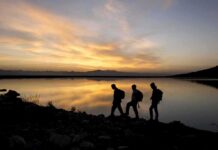
The most consequential truth in Sheila Ingram’s story is not the passport math; it’s that a late-life pivot—from decades of caregiving to independent exploration—can produce a second, self-directed chapter that is both adventurous and ordinary enough to be repeatable.
At a Glance
- Sheila Ingram, 83, from Northampton, began traveling solo at 75 and has visited 27 countries, including India, Uzbekistan, and Cuba.
- Her shift to solo travel followed years of family caregiving, a transition she describes as embracing independence and a long-deferred bucket list.
- Her experience aligns with a broader, documented rise in senior solo travel—especially among women—driven by autonomy and self-development.
- The practical reality of later-life travel blends independence with scaffolding: guided day tours, accessible infrastructure, and deliberate risk management.
Who Sheila Ingram Is and What She’s Done
By her own account, Sheila Ingram embarked on solo travel at 75 after a life organized around caregiving obligations. Now 83, she reports having explored 27 countries; she highlights India, Uzbekistan, and Cuba, and recalls ziplining in Cuba as a pointed example of how she refuses to let chronology dictate capability. She grounds her travel sensibility in particulars—naming Registan Square in Samarkand as the finest place she has seen—signaling a traveler who moves beyond checklist tourism to aesthetic judgment and cultural appetite.
That itinerary is not a stunt. It sits in a recognizable pattern: a late-life transition from structured duty to elective freedom, with travel as both instrument and outcome. The cadence—bucket-list momentum tied to a rediscovered sense of self—maps closely to what qualitative tourism research has documented about older solo travelers who prize autonomy and meaning-making, even as they navigate constraints around safety, stamina, and cost.
How Late-Life Solo Travel Actually Works
Solo is not a purity test; it is a planning posture. Older adults who travel “alone” often assemble a modular trip: independent flights and lodging combined with guided excursions, small-group day tours, and local fixers for logistics that would otherwise add friction or risk. This hybrid model preserves agency—pacing, interests, and off-hours remain self-directed—while layering in expertise where it has the highest return. Industry data underscore that this is common, not exceptional: a prominent educational travel organization reported that a majority of its 2022 solo participants were women, and a substantial share were married but electing to travel without a spouse—signals that “solo” describes with-whom-you-decide, not who you are in every hour of the day.
Physical constraints are real, but they are manageable with forethought. Wayfinding challenges linked to normal aging—vision, cognition, fatigue—can be mitigated by predictable interventions: daylight travel windows, pre-booked transfers, step-free routes, and accommodations in walkable neighborhoods that reduce last-mile complexity. Experienced older travelers become adept at energy budgeting: stacking lower-effort cultural visits around higher-intensity activities, building in recovery time, and using midday rests to extend functional bandwidth across a multi-week itinerary.
From Caregiving to Autonomy: The Psychology of the Pivot
Caregiving compresses personal bandwidth; when it ends, there is both space and a void. Many older solo travelers report that the initial draw of going alone is control—destination, pace, budget, and how much social contact to invite or avoid. Academic work on women journeying alone suggests that older adults often experience solitude more positively than their younger counterparts; solitude can register as chosen quiet rather than isolation, a context for reflection rather than deprivation. Ingram’s phrasing—“embrace it” and tick off countries—tracks with this literature’s triad of motivations: competence (I can do this), autonomy (I choose this), and relatedness on demand (I join others when I wish).
The result is a pragmatic confidence. Travelers in this cohort often keep a short list of non-negotiables—medical documentation, insurance, medication redundancy, and communication redundancies—while treating spontaneity as something to be exercised within safe bounds. That mix is not romantic; it is learned craft.
Where Ingram’s Story Fits the Broader Pattern
Remove the age from the headline and the pattern remains: a traveler sets a goal, curates destinations that balance aesthetic reward and operational feasibility, and uses targeted structure to unlock independence. What is noteworthy is the age-specific base rate. Surveys and industry analyses indicate that older generations lead the way in solo travel participation; in some datasets, well over half of Boomers and a majority of the Silent Generation report having taken at least one solo trip, with women forming the clear majority among senior solo participants. Condensed media narratives often present the behavior as extraordinary; the data suggest it is a meaningful market segment with distinct needs that providers increasingly design for.
Destination choice matters. Uzbekistan’s Samarkand offers dense cultural payoff in compact geography—Islamic architecture masterpieces within short transfers—making it a rational pick for travelers who prioritize depth over distance walking. India’s major circuits can be configured with private drivers to minimize transit friction. Even adventure notes—like ziplining in Cuba—can be layered onto otherwise moderate itineraries. The common denominator is intentionality: engineering the trip to fit the traveler’s energy, not the other way around.
Risk, Resilience, and the Infrastructure That Makes It Possible
Later-life solo travel succeeds when personal resilience meets age-friendly infrastructure. The tourism ecosystem has become incrementally more accommodating—clearer signage, better lighting, accessible transport, and service design that anticipates mobility and sensory diversity. Research on age-friendly tourism describes a dynamic service ecology: when operators signal inclusion, older travelers reciprocate with patronage and word-of-mouth that rewards those adaptations. The residual gaps—crowd management, uneven sidewalks, hyper-fast digital interfaces—are navigable with strategy: paper backups, photo logs of passports and tickets, airport assistance booked ahead, and lodging chosen for elevator access and proximity to transit.
The social layer is equally practical. Small-group day tours give structure and safety while preserving the solo arc. Community forms in predictable places—hotel breakfasts, museum benches, rail compartments—allowing travelers to toggle between solitude and sociability as mood and energy dictate. A sizable share of older solo travelers are partnered or married; traveling without a spouse is less a rupture than an arrangement for divergent interests and tempos.
What Ingram’s Example Teaches Prospective Late-Life Travelers
Three operational lessons emerge. First, start with high-yield places—compact historic cores, robust transit, and reputable local operators—so that early confidence compounds. Second, script the trip around your peak hours: schedule cognitively demanding navigation and major sights in the morning, push casual browsing and cafés into the afternoon. Third, pre-arrange the “edges” of the journey—airport transfers, first-night dinner, SIM or eSIM setup—because smoothing those liminal moments has an outsize effect on perceived safety and enjoyment. Industry evidence suggests these tactics are common among successful senior solo travelers; they transform aspiration into a repeatable practice rather than a one-off feat.
Why Stories Like This Matter
Ingram’s 27-country ledger is an attention hook; the substance is the method. A late-life travel practice built on autonomy, scoped risk, and aesthetic ambition is attainable for many, not just the unusually hardy. The market has moved to meet that reality—more single-occupancy options, clearer accessibility information, and operators fluent in the needs of older women traveling alone. The payoff is not just miles flown. It is agency reclaimed, competence reaffirmed, and a social map redrawn to include places once postponed indefinitely. For those weighing whether it’s too late to start, one Northampton traveler’s answer is empirically simple: begin, and build from there.
Sources:
mirror.co.uk, youtube.com, corecruitment.com, visit50.com, theworldlytravels.com, italeatsandtreats.com, goodhousekeeping.com