Congress rarely disciplines its own for workplace misconduct; when it does, the line it draws tells you how the House now defines the boundaries of power, propriety, and duty of care inside a Member’s office.
The Short Version
- The House Committee on Ethics found “persistent unprofessional and inappropriate conduct” by Rep. Chuck Edwards toward two young female staffers and recommended censure; the House adopted that censure.
- The panel did not find sexual activity, explicit propositions, or quid pro quo harassment, but concluded Edwards violated the spirit of House rules governing workplace dignity.
- This censure sits within a sparse but consequential history: the House uses censure in misconduct cases sparingly, reserving it for institutionally significant rebukes.
- Attempts to yoke this case to unrelated, unproven allegations about another lawmaker’s immigration history are not supported by comparable evidentiary records.
What the House actually determined — and why that matters
The Committee on Ethics delivered a clear bottom line: there was substantial reason to believe Rep. Chuck Edwards engaged in a pattern of unprofessional and inappropriate conduct toward two identified female staffers, sustained over time, and incompatible with House standards for a safe, professional workplace. The committee’s public report described behavior that personalized staff relationships well beyond professional norms: frequent remarks about appearance and weight; late-night messages; deeply personal and seemingly romantic texts; intrusions on personal occasions; and substantial personal gifts and travel — thousands of dollars’ worth — that blurred the boundary between supervisor and subordinate. The House subsequently adopted a censure resolution consistent with the panel’s recommendation, a formal institutional judgment that his conduct merited public condemnation by the chamber itself.
Two framing points keep this finding in proportion. First, the committee explicitly concluded Edwards neither engaged in sexual activity with, nor explicitly propositioned, any staff member, and it did not find a violation of federal sexual harassment law or a quid pro quo scheme. Second, it grounded censure in the “spirit” of House rules on workplace dignity and supervisory responsibility — a norms-based judgment rather than a criminal-law standard. In practice, that combination underscores that Congress views power-imbalanced boundary-crossing as sanctionable on its own terms. You need not meet a prosecutor’s elements of sexual harassment to run afoul of the House’s expectations for Members as employers.
How a congressional office works — and where conduct goes wrong
Capitol Hill offices revolve around asymmetric power. A Member controls hiring, advancement, references, and access; junior staff, often early in their careers, depend on that gatekeeping. That asymmetry is why the House has long treated supervisory conduct as a workplace-rights issue, not merely a matter of personal taste. The behaviors the committee cataloged — late-night personal messaging, commentary about body and appearance, unsolicited intimacy in language and gifts — create a workplace where subordinates are pressed to manage the boss’s emotional life as a condition of their employment. Even absent explicit propositions, that dynamic corrodes professional agency. The committee’s language is calibrated to that harm: “persistent” conduct, not an isolated misstep, over months, involving more than one employee.
Edwards and his counsel argued the opposite framing — that affection, gifts, compliments, poetry, and socializing are not sexual misconduct and that the panel found no sex, no propositions, and no quid pro quo. Those points are accurate as far as they go; they simply do not answer the question the House chose to ask. The chamber judged the conduct by employer obligations under its own code, not by the narrower criminal-law thresholds defense counsel emphasized. That distinction is the heart of the case.
Why censure is a big deal in this category
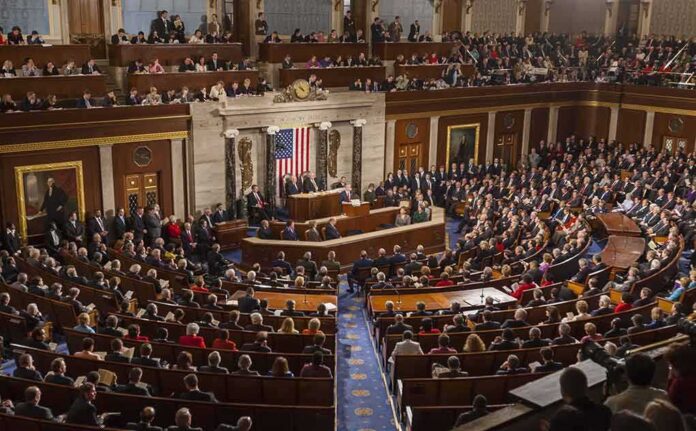
Censure is rare and deliberately public: a majority vote of disapproval, delivered with the Member standing in the well as the resolution is read aloud. The House historically reserves it for conduct that, while not warranting expulsion, undermines institutional standards. In sexual-misconduct and workplace-abuse matters, the House has preferred other endpoints — resignation, loss of jurisdiction, or lesser admonitions — making a standing censure comparatively uncommon and therefore weighty. That the House accepted the committee’s recommendation in this case signals two things: it credits the evidentiary record assembled by the panel; and it intends to police supervisory boundaries even where no explicit sexual proposition or federal statutory violation is proven.
That judgment also harmonizes with the committee’s own historical framing: over decades, the House has treated sexual or power-based misconduct toward staff and pages as exceptional and reputation-defining for the institution, not just the Member. The current case extends that lineage into modern workplace-rights standards, emphasizing psychological and professional coercion risks that arise from blurred personal boundaries, gifts, and persistent personal contact from a superior.
Where the dispute actually lies
The narrow dispute is not about the factual existence of messages, gifts, or comments — the committee’s report grounds those claims specifically — but about what they mean legally and institutionally. Edwards’s defense stresses what was not found: no sex, no explicit propositions, no quid pro quo, no federal-law violation. The Ethics Committee’s majority answers with workplace governance: Members have affirmative duties not to create environments where subordinates must navigate personalized attention and material largesse from their boss. On the evidentiary record the House reviewed, the majority’s case is stronger: the description of conduct is concrete and repeated, involves two staffers, and is documented enough to anchor a formal sanction; the defense, while accurate about absences, relies on a standard the House did not adopt as dispositive.
There is an important caveat that belongs in any careful analysis: a censure is still a legislative judgment, not a court verdict. The committee’s file — witness interviews, exhibits, messages, expense records — is the backbone of that judgment. But in the domain that matters here, the workplace duties of a Member, the House is the rulemaker and the fact-finder. Its threshold is the relevant one, and it was met.
House votes 413-2 to censure Rep. Chuck Edwards over misconduct with staffers.
Speaker Johnson backed it. Edwards already dropped his reelection bid. Only two no votes.
Now the same energy for Ilhan Omar and judges who ignore SCOTUS. Consistency or nothing.…— Felix Lima Fernandes (@TheFelix123) September 2, 2026
On attempts to graft unrelated, unproven claims to this case
Some commentary tries to pair the Edwards censure with separate, long-circulating allegations about Rep. Ilhan Omar’s marital and immigration history. Those assertions have not been substantiated in court or through public documentary proof; Omar has consistently denied them. More to the point, they do not share a common evidentiary footing with the Edwards matter, which rests on a formal bipartisan committee investigation, a published report, and a House vote of censure. Conflating a documented workplace-misconduct case with a distinct, unresolved allegation from a different policy lane confuses rather than clarifies the standards at issue.
The practical lesson for congressional leadership and staff
The signal to Members is unambiguous: supervisory relationships are professional relationships, and the House will treat repeated personal boundary-crossing — even absent explicit sexual overtures — as sanctionable. Mechanically, that means office policies should set bright lines on out-of-hours communications, gift acceptance, travel, and one-on-one socializing; chiefs of staff should train managers on power dynamics, not just on harassment law; and Members should outsource personal affirmation to their friends, not their staff. For staff, the case validates contemporaneous reporting to chiefs, the Ethics Office, or the Office of Congressional Workplace Rights when boundaries erode. The institution has announced that this is not “mere collegiality” gone awry; it is a workplace standard the House will enforce.
Sources:
ethics.house.gov, thehill.com, npr.org, apnews.com, govinfo.gov, cnn.com