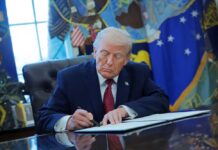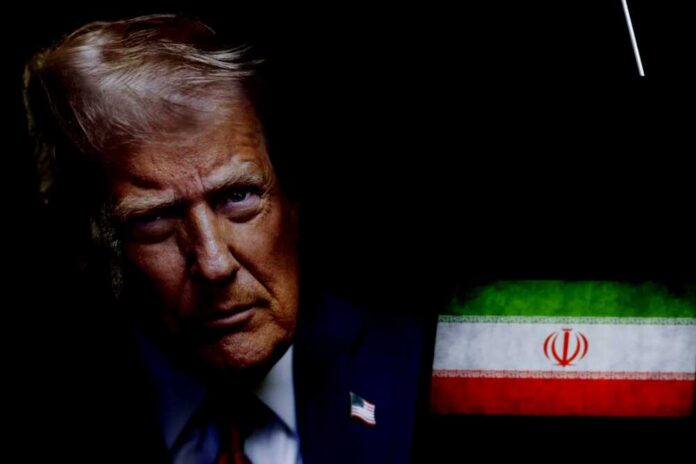
After an 8 p.m. strike deadline and blunt threats of devastation, President Trump suddenly paused the Iran war—on one condition: Iran must open the Strait of Hormuz.
Quick Take
- President Donald Trump announced a two-week ceasefire with Iran on April 7, 2026, after a last-minute diplomatic push led by Pakistan.
- The pause is tied to Iran ensuring the “complete, immediate, and safe” opening of the Strait of Hormuz, a choke point critical to global energy shipping.
- Israel agreed to the ceasefire, and the U.S. halted military actions as the deal took effect at 8 p.m. ET.
- Iran confirmed acceptance through Foreign Minister Abbas Araghchi, though reports indicated some Iranian missile launches continued briefly after the announcement.
- Talks are expected in Islamabad, with Vice President J.D. Vance slated to lead the U.S. delegation.
Trump’s deadline diplomacy produces a two-week pause
President Donald Trump said April 7 that the U.S. and Iran agreed to a two-week ceasefire after a rapidly escalating standoff that included a hard deadline for a deal by 8 p.m. ET. Trump had warned of strikes on Iranian infrastructure if no agreement was reached. Instead, he announced a “mutual ceasefire” and said U.S. military objectives had been met, framing the pause as a bridge to broader talks.
Iran’s acceptance was conveyed through Foreign Minister Abbas Araghchi, whose message was shared publicly after Trump’s announcement. Araghchi said Iran would cease defensive operations if attacks stopped and signaled that safe passage in the Strait of Hormuz would be coordinated. The administration described Iran’s proposal as a “workable basis” for negotiations, but public reporting also noted uncertainty about whether the U.S. fully accepted Iran’s wider “10-point” plan.
Hormuz is the leverage point—and the economic stake
The Strait of Hormuz sits at the center of the ceasefire’s conditions because it is one of the world’s most important waterways for oil and gas shipments. Trump’s public demand focused on reopening the strait completely and safely, reflecting a priority that goes beyond battlefield calculations. For American consumers, the practical significance is straightforward: disruptions in Hormuz can hit energy prices quickly, feeding inflation and economic anxiety at home.
This is where the ceasefire becomes more than a military headline. A two-week pause that stabilizes shipping lanes can reduce the risk of sudden price spikes, while failure to implement the terms could revive market panic just as quickly. The reporting also underscored a real-world complication: even when national leaders agree, implementation can lag in the field. That matters in a region where a single attack or misfire can trigger rapid escalation.
Pakistan’s mediation and Israel’s buy-in reshape the map
Pakistan played an unexpected but pivotal role. Prime Minister Shehbaz Sharif publicly urged Trump to extend the deadline by two weeks, and Trump later credited discussions involving Sharif and Pakistan’s senior military leadership. Trump also consulted Israeli Prime Minister Benjamin Netanyahu, and the White House indicated Israel agreed to the ceasefire. The arrangement effectively placed Pakistan as a bridge in a high-stakes triangle involving Washington, Tehran, and Jerusalem.
Ceasefire terms are clear; follow-through is the open question
U.S. reporting indicated the ceasefire was operational and that the United States stopped military actions as it took effect. Still, at least one account noted Iranian missiles launched toward Israel and Gulf targets after the announcement, suggesting either delays in command-and-control or competing actors operating on different timelines. Iran’s internal military structure, including the Revolutionary Guards, has long raised questions about how quickly top-level decisions translate into on-the-ground compliance.
Negotiations are expected to continue in Islamabad, with Vice President J.D. Vance leading the U.S. delegation. The next two weeks will test whether this was merely a tactical pause or the start of a longer settlement. For conservatives wary of endless conflict and equally wary of vague deals, the measurable benchmarks are simple: attacks stop, shipping stays open, and any longer agreement is concrete enough to verify rather than sell.
Sources:
Iran war live: Trump declares ceasefire, Tehran agrees safe Hormuz transit
Live updates: Both US and Iran claim victory after two-week ceasefire deal reached
Trump announces two-week ceasefire as Iran agrees to reopen Hormuz Strait