A single Iranian threat to a global shipping chokepoint has now started showing up where it hurts regular people most: the supply chain.
Quick Take
- Maersk suspended all new cargo bookings between the Indian Subcontinent and several Upper Gulf markets “until further notice,” citing security and operational risk.
- Iran declared the Strait of Hormuz closed and threatened to attack vessels attempting passage, escalating commercial risk for shippers.
- Restrictions hit refrigerated (reefer) and dangerous/special cargo first, with limited exceptions for critical foodstuffs, medicines, and essential goods.
- Air freight disruptions and war-risk surcharges are adding delays and higher costs, even where ports remain open.
Maersk freezes new bookings as Hormuz risk spikes
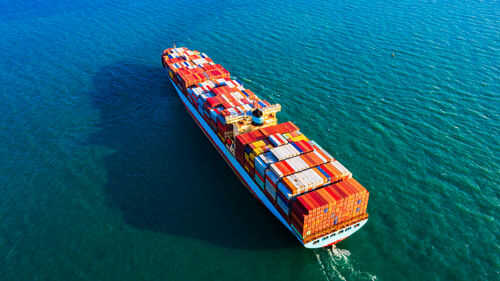
Maersk announced on March 2, 2026, that it would immediately suspend all new cargo bookings between South Asian origins—India, Pakistan, Bangladesh, and Sri Lanka—and select Upper Gulf destinations. The company framed the move as an operational response to mounting Middle East instability and a rapidly shifting risk environment. Maersk said it is monitoring developments and taking measures to protect personnel, safeguard cargo integrity, and maintain network stability.
Iran’s declaration that the Strait of Hormuz is closed—and reported threats to attack vessels attempting passage—sharply raises the stakes for commercial operators that must insure ships, crews, and cargo. The Strait is a critical chokepoint for global maritime commerce, and even the possibility of disruption forces private companies to make conservative routing and booking decisions. Maersk’s decision shows how quickly military rhetoric can translate into real-world constraints on trade.
What’s actually restricted: reefer, dangerous cargo, and key Gulf gateways
Maersk’s guidance goes beyond a generic warning. The company suspended acceptance of refrigerated containers and dangerous/special cargo to and from multiple Gulf countries until further notice, while carving out exceptions for critical foodstuffs, medicines, and essential goods. Separately, Maersk suspended new bookings between the Indian Subcontinent and Upper Gulf markets including the UAE, Bahrain, Qatar, Iraq, Kuwait, and Saudi Arabia’s Dammam and Jubail ports.
The advisory also drew bright lines around Israel-related cargo: dangerous cargo to and from Israel was not being accepted, while other cargo flows to and from Israel remained open. For customers with confirmed bookings made before the advisory, Maersk indicated shipments would be reviewed case-by-case and cargo already in transit would remain under active management. That approach limits sudden abandonment of freight while still tightening the pipeline on new risk.
Airspace closures and surcharges add another inflationary layer
The disruption is not only on the water. Maersk also flagged air freight turmoil tied to temporary airspace suspensions in parts of the region, prompting carriers to cancel or reroute flights. Fewer flight options typically mean longer transit times, less predictable delivery windows, and higher prices. Maersk noted that war-risk surcharges are being introduced and that higher jet fuel costs are pushing rates upward, tightening the squeeze on time-sensitive cargo.
Port conditions add to the uneven picture. Maersk’s operational notes described some terminals as fully operational across the UAE, Qatar, Saudi Arabia, and Iraq, while other facilities faced partial resumption or suspension—highlighting how quickly normal logistics assumptions can break down. Landside services such as trucking, rail, and warehousing were described as continuing, but border congestion and customs delays were expected as shippers pivot to alternatives.
Why this matters to U.S. consumers: supply chains react first, prices follow
Americans do not need to ship containers to feel the effects of global chokepoints. When major lines restrict bookings, capacity tightens, routes get longer, and insurers price in risk—costs that eventually wash through the system. The immediate hits often land on perishables and specialized goods, but the knock-on effects can spread as schedules slip and containers pile up in the wrong places, creating rate volatility and reliability problems.
The available reporting does not quantify the exact price impact on U.S. shelves yet, and the situation remains fluid. Still, Maersk’s own language—calling conditions “highly volatile and subject to change”—signals why businesses plan for worst-case scenarios rather than best-case promises. For voters tired of watching “global events” become excuses for higher domestic costs, this is a reminder that energy routes and maritime security are kitchen-table issues.
What to watch next: contingency updates, reroutes, and how long “until further notice” lasts
Maersk has pointed customers to ongoing contingency updates as it manages vessels and revises operating assumptions. If the threat environment persists, other carriers may mirror similar restrictions, and that can quickly become an industry-wide capacity crunch. Shippers will look for workarounds—alternative gateways, inland solutions, or different modes—but each workaround tends to trade speed for cost or certainty for complexity.
The key question is whether security conditions stabilize enough for Maersk to reopen bookings without punitive surcharges and unpredictable delays. Until then, the conservative takeaway is straightforward: when hostile actors can credibly threaten a chokepoint like Hormuz, private markets respond immediately—and families and small businesses end up dealing with the consequences downstream.
Sources:
Maersk suspends bookings between Bangladesh and Gulf region amid Iran warning
Iran crisis: Maersk suspends new bookings between Bangladesh, 3 other countries and Gulf
Middle East operational update
Liners suspend Gulf cargo bookings and divert box ships
Maersk suspends refrigerated, special cargo bookings to and from Gulf nations
Middle East vessel contingency updates