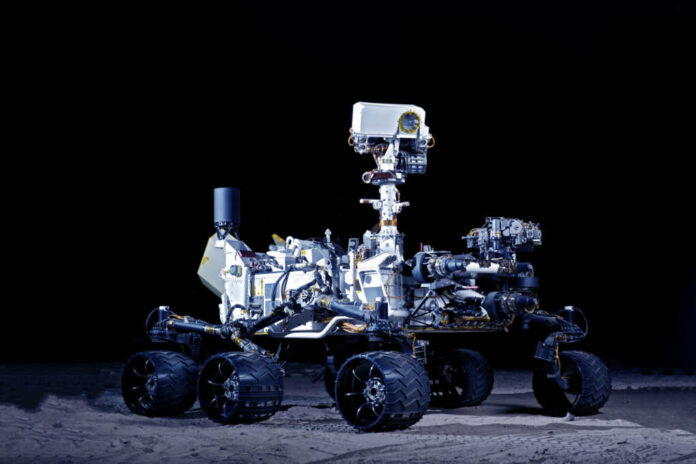
As robots push deeper into the kill zone, the real fight is shifting from brave soldiers to cold steel — and that should make every defender of human judgment and American strength pay close attention.
Story Snapshot
- Ukraine is fielding tens of thousands of ground robots that now handle most frontline logistics and some combat tasks.[2][8]
- These robots have even helped capture enemy positions and hold key intersections for weeks under fire.[1][2]
- Despite hype, the machines remain remote-controlled tools, not fully autonomous deciders of life and death.[1][4][8]
- How the world handles this shift will shape future wars, rules of engagement, and America’s own readiness.[2][7][8]
Robots Move From Support Role Into The Frontline Kill Zone
On the battlefields of Ukraine, unmanned ground vehicles are no longer experiments in a lab; they are now standard tools that move ammo, evacuate the wounded, and even support assaults under constant drone surveillance and enemy fire.[4][8] Ukrainian units use these robots to carry supplies down trenches, deliver explosives into enemy positions, and place sensors and electronic warfare gear in areas too dangerous for regular infantry.[8] This shift lets commanders keep more human soldiers out of the worst kill zones while still keeping pressure on Russian lines.[4][8]
Reports from the front say these ground robots already perform most logistics missions along key sectors.[4][7] One Ukrainian unmanned ground vehicle defended a key intersection under constant attack for 45 days, taking fire that would have cost many human lives.[1][5] In another operation, President Volodymyr Zelenskyy said Ukrainian forces captured an enemy position “exclusively by unmanned platforms” for the first time in this war.[2] These stories show that remote-controlled machines are no longer sideshow gadgets; they are shaping how commanders think about seizing and holding ground.[1][2][8]
How Much Are Robots Really Replacing Soldiers?
Behind the dramatic headlines, experts warn that robots are still tools, not replacements for infantry.[8] The Ukrainian general staff reports that robotic platforms have cut personnel casualties by as much as 30 percent, which is a big gain but not anything close to a robot-only battlefield.[3][4] Analysts at the Atlantic Council say unmanned ground vehicles can be a key part of defense, yet “are not a realistic alternative to boots on the ground,” because ground must still be cleared, searched, and held by people. Terrain, mud, rubble, and broken buildings limit what tracked machines can do without human teams alongside them.[8]
Ukrainian and Western officers also stress that humans still make the critical calls.[1][4][8] Current ground robots in Ukraine are teleoperated, which means a soldier sits behind a screen, watches video feeds, and drives the machine using radio links.[1][4] Those links can be jammed or blocked by terrain, forcing operators to stay nearby and under threat.[8] A United States Army analysis notes that ground robots struggle with line-of-sight issues and rough ground, and that Ukraine has had to adapt tactics and networks to work around those limits.[8] So while robots reduce exposure, they have not removed the need for human courage and on-the-spot judgment.[1][8]
Why This Matters For American Power And The Rules Of War
For Americans who care about a strong defense and clear moral lines in war, Ukraine’s robot surge is both a warning and a lesson.[2][7][8] General Mark Milley said a few years ago that in ten to fifteen years, about one-third of the United States military could be robotic, reflecting a belief in manned–unmanned teams working together on land, sea, and air.[2] Defense researchers argue that the real revolution will be human–machine teams, where a small group of soldiers controls many semi-autonomous platforms that scout, strike, and resupply across the battlefield.[2][7][8] That future could help our troops stay alive, but only if the United States, not China or Russia, leads the design and the rules.[2][7]
🇳🇱 The First Order Consequence: Dutch defense-industry partners and logistics firms expanded a fresh supply pipeline for combat-zone robots delivered to Ukraine, reducing frontline downtime after earlier procurement delays and improving operators’ ability to maintain continuous… https://t.co/Ob6mD7PlxI
— U.S.A.I. 🇺🇸 (@researchUSAI) June 5, 2026
At the same time, conservatives are right to question who makes the final call when a robot pulls the trigger.[2][7] Ukraine’s experience shows that militaries and defense firms have strong incentives to hype “robot armies” that promise fewer casualties and faster victories, even when the systems still depend heavily on human control and are far from foolproof.[3][7][8] American policymakers now face hard choices: how to harness battlefield robots to protect our troops and deter enemies, while keeping human commanders firmly responsible for lethal decisions in line with the Constitution, just-war principles, and common sense.[2][7]
Sources:
[1] Web – Robots are about to overtake armed soldiers as the deciders of war
[2] Web – A Ukrainian ground robot defended a position from Russian assault …
[3] Web – Ukraine to field 25,000 ground robots in push to replace soldiers for …
[4] Web – Networked for War: Lessons from Ukraine’s Ground Robots
[5] YouTube – Ukraine’s Ground Robots Are Already in the Kill Zone. Sloviansk …
[7] Web – Frontline Robotics — robots that will change the course of the war
[8] Web – Ground Robots to Proliferate on Ukraine Battlefields Following …