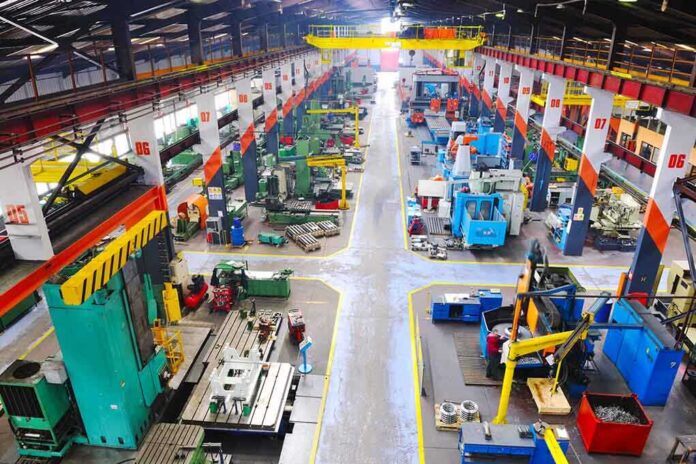
The central truth of America’s last half-century of economic policy is stark: cheaper prices at the checkout came at the cost of a deliberate hollowing out of the country’s industrial base, with consequences for work, security, and political stability that policymakers are only now trying to unwind.
Key Points
- Deindustrialization in the United States was not an inevitable byproduct of globalization, but the result of explicit policy choices that prioritized cheap imports and financial efficiency over domestic production.
- Those choices shifted millions of manufacturing and middle-class jobs overseas, reshaping entire regions’ social fabric and leaving the U.S. dependent on foreign competitors for critical supply chains.
- Secretary of State Marco Rubio has become one of the clearest voices arguing that this trade and offshoring model was a strategic mistake that now justifies tariffs and an assertive industrial policy to rebuild capacity.
- Economists and policy critics counter that the narrative of “collapsed” manufacturing is overstated, pointing to strong output, productivity gains, and offsetting job growth in services—even as they acknowledge severe regional job loss.
- The emerging consensus is not about whether deindustrialization harmed communities, but about how far to go in using protectionism and industrial planning to reverse it without creating new economic distortions.
From Cheaper Prices to a Hollowed-Out Industrial Base
Rubio’s now widely quoted line—“Prices were cheaper… but it ended up deindustrializing our country and costing us millions of jobs”—captures a trade-off that was often implicit but rarely stated so plainly in the post–Cold War era. For decades, both parties embraced a doctrine of liberalized trade, confident that global integration would deliver consumer benefits, higher-level jobs, and democracy abroad. Cheap imports were treated as proof that the model worked. In practice, those imports were tied to offshoring decisions by American firms: production moved to lower-cost jurisdictions, particularly China and other parts of Asia, while domestic factories closed and supply chains lengthened.
At the Munich Security Conference, Rubio framed this not as an unforeseen consequence of globalization but as a “conscious policy choice… a decades-long economic undertaking that stripped our nations of their wealth, of their productive capacity, and of their independence.” He argued that a “dogmatic vision of free and unfettered trade” prevailed even as competitors protected their own industries and subsidized national champions, systematically undercutting U.S. plants and encouraging the relocation of “millions of working and middle-class jobs overseas.”
What Deindustrialization Actually Looks Like
Deindustrialization is not simply fewer people working on assembly lines. It is a structural shift in the composition of the economy—from goods-producing sectors toward services—accompanied by geographic concentration of pain. Manufacturing employment in the United States peaked around 1980 at roughly 20 million jobs, then declined gradually before a sharp drop between 2000 and 2010. The “China shock” literature, exemplified by work from David Autor and colleagues, connects this to the surge of Chinese imports after China’s entry into the World Trade Organization in 2001, showing concentrated job losses in communities facing import competition.
Rubio’s own office and allied researchers have traced these losses to broader social outcomes: lower labor-force participation among men, increased drug abuse, welfare dependency, and strains on family formation. Towns built around a single plant or cluster of factories saw not only employment disappear, but also the civic infrastructure that had grown up around industrial work—local banks, unions, churches, and small businesses tethered to the spending power of stable wages. In Black urban neighborhoods, the loss of mid-skill manufacturing work has been explicitly linked to stagnant wages and multi-generational joblessness, widening racial wealth gaps even as aggregate national indicators improved.
Rubio’s Case: Deindustrialization as Strategic Failure, Not Market Fate
Rubio’s argument is not merely sentimental nostalgia for “good factory jobs.” It is a strategic indictment: by offshoring production and surrendering supply-chain control, the U.S. traded short-term efficiency for long-term vulnerability. In his Senate and State Department work, he has repeatedly stressed that “you can’t be a great power unless you can make things,” tying industrial capacity directly to national security. Critical goods feature prominently—pharmaceuticals, medical gear, advanced electronics, defense inputs—where dependence on foreign suppliers, especially geopolitical rivals, becomes a strategic risk rather than an economic curiosity.
In this view, the post–Cold War model did two things simultaneously. First, it encouraged financialization—profits from arbitrage, intellectual property, and asset inflation—over investment in physical capacity. Second, it shifted strategic supply chains overseas under the banner of efficiency, creating what Rubio describes as “fragile supply chains, shortages of critical components, weakened defense manufacturing, [and] strategic reliance on geopolitical competitors.” The COVID-19 pandemic and subsequent geopolitical tensions with China and Iran gave this critique concrete examples: shortages of basic medical supplies, dependence on foreign production of generics, and broader concern about whether the United States could surge industrial output in a crisis.
The Policy Response: Tariffs, Industrial Strategy, and Reshoring
Rubio’s proposed remedy is twofold: use trade policy to penalize offshoring and build a coordinated national industrial strategy to favor domestic production in critical sectors. In legislative terms, this has meant bills to revoke trade advantages for companies that offshore, restrict sensitive exports to China, and tie federal incentives to commitments to keep manufacturing in the United States. Working with figures such as Representative Ro Khanna, he has backed a “National Development Strategy” aimed at restoring manufacturing leadership through targeted support for strategic industries and small-business innovation.
The Trump administration’s broader economic program provides the political context. Tariffs on steel, autos, and select Chinese goods, alongside “Buy America”–style procurement and efforts to onshore generic drug production, all reflect a shift from the older free-trade orthodoxy to an openly protectionist industrial posture. Rubio has defended this turn as necessary course correction: if decades of laissez-faire trade and offshoring were a deliberate choice, reversing them must likewise be deliberate, even at the cost of higher prices in the short term. The guiding assumption is simple: strategic autonomy and resilient middle-class employment are worth more than marginal consumer savings.
The Counter-Argument: Output, Productivity, and the Limits of Protection
Rubio’s narrative is forceful, but it is not uncontested. Market-oriented economists and policy analysts argue that framing U.S. manufacturing as having “collapsed” distorts what actually happened. They point out that even as manufacturing employment fell, U.S. manufacturing output and productivity increased, with workers producing more value with fewer labor hours. From this vantage point, deindustrialization as job loss does not necessarily equal industrial decline as capacity loss. The economy became more capital-intensive and automated; many low-wage, hazardous jobs disappeared, while services and advanced manufacturing expanded.
These critics also warn about the unintended consequences of protectionist tools. Studies of “trade remedy” duties—antidumping and countervailing measures—show that tariffs often help a narrow set of upstream industries while harming downstream manufacturers that rely on imported inputs, leading to net employment losses in those sectors. Broad-brush industrial policy, they argue, risks locking in inefficient producers, encouraging lobbying over innovation, and raising prices for consumers and non-targeted businesses. Instead, they favor policies that support worker mobility, education, and innovation across the economy, rather than trying to recreate the exact employment structure of the mid-20th century.
Where the Evidence Converges: Concentrated Harm, Uneven Gains
When you strip away ideological framing, the serious debate is less about whether deindustrialization harmed people and more about how to weigh those harms against national aggregates. Most empirical work agrees that import competition from China and offshoring led to substantial manufacturing job losses, particularly among non-college workers in specific regions. It also agrees that the national economy gained in other ways: lower prices, efficiency gains, new service-sector employment, and robust manufacturing output in high-tech niches.
Rubio’s emphasis—and the lived experience of many communities—is on the concentrated nature of the damage. The “offsetting” jobs highlighted by economists often do not appear in the same towns, for the same workers, at comparable wages. A 60-year-old machinist in Ohio rarely transitions into a high-wage software role in Austin. That mismatch between aggregate gains and localized losses explains why deindustrialization became a political fault line: the policy was sold as a net positive while its costs were borne by specific classes and places, from Rust Belt cities to Southern textile towns to urban Black neighborhoods.
Industrial Policy Going Forward: Rebuilding Without Romanticizing
The challenge now is not to choose between nostalgia and laissez-faire, but to design a realistic industrial strategy for a mature, technological economy. Rubio’s interventions have dragged “industrial policy” back into mainstream conservative conversation, joining a broader rethinking on both the left and right about the state’s role in shaping production. The most defensible focus is on strategic sectors—defense, advanced manufacturing, critical minerals, pharmaceuticals, clean energy components—where reliance on foreign suppliers creates real security risks and where domestic capacity supports innovation spillovers.
Even here, the tools matter. Tariffs can buy time and leverage but are blunt instruments; they can just as easily entrench complacent firms as they can foster new investment. Smarter approaches combine long-term R&D support, infrastructure and permitting reform, workforce training, and predictable demand through procurement, all anchored in clear criteria about what counts as “strategic.” The United States cannot, and need not, replicate the exact industrial footprint of 1975. It does need to ensure that when crises hit—pandemics, wars, supply-chain shocks—it can produce what it must, at scale, without begging competitors for essentials.
Prices were cheaper… but it ended up deindustrializing our country and costing us millions of jobs."
Secretary of State Marco Rubio says decades of prioritizing low-cost manufacturing overseas hollowed out America's industrial base.
pic.twitter.com/uzQ4WVdb1h— @perkinsights (@perkinsightz) August 2, 2026
Politics, Trade, and the New Economic Common Sense
Rubio’s claim that deindustrialization “was a choice” resonates because it names responsibility. These outcomes were not acts of God; they were the cumulative effect of trade agreements, tariff schedules, regulatory frameworks, and corporate strategies often made with little regard for their long-term social or strategic implications. Reindustrialization, accordingly, will not be automatic. It will require another set of choices: to accept higher near-term costs, to prioritize certain regions and industries, and to accept that efficiency is not the only metric by which a great power judges its economy.
The political realignment underway—bridging parts of the populist right and industrial-policy left—reflects a dawning recognition that a nation cannot remain secure, cohesive, and broadly prosperous if it outsources too much of its capacity to make things. The prices were indeed cheaper. The bill is only now coming due.
Sources:
facebook.com, youtube.com, state.gov, x.com, foxnews.com, cato.org, presidency.ucsb.edu, newsweek.com, trend.az, americanrhetoric.com, sbc.senate.gov, americanmind.org, linkedin.com, amo.house.gov, nationalaffairs.com, rubio.senate.gov, niskanencenter.org, washingtonpost.com, wiley.law