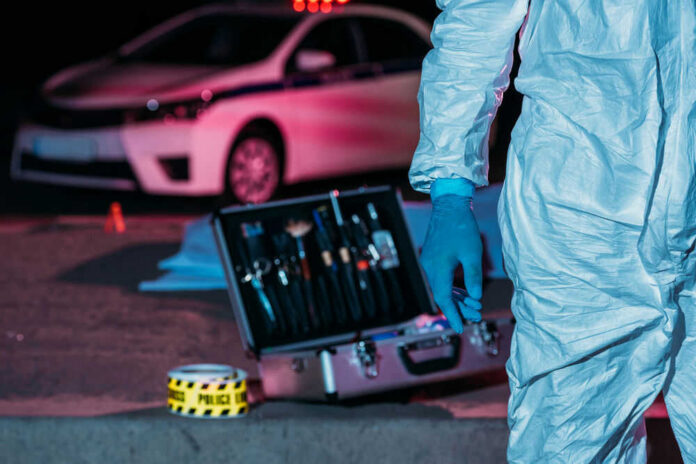
The real story here is not that every unanswered question deserves equal weight; it is that the prosecution’s case against Tyler Robinson rests on a conventional stack of evidence—DNA, surveillance, witness testimony, and alleged admissions—while the counter-narrative leans far more heavily on interpretive doubt than on equally specific rebuttal.
Key Points
- The strongest public case for Robinson’s guilt is cumulative: multiple forms of evidence point in the same direction rather than relying on a single dramatic claim.
- The most serious skeptical arguments do not directly disprove that evidence; they question identification, timing, and the completeness of the public record.
- That distinction matters. In high-profile political violence cases, conspiracy narratives often thrive on gaps in disclosure even when the core evidentiary picture is fairly conventional.
- Until primary-source forensic materials and full transcripts are public, readers should separate what is asserted in court from what is merely circulated online.
The prosecution narrative is built like a criminal case, not a mythology
The most important thing to understand is that the public case against Robinson is not based on one isolated piece of theater. According to reporting on prosecutors’ stated evidence plan, they intend to present DNA linking Robinson to the murder weapon, surveillance footage placing him at the scene, witness statements, and autopsy findings; they also say he faces the possibility of the death penalty if convicted. That is the ordinary architecture of a serious homicide prosecution. It matters because conspiratorial explanations usually flourish when a case depends on one brittle assertion. Here, the argument is cumulative: physical evidence, visual evidence, and testimonial evidence are meant to reinforce one another.
The alleged text-message evidence pushes the case further still. One report says Robinson messaged a friend 55 minutes before the shooting to boast about success, while other summaries of the prosecution’s position describe texts and notes indicating prior planning. If those messages are authenticated in court, they are not a peripheral detail; they are a confession-shaped pillar that changes the evidentiary balance. In criminal cases, the difference between “someone resembles the suspect” and “the suspect appears to admit the act” is the difference between ambiguity and a far more coherent prosecution theory.
Where the skepticism is strongest — and where it stops
The counter-case is not nonexistent. It has a recognizable core: some observers argue that footage, gait, or rooftop movement has been misread, and one academic-style critique claims several alleged movements may involve misidentification, fabrication, or impersonation. That is the most serious form of dissent because it targets the timeline itself, not merely the politics around the case. The same general line of argument appears in commentary about a “distinct gait or limp,” which skeptics interpret as a mismatch with Robinson’s known physical profile rather than as proof of concealment.
But skepticism is not the same as rebuttal. In the material provided, Side B does not produce a primary-source forensic analysis that undercuts the DNA claim, a lab report showing contamination, or a chain-of-custody breakdown that would seriously destabilize the prosecution’s case. Nor does it offer a direct forensic refutation of the alleged text confession or a published expert analysis demonstrating that the surveillance footage cannot depict Robinson. That distinction is decisive. General doubt can keep a debate alive; it cannot, by itself, overturn a multilayered evidentiary presentation.
Why the public record feels unstable even when the case may not be
This is the point where modern murder cases become informational battlegrounds. High-visibility political killings are especially vulnerable to conspiracy formation because they combine moral shock, ideological stakes, and a rapid flood of partial disclosures. The broader research package points to exactly that pattern: political violence is often followed by competing narratives, and conspiracy misinformation is a recurrent feature of assassination discourse. That does not mean the official case is wrong; it means the environment is structurally primed for doubt, especially when the public sees fragments of evidence before the full evidentiary record is released.
That dynamic is amplified when the media ecosystem recycles secondary summaries instead of primary documents. Here, many of the claims in circulation come through reporting on courtroom activity, platform clips, or partisan commentary rather than through a full public docket with exhibits, transcripts, and authenticated forensic reports. For a careful reader, that creates a practical rule: do not confuse incomplete access with exculpation. A case can be strong and still feel opaque, particularly when live court coverage, social video, and commentary networks turn a criminal proceeding into a content war.
Investigative Journalist Cam Higby explains how there's a lie proliferating across social media about the DNA evidence in the Tyler Robinson hearing.
Viral claim: DNA on the screwdriver and towel was "almost entirely" Lance Twiggs, with 95% and 89% Twiggs, only 5-11% Robinson.… pic.twitter.com/UVXoRvo6ev
— Media Lies (@MediasLies) July 8, 2026
What the evidence currently supports
At present, the most defensible reading is straightforward: the prosecution appears to have assembled a broadly conventional but potentially strong case, and the public counter-narrative has not yet matched it with comparably specific forensic rebuttal. The Daily Mail reporting on the hearing claims prosecutors will present DNA, surveillance, witness statements, and autopsy material; broader summaries of the case add alleged messages and confession-like statements that, if authenticated, would substantially strengthen the state’s position. Against that, the principal skeptical materials argue misidentification, unusual gait, or circumstantial weakness, but they do not dismantle the core evidentiary claims with the same level of specificity.
That is why the phrase “destroys conspiracy theories” is too absolute, but not directionally wrong in spirit. What the evidence package supports is narrower and stronger: the conspiracy frame has not produced a comparably rigorous, source-based alternative account. It has produced suspicion, pattern-reading, and resistance to institutional trust. Those are politically potent, and in a case like this they can spread quickly. But they are not the same thing as a credible forensic answer to DNA, surveillance, or admissions. Until the primary materials are public and tested adversarially, the right posture is disciplined skepticism toward claims on both sides, with the burden remaining on anyone who wants to overturn the prosecution’s cumulative case.
Sources:
youtube.com, dailymail.com, podcasts.apple.com, imdb.com, oklahoma.gov, facebook.com, news.northeastern.edu, abc7news.com