European powers have crossed a historic threshold by committing to military action against Iran, signaling that Tehran’s reckless aggression in the Persian Gulf has pushed the West to openly back defensive strikes that could reshape global energy security.
Story Snapshot
- E3 nations (UK, France, Germany) pledged support for “proportionate military defensive measures” against Iranian attacks on February 28, 2026
- Iran’s closure of the Strait of Hormuz has stranded 150 oil tankers, threatening worldwide energy supplies
- Gulf states absorbed devastating Iranian missile and drone strikes on civilian airports, ports, and US military bases
- UK Prime Minister authorized American use of British bases for defensive operations and deployed Ukrainian specialists to aid Gulf defenses
European Powers Break From Diplomatic Tradition
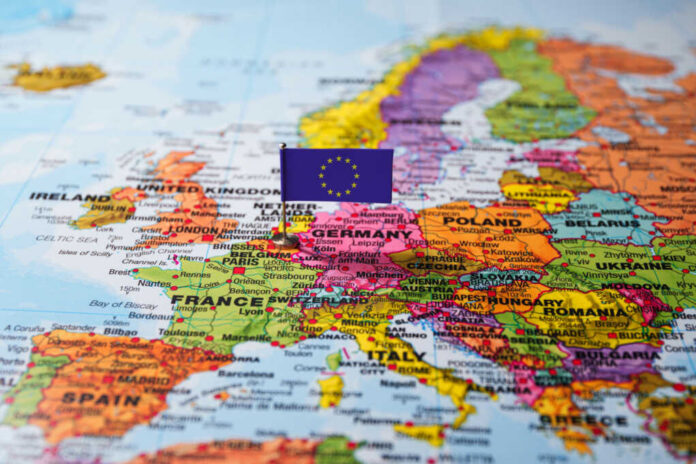
The E3 nations issued an unprecedented statement on February 28, 2026, committing to support proportionate military defensive measures against Iranian drones and ballistic missiles targeting Gulf allies. This marks the first time Britain, France, and Germany have openly pledged military involvement in the escalating Iran conflict, abandoning decades of cautious diplomacy. UK Prime Minister Keir Starmer announced the United States can utilize British bases for defensive strikes against Iran, while revealing Ukrainian drone defense specialists are assisting Gulf nations. Iranian Foreign Minister Araghchi immediately warned that European military participation would constitute an act of war.
Iran’s Strategic Chokehold on Global Energy
Tehran’s Islamic Revolutionary Guard Corps closed the Strait of Hormuz in late February 2026, effectively strangling a critical artery for global oil shipments. Over 150 tankers now sit idle in the Persian Gulf, unable to transit the narrow waterway that typically handles roughly 21 million barrels of oil daily. The IRGC has sunk at least 10 commercial vessels attempting passage, while launching cyberattacks on Gulf financial systems. Qatar halted energy production entirely by March 2, compounding the supply crisis. This deliberate economic warfare threatens to trigger worldwide fuel shortages and price spikes, demonstrating Iran’s willingness to weaponize energy access against nations supporting American operations.
Gulf States Bear the Brunt of Iranian Retaliation
Iranian forces unleashed devastating retaliatory strikes across the Arabian Peninsula following the February 28 US-Israeli operation that killed Supreme Leader Ali Khamenei. The UAE absorbed hits on Dubai, Fujairah, and the critical Jebel Ali Port. Kuwait International Airport sustained damage, with an 11-year-old child killed in the bombardment. Bahrain’s Fifth Fleet headquarters came under direct attack, while strikes wounded American servicemembers. By March 1, Iran had launched over 170 ballistic missiles and 541 drones in coordinated waves, killing three US troops stationed in Kuwait. These indiscriminate attacks on civilian infrastructure underscore the regime’s disregard for international norms and innocent lives.
Trump’s Decisive Action to Dismantle Nuclear Threat
President Trump authorized Operation Epic Fury on February 3, 2026, designed to eliminate Iran’s nuclear weapons capability and dismantle the regime’s security apparatus. The coordinated US-Israeli campaign targeted nuclear facilities at Fordow, Natanz, and Isfahan, alongside command centers in Tehran and Sanandaj. Trump projects the operation will last four to five weeks, achieving objectives that previous administrations failed to address through ineffective diplomacy. The strikes killed Khamenei and severely degraded IRGC command structures, representing the strongest American response to Iranian aggression in decades. This decisive military action corrects years of appeasing a regime that sponsors terrorism, develops nuclear weapons, and destabilizes an entire region critical to Western interests.
EU, Gulf States Urge Iran to End Attacks Threatening 'Global Security'https://t.co/RTUbAcbgo0
— Asharq Al-Awsat English (@aawsat_eng) March 5, 2026
Iranian Red Crescent reported 555 casualties by March 2, though exact figures remain difficult to verify amid ongoing combat operations. The Atlantic Council assesses that the Gulf region emerging from this conflict will fundamentally differ from pre-war alignments, with Arab states demonstrating unprecedented unity against Iranian expansionism. Gulf governments have summoned Iranian envoys and coordinated defensive measures, signaling Tehran’s belligerence has backfired by strengthening regional cooperation with Western allies. This realignment serves American interests in containing Iranian influence while protecting energy infrastructure that underpins global economic stability.
Sources:
Timeline of the 2026 Iran conflict – Wikipedia
Iran War Timeline 2026 – Nukeclock
War in the Middle East: What Implications for the EU and World – ISS Europe
The Gulf That Emerges From the Iran War Will Be Very Different – Atlantic Council
Iran Strikes: Trump Israel Attack Timeline – The Independent