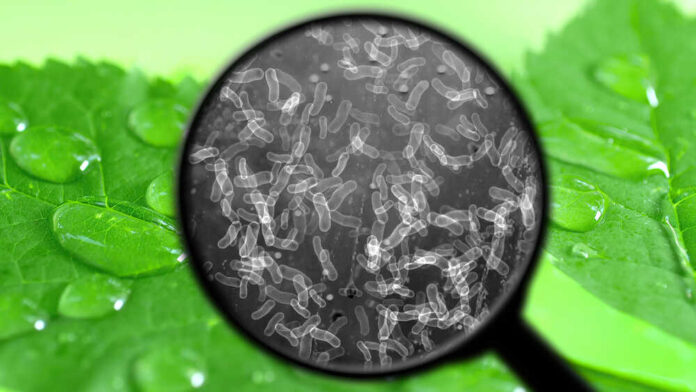
A new scientific breakthrough on Mars could revolutionize space colonization, leveraging Earth’s toughest microbes to create habitable environments.
Story Highlights
- Extremophile microbes offer solutions for Mars colonization by transforming harsh Martian environments.
- Research emphasizes the use of microbial consortia to enhance survival and functionality on Mars.
- Experiments confirm that these microbes can produce oxygen and repair DNA in space-like conditions.
- Potential economic and social impacts could accelerate Mars colonization and space industry growth.
Extremophiles: The Key to Mars Colonization
Research in 2025 reveals that extremophile microbes, known for surviving Earth’s harshest conditions, could play a crucial role in Mars colonization. Microbes such as Chroococcidiopsis and Deinococcus radiodurans show resilience against radiation, vacuum, and perchlorates, making them ideal for terraforming Mars. These microbes have been tested in space simulations, confirming their ability to survive and produce oxygen, essential for creating sustainable human habitats on Mars.
NASA and ESA lead the way in this research, conducting experiments on the International Space Station to test microbial survival in space. These studies are supported by institutions like KAUST and researchers worldwide. The collaboration focuses on engineering microbial consortia, which are more robust than single-species solutions, to mitigate Mars’ environmental challenges such as toxic regolith and extreme temperatures.
Microbial Consortia: A Game Changer for Terraforming
Recent developments emphasize the shift from using individual extremophile species to microbial consortia, enhancing the microbes’ adaptability and functionality on Mars. Synthetic biology plays a vital role, engineering these consortia to metabolize Martian perchlorates and withstand high radiation levels. This approach aligns with the conservative value of innovation and self-reliance, offering a biological solution to a complex problem.
Projects like CyanoTechRider and BIOSIGN explore the potential of these microbes to repair DNA and facilitate photosynthesis under Martian conditions. The economic implications are significant, potentially launching a new market for terraforming technologies and increasing investment in space exploration, which conservatives view as a means to bolster national pride and economic growth.
The Impact and Future of Mars Colonization
The short-term benefits of this research include reducing mission risks by identifying contamination threats and enabling the production of oxygen and soil for initial habitats. In the long term, the successful deployment of microbial mats could create self-sustaining biospheres, supporting human colonies and democratizing access to Mars. This would not only advance scientific understanding but also spur international cooperation on bio-introduction treaties.
Earth’s toughest microbes could help humans live on Mars – https://t.co/69zgjw3Z0L
— Ken Gusler (@kgusler) January 6, 2026
While optimistic about these developments, experts caution against unintended ecological changes on Mars. Nonetheless, the potential for using extremophiles to transform Mars aligns with conservative principles of ingenuity and enterprise. As research continues, these microbes could become the cornerstone of human expansion beyond Earth, promising a new frontier for exploration and innovation.
Sources:
PubMed: Extremophiles and Mars
Universe Today: Extremophiles on Mars
EurekAlert: Microbial Risk Studies
arXiv: Symbiotic Engineering for Mars
LiveScience: NASA’s Microbial Discoveries