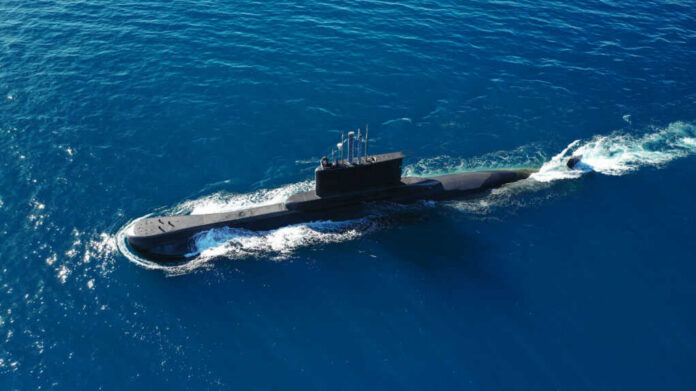
U.S. Navy destroyers have entered the Strait of Hormuz to clear Iranian mines blocking one of the world’s most critical energy chokepoints, marking a decisive American response to Tehran’s attempt to strangle global commerce and threaten economic stability.
Story Highlights
- Two U.S. Navy destroyers began mine-clearing operations in the Strait of Hormuz on April 11, 2026, establishing safe passage through waters mined by Iran’s Revolutionary Guards
- Underwater drones costing approximately $50,000 each will deploy to remove mines from the strait, which handles roughly 20% of global oil trade
- President Trump announced Iranian minelaying vessels were sunk prior to the clearance operation, demonstrating American resolve against hostile blockade attempts
- The mission coincides with Pakistan-mediated trilateral talks aimed at de-escalating U.S.-Iran tensions while protecting vital international shipping lanes
Navy Establishes Safe Passage Through Strategic Waterway
The USS Frank Peterson and USS Michael Murphy completed their transit through the Strait of Hormuz on April 11, 2026, initiating what U.S. Central Command calls “setting conditions” for comprehensive mine clearance. CENTCOM announced the destroyers successfully navigated the 21-mile-wide chokepoint between Iran and Oman, establishing an initial pathway that will be shared with the maritime industry once fully secured. The operation represents the first confirmed U.S. transit of the mine-affected strait since the Islamic Revolutionary Guards Corps deployed sea mines to block commercial shipping during escalating conflict.
Low-Cost Drone Technology Revolutionizes Mine Warfare
Advanced underwater drones capable of reaching depths of 5,000 feet with a 250-mile operational range will spearhead the clearance effort at a fraction of traditional costs. These unmanned systems, priced around $50,000 per unit, offer customizable capabilities for detecting and neutralizing mines while keeping American sailors out of harm’s way. Military analysts note this technology addresses a critical gap, as the U.S. Navy previously lacked fully safe mine-clearing systems adequate for the complex Hormuz environment. The deployment demonstrates how innovative, cost-effective solutions can counter asymmetric threats that hostile actors deploy to disrupt free navigation.
Strategic Implications for Energy Security
The Strait of Hormuz serves as a vital artery for global energy markets, channeling approximately one-fifth of the world’s oil trade through its narrow passage. Iran’s decision to mine these international waters directly threatened economic stability for oil-importing nations and Gulf states dependent on unimpeded shipping lanes. By restoring navigation freedom, U.S. forces aim to prevent oil price spikes that would harm American consumers and global markets alike. This clearance operation reinforces deterrence against future Iranian attempts to weaponize strategic chokepoints, sending an unmistakable message that America will not tolerate hostile blockades of international commerce.
Historical Precedent and Current Conflict Dynamics
Iranian mine warfare tactics trace back to the 1980s Tanker War during the Iran-Iraq conflict, when similar threats prompted U.S. Navy countermeasures under Operation Earnest Will. The current escalation saw Revolutionary Guards laying mines to block the strait, prompting President Trump to authorize strikes against Iranian minelaying vessels according to his social media statements. As U.S. forces clear the waterway, Pakistan-mediated trilateral talks launched simultaneously in Islamabad on April 11, creating diplomatic pressure on Tehran. The dual-track approach of military action and negotiation demonstrates American strength backed by willingness to resolve tensions, though questions remain about Iran’s commitment to abandoning mine warfare as a coercive tool.
Broader Impact on Regional Stability
The successful mine clearance operation carries short-term benefits for global shipping while establishing long-term strategic advantages. Immediate restoration of safe passage prevents economic disruption and demonstrates U.S. capability to overcome Iranian aggression without prolonged conflict. The mission showcases American naval superiority and advanced unmanned systems technology, further isolating Tehran economically and diplomatically. For Americans frustrated by foreign entanglements yet concerned about energy costs, this operation represents decisive action to protect vital interests without extensive boots-on-ground commitments, though ongoing vigilance remains necessary against a regime that repeatedly threatens international waters for political leverage.
Sources:
US says its forces have begun mine-clearance mission in Strait of Hormuz – India Today