
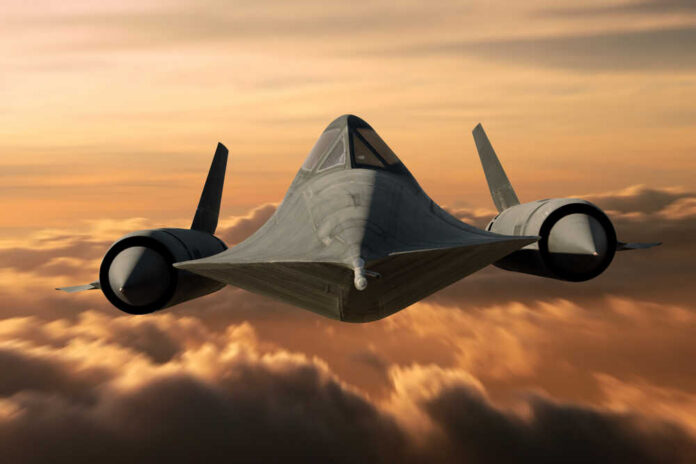
An American test pilot was ripped out of an SR-71 at Mach 3—yet lived to wake up under a parachute over a New Mexico cattle ranch.
Quick Take
- A 1966 SR-71A test flight broke apart at roughly Mach 3.18 and about 78,000–79,000 feet after a right inlet “unstart” triggered violent instability.
- Pilot Bill Weaver survived without a conventional ejection; aerodynamic forces tore him free after his restraints failed, and his suit and automatic chutes did the rest.
- Reconnaissance systems officer Jim Zwayer parachuted but died from a catastrophic neck injury during the breakup.
- The accident pushed Lockheed and the Air Force toward inlet-control changes, including systems designed to prevent dangerous asymmetric “unstarts.”
What Happened When the Blackbird’s Inlet “Unstarted”
Lockheed test pilot Bill Weaver and reconnaissance systems officer Jim Zwayer launched from Beale Air Force Base in January 1966 to run aft center-of-gravity testing and evaluate inlet behavior at extreme speed and altitude. At around Mach 3.18 near 78,000–79,000 feet, the right inlet malfunctioned. During a banked turn, the inlet “unstart” forced the shock wave forward, producing sudden yaw and pitch changes that quickly overwhelmed control and structural limits.
The chain reaction unfolded in seconds. Reports across multiple accounts describe a violent departure from controlled flight, extreme forces, and rapid airframe breakup, including separation of sections of the aircraft and a debris field eventually stretching roughly 15 by 10 miles. The SR-71’s reputation for strength and speed is real, but this incident underscored a hard aviation truth: at the edge of performance, small mechanical or aerodynamic failures can become unrecoverable before a crew fully processes what is happening.
A Survival That Wasn’t a Standard Ejection
Weaver’s survival stands out because it did not follow the normal “seat, rocket, chute” ejection sequence most Americans picture. Accounts agree his seat stayed with the aircraft, while his restraints shredded and aerodynamic forces extracted him from the cockpit during the breakup. Weaver blacked out under the brutal loads, then later regained consciousness during descent as an automatic stabilizing parachute sequence progressed, with a main chute deploying at lower altitude.
Details vary slightly by retelling, but the core mechanics remain consistent: a pressurized suit kept Weaver alive in thin air and cold temperatures long enough for the parachute system to function. He reportedly awoke to a frozen faceplate and partial oxygen complications—an illustration of how close the margin was between survival and tragedy. He also saw Zwayer’s parachute, a reminder that “getting out” is not the same as “making it.”
Why One Crew Member Lived and the Other Did Not
Zwayer’s chute deployed, but he suffered a fatal neck injury during the aircraft’s disintegration. Sources describe the injury as immediate and unsurvivable, even though he descended under canopy. That distinction matters for understanding what this incident was—and was not. It was not simply a case of equipment failure or a parachute malfunction. The breakup forces themselves were lethal, and the violence of the event at Mach 3 made outcomes partly dependent on physics and split-second variables.
The Ranch Rescue and the Limits of “Deep State” Competence
Weaver came down on a remote New Mexico ranch plateau, where rancher Albert Mitchell quickly reached him using a personal helicopter and flew him to a hospital in Tucumcari, roughly 60 miles away. Mitchell also checked on Zwayer, while others secured the area until authorities arrived. The rescue story is striking because it’s local, private capability—not a massive bureaucracy—that delivered immediate help when seconds and miles mattered.
https://twitter.com/19_forty_five/status/2043126431136297391
In today’s politics, many Americans—conservatives and a growing slice of liberals—worry that institutions prioritize process, messaging, and career preservation over competence. This incident, while decades old, still resonates as a counterpoint: elite programs can produce unmatched technology, yet they can also be one inlet failure away from catastrophe. The lesson isn’t cynical; it’s accountability-focused. High performance requires humility, rigorous testing, and systems designed for real-world failure modes.
Sources:
An SR-71 Blackbird Totally Disintegrated at Mach 3 and the Pilot Was Ripped Out of the Aircraft
Mach 3 ejection: SR-71 Blackbird
The unbelievable story of a pilot who survived an SR-71 Blackbird’s disintegration at Mach 3
SR-71 Disintegrated, Pilot Free-Fell from Space, Lived to Tell