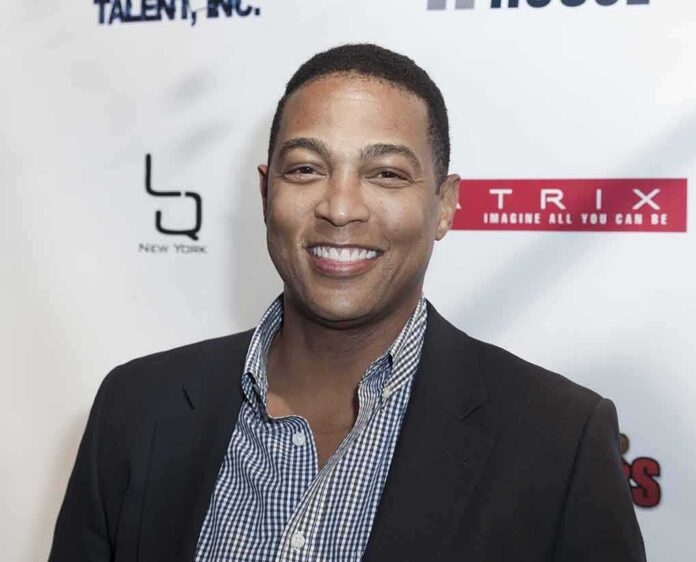
What makes the Don Lemon church-protest case matter is not the celebrity of the defendant; it is the legal line it is testing between newsgathering and participation. Once a reporter is inside a volatile protest, the case turns on conduct, intent, and coordination — the three things that separate protected observation from a federal civil-rights charge.
Key Points
- Lemon has been charged in federal court and has pleaded not guilty, so this is an active criminal case, not a rumor or a social-media dispute.
- Prosecutors say the case arises from an anti-ICE protest that disrupted a worship service at Cities Church in St. Paul and is being pursued under the FACE Act.
- Lemon’s public defense is straightforward: he says he was there as a journalist documenting the protest, not as a participant.
- The public record currently shows the existence of charges more clearly than it shows the evidence behind them; the indictment’s full factual basis remains the decisive missing piece.
The Legal Core of the Case
The charging theory is built around the Freedom of Access to Clinic Entrances Act, better known as the FACE Act, a 1994 statute that bars force, threats, or physical obstruction that interfere with protected access to places of worship and, historically, abortion clinics. That matters because the government is not merely saying a protest occurred; it is saying the protest crossed into conduct that obstructed religious exercise. Reuters describes the case as one linked to a protest opposing President Trump’s immigration policies, while PBS and ABC both report that Lemon appeared in federal court and pleaded not guilty.
That distinction is essential. A loud protest near a church is not automatically a federal civil-rights crime. The prosecution has to prove more than presence and more than disagreement with the message. It must show conduct that fits the statute and, for the conspiracy count, an agreement or shared intent. The public summaries available so far confirm the charges, but they do not yet spell out the full factual machinery prosecutors will use to prove those elements.
Why the Journalism Defense Matters
Lemon’s strongest defense is not complicated, and it is powerful because the First Amendment has real force in this setting: he says he was there to cover the event, not to join it. AP, PBS, Patch, and Reuters all report that he has maintained he was acting as a journalist, and AP reports his lawyers have even sought grand jury transcripts while arguing the case should be dismissed. In other words, the defense is not denying that he was present; it is denying that his presence was criminal in character.
That framing is more than public relations. Modern protest cases often hinge on whether a person filming, speaking, or moving with a crowd is exercising press freedom or functioning as a participant. The difference can be subtle in the moment and decisive later in court. A livestream, a phone camera, or a press-style explanation does not immunize someone from prosecution if the evidence shows coordination; but neither does proximity to a protest erase journalistic status. That is why the missing materials — video, timestamps, communications, witness accounts — are so consequential.
What the Public Record Shows, and What It Does Not
The record now available is stronger on procedural facts than on proof. It shows that Lemon was indicted or charged, that he appeared in court, and that he entered a not-guilty plea. It also shows that multiple people were charged in the same episode, which supports prosecutors’ broader theory that the protest was coordinated rather than spontaneous or isolated. But the reporting provided here does not reproduce the indictment itself, and that means the public is still reading summaries of alleged conduct rather than the underlying sworn narrative.
That gap is where public confusion tends to grow. Lemon’s camp can point to the absence of a public evidentiary package and emphasize the obvious innocence claim: a reporter covering a protest is not the same thing as a protester obstructing worship. Prosecutors, by contrast, can point to the existence of charges, to the number of defendants, and to reporting that a livestreamed group interrupted services with chants such as “ICE out” and “Justice for Renee Good.” Both things can be true at once: the case may be serious, and the public may still be underinformed about the proof.
The Real Dispute: Intent, Not Presence
Side B’s argument is not that nothing happened at the church. It is that Lemon says he was there solely to document it, and that the current public record does not yet show he personally joined the disruption. That is a serious defense because federal civil-rights charges are not built on vibes; they are built on conduct and mental state. If the evidence shows he remained a journalist, observed from a distance, and did nothing to further the obstruction, the prosecution faces a difficult burden. If, however, the evidence shows he moved with the group, helped amplify the disruption, or coordinated with others, the press defense weakens sharply.
That is why the strongest reporting to date leaves the case in a narrow but unstable place. It is not empty, and it is not resolved. Lemon has not admitted the charged conduct; he has pleaded not guilty; and AP reports his lawyers are actively challenging the case on procedural grounds. At the same time, the government’s theory remains plausible enough on the face of the reporting that the dispute cannot be dismissed as simple political theater. The outcome will depend on the underlying file, not on the rhetoric surrounding it.
Don Lemon asked a federal judge to dismiss civil-rights charges stemming from his coverage of an anti-ICE protest that disrupted Minnesota church service…his lawyers argue the Justice Department pursued the case vindictively to punish his First Amendment-protected reporting
— News Orbit 🗞️ (@NewsOrbitUS) August 7, 2026
Why the Case Became a Political Symbol
The political charge around the case is built into its setting. Reuters connects the protest to opposition to President Trump’s immigration policies, and that immediately places the case inside a familiar American fault line: immigration enforcement, protest rights, and media suspicion. Once those elements are in the same room, every side sees a different danger. Critics of the prosecution see selective enforcement and a press-targeting narrative; supporters see an ordinary civil-rights case involving a disruptive church protest. The facts have not yet been resolved enough to justify either caricature.
That is also why the FACE Act carries so much baggage. The statute has long been used in abortion-clinic protest cases, and Reuters notes that it also covers obstruction of access to worship spaces. So when prosecutors invoke it in a church-protest case involving a recognizable media figure, the case inherits two controversies at once: the scope of the law itself and the role of journalism at a charged public demonstration. Those debates can obscure the central question, which is whether Lemon’s conduct, as proved in court, crossed the line from coverage into criminal interference.
What Will Ultimately Decide It
The decisive evidence will be mundane rather than dramatic: the indictment language, the arraignment transcript, any prosecutor proffer, and any authenticated video or witness testimony showing exactly what Lemon did inside or around the church. If the materials show reporting behavior only — camera work, interviews, note-taking, and no coordination — the defense becomes much stronger. If they show synchronized action with the protesting group, the prosecution gains the factual basis it needs. Until then, the public is looking at the outline of a case, not its full anatomy.
That is the cleanest way to understand the dispute. Don Lemon is not being judged here on whether viewers trust him or dislike Trump-era immigration politics. He is being judged on whether a federal court finds that his presence at a disrupted church service was journalism, protest, or something criminally in between. The answer will come from evidence, not from the noise that has already formed around it.
Sources:
redstate.com, pbs.org, youtube.com, reuters.com, facebook.com, nbcnews.com