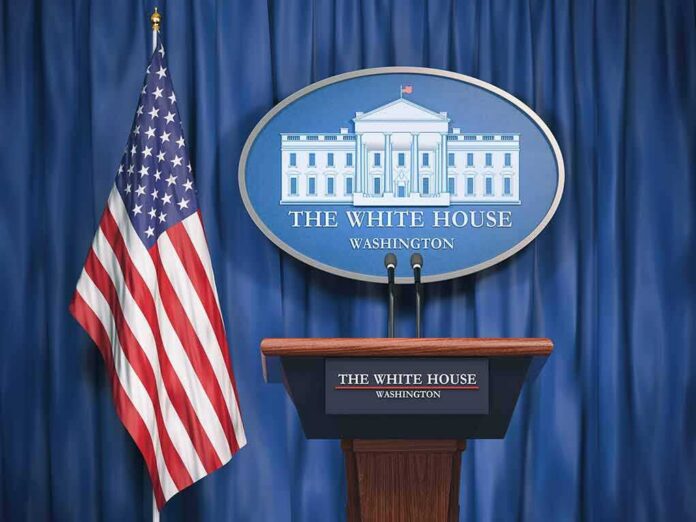
The essential fact in this Iran episode is not simply that President Trump announced a deal was near; it is that he used the language of imminence to justify a pause in military action, while the public record simultaneously showed Tehran rejecting the premise of direct talks and insisting that nothing had been finalized.
Key Points
- Trump portrayed negotiations as sufficiently advanced to cancel or pause strikes, presenting diplomacy and force as two sides of the same decision.
- The strongest public counterweight is Iran’s categorical denial that direct talks were occurring, or that it had requested negotiations.
- The most durable reading is not that one side was simply “lying” and the other simply “telling the truth,” but that the dispute turned on what counts as a talk, what counts as a deal, and when an agreement becomes real.
- This pattern matters because repeated claims of a near-term breakthrough can move markets, shape allied behavior, and erode credibility when final documents never appear.
What Trump Claimed, and Why It Mattered
Trump’s central message was stark: the strike was off, the deal was close, and the window for a diplomatic settlement had opened. In contemporaneous reporting, he said he had agreed to cancel the attack “for the future benefit of the world” and the “survival of a successful and prosperous Iran,” while also saying the deal’s parameters had already been agreed to and that final details were still being worked out. That combination is politically powerful. It turns a military hold decision into evidence of leverage, and it turns leverage into proof that the other side is ready to bargain. In diplomatic terms, Trump was not describing a finalized settlement; he was describing a moment of contingent momentum.
That distinction matters. A preliminary framework, a memorandum of understanding, a mediated channel, and a signed bilateral agreement are not interchangeable. Trump’s own comments, as reported, repeatedly sat in that gray zone: “largely negotiated,” “subject to finalization of documents,” “probably a signing,” and “pretty quickly”. Those phrases do not describe completion. They describe an agreement in motion. The public problem, then, was not merely whether negotiations existed; it was whether Trump was presenting an in-progress diplomatic process as if it had already crossed the threshold into settled fact.
The Core Contradiction: Direct Talks Versus Public Denial
Iran’s response was not subtle. The Foreign Ministry denied that talks were taking place, and Esmaeil Baghaei called the reports speculative while stressing that “nothing has been finalized”. Other Iranian figures went further, rejecting the idea of direct negotiations and, in some accounts, even the idea of indirect contact as Trump described it. This is the hard counterweight to Trump’s framing. If the claim is that direct talks were underway and a deal was close, then the principal counterparty publicly denied both the talks and the supposed request to negotiate.
Yet Iran’s denials do not erase the possibility of mediated messaging. The public record also shows acknowledgment of messages passing through friendly countries or intermediaries, which is a different thing from direct negotiation. That is the crux of the ambiguity. A regime can reject the label “talks” while still receiving or sending messages through third parties. In practical diplomacy, that difference is not semantic fluff. It separates signaling from bargaining, and bargaining from commitment. Trump’s account leaned on the more expansive reading; Iran insisted on the narrowest possible one.
Why the Public Record Favors Caution, Not Certainty
The evidence package supports a cautious conclusion: Trump’s description of progress was real as a political act, but not yet anchored by the sort of reciprocal, document-backed confirmation that would make it a settled diplomatic fact. Reuters, BBC, PBS, the Guardian, and AP-cited coverage all describe the same structural weakness: final aspects, final documents, or a formal signing were still pending. That does not prove the effort was fake. It does mean the claim of an imminent deal was still incomplete, and therefore vulnerable to dispute.
There is also a pattern problem. CNN reported that Trump had made similar “deal is around the corner” claims at least 38 times across the spring, which turns this from an isolated burst of optimism into a recurring communications style. That matters because audiences do not hear each fresh claim in a vacuum; they hear it against a background of prior imminence announcements that never quite hardened into finality. Once that pattern exists, each new assertion must overcome accumulated skepticism. The result is a credibility discount, even when some underlying negotiations may indeed be happening.
The Strategic Logic Behind the Rhetoric
Trump’s public posture served several purposes at once. It signaled strength by implying that military options were real and ready, while also presenting restraint as a choice made from a position of advantage. It reassured allies that Washington was still engaged. And it framed any eventual agreement as something extracted, not volunteered. That is classic coercive diplomacy: force in the background, negotiations in the foreground, and public narrative used to keep both audiences — domestic and foreign — off balance.
Iran had its own strategic reasons to deny the whole frame. By rejecting the existence of talks, Tehran refused to validate Trump’s claim of leverage and avoided appearing to negotiate under threat. Its public language also preserved room to say that any messages were merely mediated communications, not capitulation or direct bargaining. In other words, both sides had reasons to shape the story before any text was signed. The dispute was not just over facts; it was over who got to define the diplomatic reality in real time.
How to Read the Episode a Year Later
The correct evergreen reading is that this was a high-stakes diplomacy story built on an unstable mix of real contacts, public signaling, and unfinished terms. Trump’s claims were not trivial bluster; they were backed by specific assertions about pausing strikes, allied pressure, and a deal framework that he said was nearing completion. But the strongest counter-evidence shows that Iran publicly denied direct negotiations, denied requesting talks, and denied that any agreement had been finalized. Those denials do not prove that every channel was closed. They do prove that Trump’s version was not mutually confirmed and therefore should not be treated as a completed diplomatic fact.
That is the deeper lesson. In modern crisis diplomacy, the announcement can arrive before the document, the signaling can precede the substance, and public certainty can be used to create political and strategic momentum. Sometimes that momentum produces a real accord. Sometimes it produces a narrative. The difference is documentable, but only if the final paper trail emerges. In the absence of that trail, the responsible reading is clear: Trump was publicly asserting a near deal and a pause in strikes; Iran was publicly denying the premise; and the evidence supports an in-progress negotiation, not a settled resolution.
BS BULLETIN President Trump says U.S.-Iran negotiations are set to begin Monday after he says he called off what he described as a massive military strike in favor of diplomacy. Iran, however, disputes Trump’s account and says no direct U.S. talks are currently underway. Trump…
— Common Sense with Chad Law (@chadparkerlaw) August 3, 2026
Sources:
mediaite.com, nytimes.com, cnn.com, youtube.com, axios.com, pbs.org, dw.com, en.wikipedia.org