A neighbor says an 18-year-old dropped a plastic tub holding a human torso, then ran.
Story Snapshot
- Police found a dismembered torso in a tub at a Smyrna, Georgia apartment complex.
- Officers arrested 18-year-old Kingston Bradley; charges now include malice murder.
- A warrant says a witness saw Bradley carrying the tub and fleeing when noticed.
- Investigators later found more remains tied to the victim, a 26-year-old mother.
A torso in a tub, a witness, and a fast-moving case
Smyrna police say a call about a missing woman led them to a grim find at Park Valley Apartments. A witness reported seeing 18-year-old Kingston Bradley carrying a plastic tub. When he realized he had been seen, he dropped it on a dirt path and ran to his nearby apartment, according to an arrest warrant. Inside the tub, officers found a dismembered torso. Police booked Bradley that same day on a charge of concealing a death.
Investigators identified the victim as 26-year-old Shanteria “KT” Mosley. Police upgraded charges to malice murder after a search turned up additional remains tied to her. Jail records show Bradley is held without bond. Police said at a briefing they had not yet linked him to a specific tool used in the dismemberment. They also said Bradley has not given a statement. As always, he is presumed innocent unless proven guilty in court.
What police say they found, and why it matters
The warrant’s details set the frame. Officers described the tub with a torso at the complex and noted evidence that pointed them to Bradley’s apartment, where they continued their work. That initial concealment charge fits what homicide detectives often do in dismemberment cases: secure the crime-scene chain and the body handling evidence first, then build the homicide case through autopsy and lab work. That sequence protects the case and the community.
Detectives later searched a vehicle and found more remains believed to be Mosley’s, which prompted the murder charge. That find answered the urgent question families ask first: where is the rest. It also strengthened the link between the recovered remains and the suspect, according to police. Prosecutors now have both possession and recovery points to argue intent and actions after death. That is a serious turn in any court.
Families, denials, and the narrow lane of facts
Mosley’s aunt, identified in the warrant, told reporters she saw the man with what looked like a bag hiding a container before he dropped it and ran. She said the family had searched the complex and confronted the suspect at his door earlier. Her account lines up with the timeline police shared and the core claim in the warrant, which is why it likely appears in charging papers at all.
🚨 This case out of Smyrna, Georgia is developing, and the arrest warrant is…a lot.
Police investigating a missing person found the dismembered torso of a woman inside a plastic storage tub Wednesday night.
According to the warrant, a witness saw 18-year-old Kingston Lammar… pic.twitter.com/kEjesaqJqK
— Clinical Menace (@clinicalmenace_) September 25, 2026
Bradley’s father released a statement denying any role or foreknowledge and saying he did not know the victim. That matters for clarity, but it does not change the state’s claims about the son. The case will stand or fall on physical evidence, scene reconstruction, and credible witness testimony. That is the conservative standard: facts first, feelings aside, let evidence drive outcomes.
How investigators prove what happened next
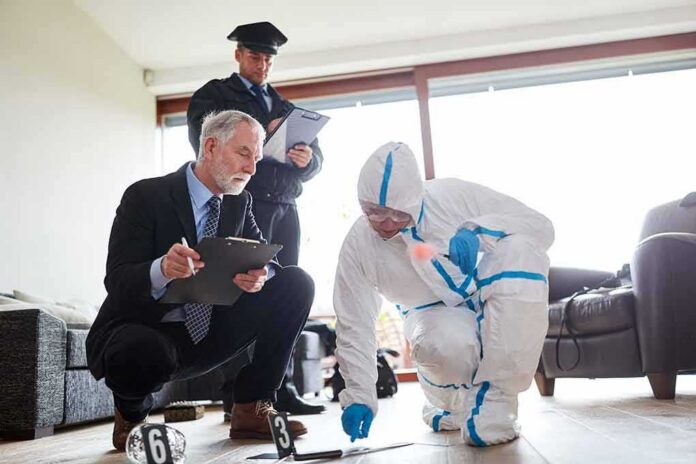
Medical examiners will study the remains to learn how Mosley died and whether injuries happened before or after death. Forensic teams will test cleaning agents, fabrics, and tools for trace blood and tissue. Analysts will match cuts on bone to blade types and may compare marks to items seized under warrant. Those methods have anchored many dismemberment prosecutions and help separate postmortem concealment from lethal cause.
Police also work the simple steps that often crack complex crimes. They pull camera footage, phone records, ride-share and food delivery logs, and secure digital data from cars and buildings. They map when, where, and by whom each item moved. If the chain ties the tub, the vehicle, and the apartment to Bradley at key times, prosecutors gain leverage. If gaps appear, the defense can press them at trial. The system is built for that test.
What this says about safety and justice
Neighbors found themselves in the middle of a nightmare. Yet the response shows the parts working: a family reported a missing loved one, a witness spoke up, officers moved fast, and prosecutors escalated charges as facts deepened. The path ahead is sober and slow, as it should be when life is lost. The next real answers will come from the autopsy table and the lab bench, not from social media scrolls or rumor loops.
Public safety rests on clear rules everyone understands. If the state proves the chain from handling to homicide, a jury should hear it and decide. If not, the court must say so. That is justice with guardrails. In the meantime, pray for the victim’s family, support the investigators doing the hard work, and demand the truth be shown by evidence, one tested fact at a time.
Sources:
nypost.com, ajc.com, abcnews.com, newsbreak.com, kktv.com, fox5atlanta.com, fox7austin.com, 13newsnow.com, wltx.com