Public grief after a domestic violence killing does more than mourn a life; it reveals how communities metabolize trauma, how institutions respond in the first critical days, and how easily intimate-partner homicide can be framed as an isolated shock rather than part of a persistent pattern.
The Short Version
- Hundreds gathered in Harlem to honor 27-year-old Lovay Williams, killed in her Washington Heights home; her 7-year-old daughter was present during the attack.
- Police arrested and charged a 41-year-old boyfriend in the case; family members publicly demanded justice.
- Vigils and mutual-aid support followed, with local advocates providing assistance and context on domestic violence.
- Intimate-partner homicides are often reported episodically; placing them in a broader, evidence-based framework improves public understanding and prevention.
What happened in Washington Heights and why the response matters
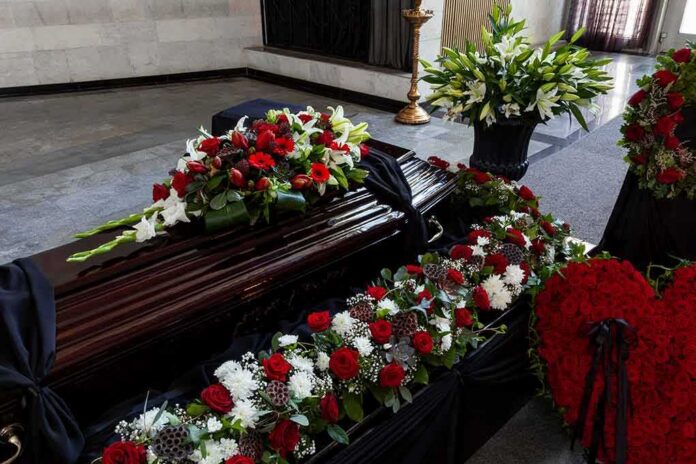
The sequence was brutally simple and devastating. Police performing a wellness check found 27-year-old Lovay Williams dead in her Washington Heights apartment, with trauma to her face and neck; her young daughter was in the home. Within days, a 41-year-old man identified as Williams’s boyfriend surrendered to police and was charged with murder and related offenses, then arraigned as the family confronted him in court and demanded accountability. The community’s response was immediate and large. Hundreds of mourners accompanied a white horse-drawn carriage bearing Williams’s casket to a Harlem church for her funeral, a collective act of witness and mourning that underscored both her life and the nature of the crime.
Public rituals after a killing do real work. They honor the dead, support survivors, and make trauma visible enough that institutions cannot look away. Vigils in Washington Heights and the Bronx followed, organized with the help of domestic violence advocates who stepped in with practical support—funeral expenses, counseling, and navigation through a system that can feel forbidding even in the best of times. These gatherings can be emotionally raw; they are also structurally important because they attract media attention, which—handled well—can educate the public about warning signs, risk factors, and resources.
How intimate-partner homicides are typically covered—and why that framing is incomplete
Most first-wave coverage of intimate-partner homicide rests on a limited record: a police statement, an arraignment, and interviews with grieving families. That scaffolding supports a powerful narrative, but it can leave the crime unmoored from its systemic context. A New York City analysis of four years of intimate-partner killings found some deaths received multiple stories while others received none—coverage was uneven, and where it existed, it skewed toward discrete incidents rather than patterns and risk factors that might aid prevention. Broader research critiques early reporting for decontextualizing the crime, leaning on non-expert sources, or using language that subtly shifts attention away from the perpetrator’s conduct.
There is a better, evidence-led way to tell these stories. Media guidelines developed by domestic-violence experts emphasize naming the conduct—domestic violence—linking to resources, and situating the killing within data on prevalence and lethality. The point is not to dilute the particularity of a victim’s life but to connect the dots the public needs to see. When coverage attends to prior abuse indicators, access to weapons, separation events, and coercive control, the story becomes legible as part of a preventable pattern rather than a bolt from the blue.
The scale of the problem: what the data actually show
Domestic violence homicides are not rare edge cases; globally, tens of thousands of women and girls are killed each year by intimate partners or family members. UN Women estimated around 45,000 such killings in 2021—more than five every hour on average. In 2022, global estimates remained at roughly 1.2 per 100,000 women and girls killed by intimate partners or other family members, with risk varying by region. These are not mere statistics; they are the measurable expression of patterns long documented by victim advocates and public-health researchers. In New York City specifically, official reviews identified more than a hundred intimate-partner homicides over a recent four-year period, again underscoring that incidents like Williams’s killing are part of a recurrent public-safety and public-health challenge, not an anomaly.
Seen through that lens, the Washington Heights case is heartbreakingly familiar: a romantic relationship, lethal violence in the home, a surviving child, and a neighborhood stunned that danger could live so close. Data does not dull that shock; it explains it—and suggests where intervention can matter most, from lethality assessment protocols to survivor-centered services.
Mechanisms that move the system: investigation, charging, and the early legal arc
Domestic-homicide investigations typically begin with patrol response and a narrow evidentiary base: the apartment as a crime scene, witness statements (often family and neighbors), and, where available, surveillance footage and digital records. In Williams’s case, the initial police response and wellness check established the time window and immediate facts; the subsequent surrender and arrest of a boyfriend translated the investigative hypothesis into formal charges that included murder, strangulation, and endangerment, moving the case into the courts. Early hearings are procedural—arraignment, bail, protective orders—but they also serve as public moments where families voice their loss and expectations for justice.
Investigative and autopsy records often remain sealed during active investigations, a routine constraint in violent-crime cases; the legal arc then proceeds through discovery, pretrial motions, and, if not resolved by plea, trial. That rhythm—fast public grief, slower forensic disclosure—is why rigorous coverage leans on confirmed procedural milestones and independently grounded prevalence data, rather than speculation about case internals that will only surface later in court.
What communities can do between vigil and verdict
The space between a funeral and a verdict is where prevention and survivor support live. Three practices make a measurable difference. First, normalize help-seeking by naming domestic violence clearly and repeatedly, and by pointing to services that meet survivors where they are—hotlines, legal aid, housing supports, and counseling. Second, adopt and fund lethality assessment protocols across frontline systems—police, healthcare, schools—so that high-risk indicators trigger rapid, coordinated responses. Third, ensure that child-focused services are fully integrated into post-incident support; children who witness lethal or near-lethal domestic violence carry trauma that compounds over time if untreated.
Responsible coverage, responsible memory
When hundreds accompany a casket down 116th Street, they are saying two things at once: that a singular life mattered and that what took it was not random. Responsible coverage can honor both truths—by reporting the concrete facts of what happened and by locating those facts within the well-documented contours of intimate-partner homicide. Doing so neither politicizes grief nor blunts accountability; it clarifies what must change if the same story is not to be told again next month, on the same block, with different names.
Sources:
nypost.com, us.headtopics.com, cbsnews.com, nydailynews.com, bronx.news12.com