

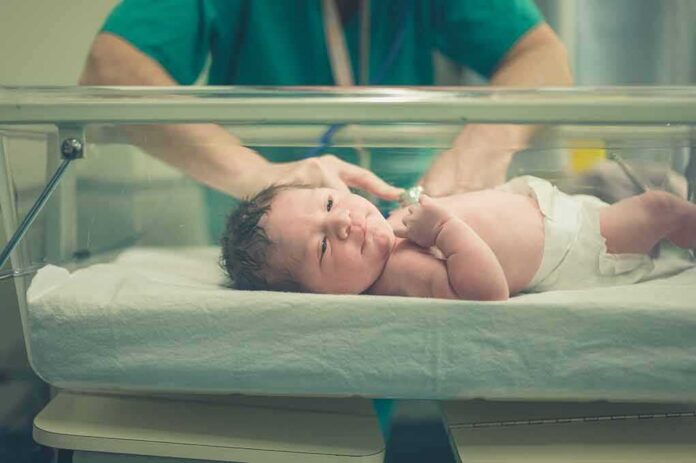
The hard center of the infant-euthanasia debate is not technology or prognosis; it is the categorical break between end-of-life choices made by a patient and irreversible life-ending decisions made about a patient who cannot choose. Treat them as a continuum and the ethics collapse; keep the distinction clear and the analysis clarifies quickly.
The Short Version
- Canadian MAID law requires adult capacity and informed consent; proposals to include infants would create a wholly different regime, not an “extension.”
- The Dutch Groningen Protocol is the chief real-world template; its criteria and oversight are cited by supporters and sharply criticized by opponents.
- Numbers are tiny, stakes are immense: reported Dutch neonatal cases have been rare, but every criterion and safeguard is contested.
- The live fault lines are consent, “unbearable suffering,” bias and disability, and whether palliative care renders active ending of life unnecessary.
What is actually being proposed—mechanism, not rhetoric
When a Quebec physician told federal lawmakers that medically assisted death could be considered for infants up to one year old with conditions incompatible with life and expected to cause extreme suffering, he invoked a model with precedent abroad rather than Canadian law. Canada’s MAID framework requires that the person be at least 18 and able to provide informed consent; by design, it excludes infants and all who cannot consent. Any neonatal regime would therefore not be a tweak to MAID but a new class of non-voluntary life-ending medicine, with distinct ethical, legal, and clinical architecture. That distinction is not semantic. It determines who decides, on what evidentiary threshold, and with which backstops against error or abuse.
Internationally, the Dutch “Groningen Protocol” anchors this discussion. Developed in the early 2000s to govern deliberate ending of life in severely ill newborns, it set out criteria: a diagnosis and prognosis of hopeless suffering, agreement of both parents, consultation with independent physicians, and reporting to prosecutors and review bodies. The protocol’s authors were explicit that newborns cannot express will; the mechanism replaces patient choice with parental authorization plus professional consensus and post hoc oversight.
How we got here: rarity, codification, and the Dutch experiment
Before Groningen, Dutch clinicians disclosed a small number of neonatal euthanasia cases to district attorneys, producing a dataset that was controversial but finite. Twenty-two cases were reported over seven years leading up to 2004. The protocol sought to standardize criteria, require transparency, and move oversight from tacit tolerance to an explicit review process. Reported numbers after introduction have remained low, measured in single digits over many years, although estimating true incidence is inherently fraught in any regime that relies on voluntary disclosure and evolving definitions. Rarity does not resolve the ethics; it shows the practice is exceptional, not routine.
Supporters point to two claimed gains from codification. First, it separates active life-ending decisions from palliative withdrawal or sedation, eliminating conceptual blur between letting die and intentionally causing death. Second, it replaces solitary bedside judgment with multidisciplinary consensus and legal review. Whether those gains suffice depends on one’s threshold question: can non-voluntary euthanasia ever be justified, even once, under any conditions? Groningen answers yes—under narrow, explicit criteria—and builds process around that answer.
Where the real disagreement lies: four contested pillars
Consent. Adult euthanasia frameworks rise or fall on autonomy; neonatal proposals cannot. Critics therefore characterize any infant regime as non-voluntary by definition and argue that parental permission—subject to grief, pressure, or misapprehension—cannot ethically substitute for the infant’s own choice. Even advocates concede the non-voluntary nature; the dispute is whether parental authorization plus external review is a morally sufficient surrogate for the patient’s interests.
Unbearable suffering. Groningen requires “hopeless and unbearable suffering,” but critics argue the term is elastic in neonates: preverbal patients cannot report pain, prognostic horizons are uncertain, and disability risks being conflated with suffering itself. In disability ethics, this is the sharpest edge—when quality-of-life judgments by clinicians or parents risk becoming value judgments about life with impairment. The ambiguity, opponents argue, invites inconsistency and bias despite formal criteria.
Palliative alternatives versus active life ending
In high-quality neonatal intensive care, aggressive symptom control—including high-dose analgesia, palliative sedation, and withdrawal of burdensome interventions—can relieve pain without intending death. Opponents contend these tools render active euthanasia unnecessary and ethically improper: treat suffering intensively, allow natural death when treatment only prolongs dying, but do not cause death. Proponents counter that some pathologies (for example, extensive anencephaly or catastrophic neuro-muscular syndromes) may entail suffering that cannot be satisfactorily alleviated without deep, continued sedation indistinguishable from intentionally ending life—yet the moral difference between sedation and euthanasia remains foundational in most bioethics codes.
Bias and governance. The strongest prudential critique targets real-world decision-making. Even with checklists, prognosis in complex malformations is probabilistic; parents and clinicians bring values, exhaustion, and social context to the bedside; and systems can nudge choices through resource constraints or cultural framing. Consequently, opponents argue that a protocol can never airtight-seal against parental, physician, or societal bias. Advocates respond that precisely because such choices sometimes happen in extremis, codified transparency with independent review is superior to ad hoc, undocumented practice.
Canada is not the Netherlands: legal discontinuities that actually matter
Canada’s MAID law grounds eligibility in personal agency—age, decisional capacity, and contemporaneous informed consent. As federal guidance and statute make clear, these elements are not procedural niceties; they are the ethical load-bearing walls of the regime. By that architecture, newborns are ineligible, and any infant-focused proposal would be an entirely separate construct of non-voluntary life-ending medicine, not a downstream clinic of MAID. That discontinuity explains why calls to include infants trigger categorical pushback across the political spectrum: you are not “expanding MAID”; you are proposing something else altogether.
The practical implication is straightforward. Debating infant euthanasia in Canada cannot proceed by analogy to adult MAID safeguards, because the core safeguard—patient choice—cannot exist. Any serious proposal must therefore justify three things from first principles: who may authorize, by which evidentiary standard of diagnosis and prognosis, and under what oversight with what remedies if reviewers disagree or post hoc review finds error.
The demons are laughing at us: MP Andrew Lawton asked a Quebec MAID doctor if he still supports euthanasia for children "zero to one year of age."
Lawton: "Are you laughing at that, sir? That is a question about whether MAID should be given to infants." pic.twitter.com/9K5GwPI6Kv
— Sheila Gunn Reid (@SheilaGunnReid) November 23, 2026
Judgment that respects complexity
The Groningen Protocol gives policymakers a tangible case study: narrow criteria, formal consultation, mandatory reporting, rare use, polarized reception. It demonstrates that codification is possible; it does not settle whether it is wise. The decisive questions are not rhetorical but operational. Can “unbearable suffering” be specified tightly enough for preverbal patients to avoid encasing bias and disability prejudice in clinical garb? Are palliative modalities sufficient in nearly all cases such that active ending of life is a solution in search of a problem? And if society authorizes non-voluntary life-ending, what redress exists when fallible humans misjudge an infant’s prospects?
Reasonable people who agree on the obligations of compassion diverge here, and for coherent reasons. If your first principle is autonomy, non-voluntary euthanasia is a category error. If your first principle is minimizing suffering when life cannot be a vehicle for goods the patient can ever experience, you may consider an extreme, tightly bounded exception. Between those poles lies the bedrock: clarity about which regime we are discussing, candor about its irreducible moral costs, and humility about medicine’s limits—both prognostic and ethical.
Sources:
nejm.org, www3.parliament.nz, research.rug.nl, cbc.ca, adc.bmj.com, ncbi.nlm.nih.gov, pubmed.ncbi.nlm.nih.gov