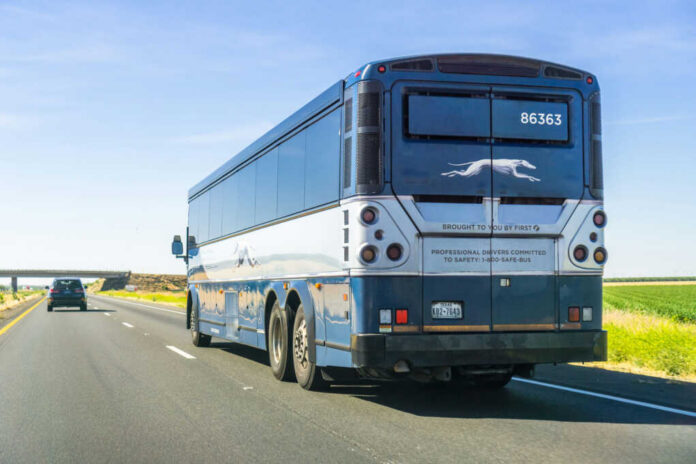
When a charter coach carrying an international airline crew flips across a divided urban expressway, killing two and injuring scores, it exposes not only the mechanical and human vulnerabilities of motorcoach travel but also the way modern media and investigation systems struggle to keep pace with public anxiety and speculation.
Key Points
- A chartered airport shuttle coach overturned on the Long Island Expressway in Queens after striking multiple vehicles, killing the driver and one passenger and injuring roughly 20 others.
- The National Transportation Safety Board (NTSB) and NYPD’s Collision Investigation Squad have opened a joint investigation; no cause has yet been identified, and basic facts like passenger count and bus destination remain incomplete.
- The bus was carrying the crew of a Royal Jordanian flight arriving at JFK and en route to a hotel, a detail confirmed by local reporting and the airline but initially absent from police briefings.
- Early coverage has focused on unverified claims about the driver’s criminal history and speculation about crash causes, illustrating a broader pattern in serious bus incidents where sensational details outstrip confirmed evidence.
A violent, complex crash in a constrained corridor
The Long Island Expressway (LIE) is not a rural interstate; it is an elevated, heavily trafficked urban artery threading through Queens, with concrete median barriers, short sight distances, and limited escape options when something goes wrong. Against that backdrop, the sequence described by police and local outlets is stark. Shortly before midnight, a chartered coach bus—operating as an airport shuttle—was traveling westbound when it first collided with two vehicles, then struck the center divider, overturned, and crossed into the eastbound lanes, where it impacted at least two more cars. In effect, a single loss of control propagated into a five‑vehicle, dual‑carriageway event in seconds.
The toll reflects that complexity. The driver of the bus and one passenger were pronounced dead at the scene. Between 18 and 20 other people were injured, with at least one driver in critical condition and many passengers treated for a spectrum of trauma, from minor to serious, at multiple Queens and Manhattan hospitals. Emergency response was correspondingly large: reports cite roughly 79 fire and EMS personnel, plus the NYPD Collision Investigation Squad, occupying and freezing the scene for hours while lanes in both directions were shut, causing backups that extended toward the Grand Central Parkway and effectively stranding motorists overnight.
Who was on the bus: airline crew, not tourists
One of the most salient—but initially uncertain—facts was who, exactly, the coach was carrying. Local television and digital outlets ultimately converged on a consistent account: the bus was a chartered airport shuttle occupied by the crew of Royal Jordanian Flight 8261, which had arrived at JFK from Amman earlier that evening. The crew, according to these reports and an airline statement, were being transported from the airport to their hotel when the crash occurred near the Greenpoint Avenue exit in Maspeth. Social media posts from aviation‑focused accounts and regional news channels amplified this framing, referring to “Royal Jordanian crew” and “airline flight crew” injured or killed in the crash.
This characterization matters for several reasons. Airline crews are subject to duty‑time limits, fatigue management rules, and employer oversight that differ markedly from those governing typical coach passengers; their transportation to and from airports is often arranged under long‑term contracts with ground service providers. A crash involving such a shuttle therefore implicates not only the bus operator and driver but also the airline’s contracting and oversight processes. Royal Jordanian’s statement that it was “actively monitoring and coordinating with authorities” signals that the investigation will have an international corporate dimension alongside local regulatory scrutiny.
What investigators know—and what they deliberately do not yet say
For the public, the most frustrating feature of serious crashes is often the investigative tempo. In this case, the NTSB has announced a formal highway investigation and stated that it is working with the NYPD to determine the cause. The NYPD Collision Investigation Squad remains on scene in the immediate aftermath, documenting physical evidence and vehicle positions, as is standard practice in fatal roadway incidents. Yet both agencies have been explicit: they are not prepared to offer even a preliminary causal narrative at this early stage.
The NTSB’s approach in highway cases mirrors its well‑established methods in aviation and other modes. Investigators document the scene, secure perishable evidence, and collect records; they then publish a preliminary factual report within roughly 30 days, followed by a full analysis and probable cause determination in a year or longer. In prior motorcoach crashes—such as the 2023 Farmingdale marching band bus in Orange County—the final report has drilled deep into mechanical issues, in that case finding that worn and underinflated tires on the steer axle led to loss of control and a fatal plunge down an embankment. The process is deliberately conservative about causal claims made before that evidentiary work is complete.
On the LIE crash, key factual gaps remain. Authorities have not released an authoritative passenger count, nor the final manifest, leaving only rough descriptions like “about two dozen” injured passengers. The bus company’s identity has not been publicly confirmed in early coverage, limiting outside scrutiny of maintenance records, prior violations, and safety culture. Perhaps most visually dissonant for lay observers, police and reporters on scene have acknowledged they do not yet know how the bus breached the concrete barrier separating the westbound and eastbound lanes. Until investigators marry skid marks, barrier damage, vehicle dynamics, and potential mechanical failures into a coherent reconstruction, any confident explanation is premature.
Mechanical failure, human error, and the bus safety playbook
Major bus crashes rarely have a single simple cause. The Farmingdale case is instructive: the NTSB did not stop at tire condition, but also highlighted seat belt non‑use—only one occupant was belted—and broader maintenance shortcomings as part of a multi‑factor causal chain. In highway motorcoach incidents generally, recurring themes include speed inappropriate to conditions, driver fatigue or distraction, impairment, equipment failures (particularly tires, brakes, or steering components), and roadway design elements that magnify the severity of loss‑of‑control events.
On the LIE, investigators will likely proceed through a familiar checklist. They will examine the bus’s left steer axle tire and wheel assembly for signs of tread or belt detachment, underinflation, or impact damage; steering linkage and suspension components for fracture patterns; and the braking system for functional status. They will retrieve maintenance logs and inspection histories from the operator and the New York State Department of Transportation to see whether defects were reported—or missed—in prior shop visits. Parallel to the mechanical work, they will scrutinize the driver’s duty schedule, medical fitness, and licensing record, and obtain toxicology results as routine practice.
Because the crash involved multiple vehicle contacts before the overturn, the sequence of impacts will be crucial. Did the bus first strike a car in its own lane due to inattention or a sudden obstruction, setting off a chain that pushed it into the barrier? Or did a mechanical failure—such as a blowout or steering loss—swerve it into traffic where subsequent collisions were essentially secondary? Witness statements from passengers and drivers of the struck vehicles, and any dashcam or traffic camera footage obtainable through subpoenas or FOIA requests, will be vital to resolving that question.
Media speculation and the lure of the driver’s backstory
Even as investigators publicly refrain from causal claims, early media reporting often rushes into the gap with highly specific but poorly sourced assertions—particularly about the driver. In this case, one outlet citing unnamed sources reported that the bus driver “has seven prior arrests, including for burglary, sexual abuse and forcible touching” and is a registered level‑2 sex offender. At the time such claims surfaced, neither the NYPD nor the NTSB had confirmed or denied them, and the driver’s identity had not been formally released pending family notification.
This pattern is not unique to the LIE crash. Studies of major transportation disasters have found that a majority of early stories highlighting criminal histories or sensational personal details rely on anonymous sources and often remain unconfirmed or are later quietly corrected. The incentive structure is straightforward: in an attention‑driven digital news economy, a narrative about a driver with a troubling past is more likely to be clicked and shared than a dry account of an incomplete investigation. Yet from a safety perspective, the fixation on alleged priors can be misleading. Prior arrests, even if accurate, do not automatically explain a specific crash; focusing on them can obscure systemic issues like equipment maintenance, contract oversight, or infrastructure design that recur across incidents and are amenable to policy remedies.
Confusion with past NTSB cases and the importance of specificity
Another subtle but consequential problem has been the conflation of this LIE crash with previous NTSB‑investigated bus incidents in search results and some coverage. Case identifiers such as HWY23FH005 and HWY23FH016 refer to distinct crashes—Louisville, Wawayanda, and others—that have their own fact patterns, timelines, and findings. When these labels are loosely associated with the Queens crash, they create factual noise that blurs public understanding and can even contaminate casual commentary with details from unrelated events.
For lay readers, the takeaway is simple: every NTSB highway case number is unique. Similarities across cases—tire failures, driver fatigue, seat belt non‑use—are analytically important, but they should be treated as patterns identified after careful study, not as interchangeable storylines applied wholesale to any new crash. For investigators and serious observers, maintaining that specificity is essential to making sound comparisons and avoiding the narrative creep that can bias both policy discussions and jury pools.
Two Killed After Bus Carrying Royal Jordanian Crew Overturns in New York
Two people, including a Royal Jordanian crew member, were killed and 20 others injured after a shuttle bus transporting the airline's flight crew overturned in a multi-vehicle crash in New York City.
The… pic.twitter.com/hJamtV0202
— AirwayBuzz (@AirwayBuzz) July 1, 2026
What this crash signals about motorcoach risk and accountability
For residents of Queens and Long Island, the most immediate legacy of the crash may be visceral: memories of being trapped for hours on the elevated LIE, of sirens and floodlights, of seeing a coach on its side against a concrete barrier where separation from oncoming traffic should have been absolute. But the systemic stakes extend further. Motorcoaches remain a critical part of the transport system connecting airports, cities, and suburbs. When a chartered shuttle carrying professional airline crew can, in a single event, kill two people and injure dozens while breaching a median designed to prevent cross‑over collisions, it demands renewed scrutiny of how these vehicles are operated and regulated.
That scrutiny must be evidence‑led. It will likely encompass the bus operator’s safety record and maintenance regime, Royal Jordanian’s contracting practices for crew transport, the physical design of the LIE segment where the crash occurred, and broader enforcement of seat belt use and speed limits on motorcoaches. It will also invite a more disciplined conversation about how we talk about such incidents in the crucial early days—distinguishing between what is known, what is plausible but unproven, and what is simply rumor.
The NTSB and NYPD have signaled, by their presence and their public posture, that they intend to build that factual foundation before naming a cause. The most responsible response—for policymakers, for media, and for the public—is to let that process run its course, then demand that its findings be translated into tangible safety improvements rather than fading into the background until the next siren on the expressway cuts through the night.
Sources:
nypost.com, katu.com, ntsb.gov, youtube.com, nytimes.com, instagram.com, idahonews.com, reddit.com