With TSA officers working unpaid during a shutdown, President Trump’s move to send ICE into airport security lines is exposing just how brittle Washington’s “essential services” become when Congress refuses to fund them.
Quick Take
- A partial government shutdown that started Feb. 14 has left roughly 50,000 TSA employees without pay and contributed to major staffing strain.
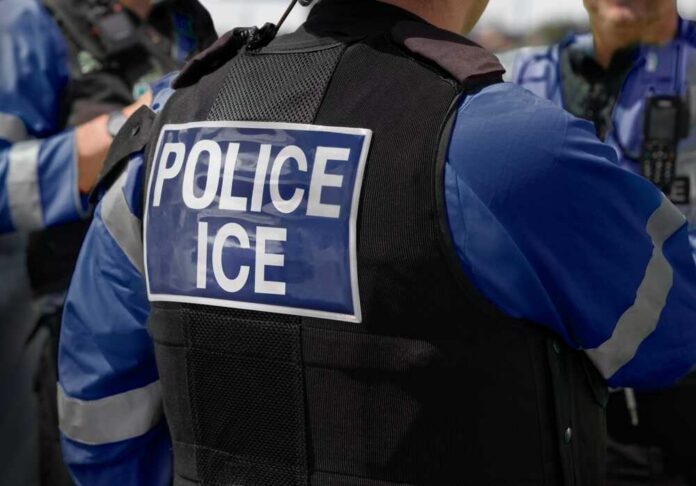
- President Trump announced ICE agents would deploy to U.S. airports starting Monday, with a mission that includes assisting security operations and arresting illegal immigrants.
- The TSA union says swapping in ICE is unsafe because ICE agents are not trained for aviation screening and because leadership has provided little operational clarity.
- Airports and industry voices report spotty federal communication as spring-break crowds magnify security lines and passenger frustration.
Shutdown Pressure Hits the Checkpoint, Not the Politicians
Federal airport security has been squeezed since the partial government shutdown began Feb. 14, tied to a congressional fight over DHS and ICE funding. Reports cite hundreds of TSA employees quitting and increased sick call-outs, leading to long lines at major airports during peak spring travel. The immediate impact has landed on working families—TSA officers missing paychecks—while travelers face delays that test patience and raise questions about whether core government functions are being treated as bargaining chips.
President Trump escalated the standoff Saturday with a Truth Social announcement saying ICE would deploy to airports starting Monday unless Democrats moved to fund DHS. His message framed the move as strengthening security and enabling immigration enforcement, including arrests of illegal immigrants at airports. By Sunday, Trump border advisor Tom Homan confirmed ICE was expected at airports “as soon as Monday,” while also describing the plan as a “work in progress,” a sign the rollout may be uneven.
ICE at Airports: Clear Enforcement Mission, Unclear Operational Plan
Officials and airport representatives described limited guidance reaching airports ahead of the expected Monday deployment. Multiple reports said the idea surprised parts of DHS and ICE, with internal uncertainty about what agents would actually do at checkpoints or in terminals. That uncertainty matters because TSA screening is a specialized, procedure-heavy job with strict training and compliance requirements. If responsibilities blur between screening, law enforcement, and immigration actions, confusion at the checkpoint can quickly become a security vulnerability.
The American Federation of Government Employees, which represents TSA officers, argued the plan “cannot” be improvised and warned ICE agents lack the training necessary for aviation security screening. The union’s core complaint is straightforward: the answer to staffing shortages is paying trained TSA personnel and stabilizing the workforce, not substituting a different federal agency under crisis conditions. From a limited-government perspective, the episode is a case study in how dysfunction in budgeting creates ad-hoc executive workarounds that can expand federal power in messy, unaccountable ways.
Political Reactions Split Along Familiar Lines
Democratic leaders blasted the proposal as dangerous, predicting it would worsen airport chaos and raising civil-liberties concerns about armed immigration agents in high-volume public travel spaces. The ACLU similarly criticized the move as an expansion of deportation-focused enforcement rather than a solution to airport throughput and safety. Those critiques reflect a broader debate about federal policing powers in everyday life. The available reporting does not confirm how agents will be positioned, what authorities they will exercise, or how travelers will be informed.
Industry voices focused less on political rhetoric and more on basic continuity of operations. Airlines and flight unions urged Congress to fund DHS and restore pay, warning that untrained substitutions and unclear lines of authority could disrupt travel further. Local reporting from an ABC affiliate captured mixed traveler reactions: some passengers supported any help that might shorten lines, while others questioned whether ICE has the right training for screening tasks. Those perspectives underline the same reality—travelers want safety and speed, and they want competence, not improvisation.
What This Means for Security, Immigration, and Constitutional Guardrails
The strongest verified facts are the shutdown timeline, the unpaid TSA workforce, Trump’s announced ICE deployment, and the union’s warning about training and operational risk. The biggest unknown is execution: what ICE will actually do at airports starting Monday, and whether TSA screening duties will be altered. Conservatives who value order and constitutional limits should watch for clear written guidance, defined roles, and oversight. Without that, the country risks normalizing emergency-style federal expansions that occur because Congress wouldn’t do its basic job.
Congress can end the immediate crisis by funding DHS and ensuring TSA employees are paid, which would reduce attrition and stabilize screening operations. Until then, travelers should expect uneven conditions across airports, with some locations reporting minimal impact and others seeing long lines. The reporting also suggests the Monday deployment may begin without a uniform national playbook, increasing the chances of confusion at high-traffic checkpoints. Limited data is available on actual day-one results, and airport confirmations remain sparse as the rollout begins.
Sources:
Trump border advisor says ICE to deploy to U.S. airports Monday
Trump ICE airports partial government shutdown
Trump threatens to deploy ICE agents to airports as DHS funding fight drags on