A Colorado appeals court just exposed how politicized prosecutions can twist the justice system, tossing key homicide convictions against two paramedics in the Elijah McClain case and forcing the state to start over.
Story Snapshot
- An appeals court reversed criminally negligent homicide convictions for two Colorado paramedics in Elijah McClain’s death and ordered new trials.
- Judges found the trial court used faulty jury instructions on criminal negligence, undermining the original verdicts.
- The state Attorney General continues to defend the prosecutions, keeping politics and “social justice” pressure in the mix.
- The ruling raises serious questions about criminalizing medical judgment and empowering activist-driven prosecutions.
Appeals Court Reverses Homicide Convictions And Orders New Trials
The Colorado Court of Appeals has reversed the criminally negligent homicide convictions of former Aurora Fire Rescue paramedics Jeremy Cooper and Peter Cichuniec in connection with the 2019 death of Elijah McClain.[1][3] The panel sent those counts back for new trials, meaning the state must retry the homicide charges if it wants to keep pursuing them.[1][3] Reporting explains that the judges concluded the trial court made an error in how it instructed the jury on the law of criminal negligence.[3]
Coverage describes the decision as focused on the legal standards given to jurors, not a declaration that the paramedics’ actions were proper or improper as a matter of fact.[3] The appeals court ruling underscores that even in highly emotional, nationally watched cases, the state still must follow the rules of due process and accurately explain the law before it can send first responders to jail.[3] The homicide counts now return to the trial court, where prosecutors must decide whether to push ahead.
How We Got Here: Original Convictions In A Politicized Case
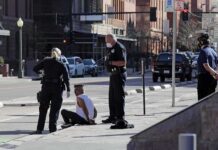
Elijah McClain, a 23‑year‑old Black man, was stopped by Aurora police in 2019 after a 911 call described a suspicious person, then was restrained and later injected with the sedative ketamine by responding paramedics.[1][2] He went into cardiac arrest on the way to the hospital and died several days later, sparking years of protests, national media coverage, and intense political pressure on Colorado authorities.[1] After renewed investigation, an Adams County jury in 2023 convicted Cooper and Cichuniec of criminally negligent homicide.[2][3]
The City of Aurora’s official case timeline notes that both paramedics were found guilty of criminally negligent homicide, and that Cichuniec was also convicted of second‑degree assault for unlawful administration of drugs based on the ketamine injection.[2] Sentencing followed in early 2024, with Cichuniec receiving a jail term.[1][2] These prosecutions were brought by the Colorado Attorney General’s office, which portrayed the case as a necessary step toward accountability and reform in the aftermath of McClain’s death and subsequent public outcry.[3]
What The Appeals Court Actually Said About The Trial
According to reporting on the decision, the Colorado Court of Appeals identified problems in the jury instructions that defined criminally negligent homicide for the panel that convicted the paramedics.[3] Judges concluded that the trial court’s language did not correctly capture the legal threshold that must be met before medical responders can be branded criminals for on‑scene decisions.[3] Because jurors were guided by an inaccurate statement of the law, the convictions on those charges could not stand and had to be reversed.[3]
Importantly, the appeals court did not erase all findings against the defendants.[3] Coverage indicates that at least one conviction related to second‑degree assault for unlawful drug administration was upheld, reflecting the court’s conclusion that, on that specific count, the jury was properly instructed and the evidence was sufficient.[3] This split outcome shows the panel was not simply “letting everyone off,” but was carefully separating legal error from lawful verdicts, which is exactly what an appellate court is supposed to do in a constitutional system.
Attorney General Stands By The Prosecutions Amid Rule‑Of‑Law Concerns
Despite the setback, Colorado Attorney General Phil Weiser publicly defended his office’s decision to prosecute the paramedics and pledged to continue fighting in the appeals process.[2][3] In a televised statement, he emphasized that a jury had convicted the men for McClain’s death and called bringing the cases to trial “the right thing to do” for justice and community healing.[2] His response signals that the state remains committed to treating the incident as criminal, not just a tragic medical and tactical failure.[2][3]
A Colorado court reversed homicide convictions against two paramedics on Thursday in the 2019 death of Elijah McClain, a Black man who was pinned down by police and injected with a fatal dose of ketamine. McClain's final words — "I can't breathe" — foreshadowed those of George… pic.twitter.com/tmG6WDAQD2
— IG: RahiemShabazz (@rahiemshabazz) June 6, 2026
For many conservatives, this posture reinforces concerns that high‑profile prosecutions of police and emergency personnel are increasingly driven by politics and media narratives rather than neutral application of law. The McClain case emerged in the same climate that saw broad “defund the police” pushes and sweeping police‑reform demands nationwide.[1][2] When an appellate court has to step in and correct basic jury‑instruction errors in such a charged environment, it raises hard questions about whether due process is being sacrificed to appease activist pressure and advance ideological agendas.
Sources:
[1] YouTube – Colorado court orders new trials for 2 paramedics found guilty in …
[2] Web – Killing of Elijah McClain – Wikipedia
[3] Web – The Elijah McClain Case – City of Aurora