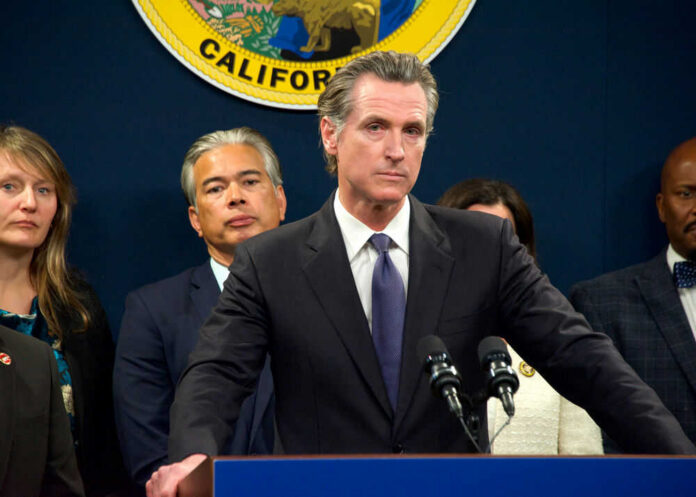
California Governor Gavin Newsom just signed a billion-dollar clean energy deal with a foreign government while the United States withdrew from international climate agreements, and critics are questioning whether he’s building a presidential platform or overstepping his authority as a state governor.
Story Snapshot
- Governor Newsom signed a climate partnership with the UK on February 16, 2026, securing nearly $1 billion from British energy company Octopus Energy for California clean-tech investments
- The deal positions California as an independent climate actor after Trump withdrew the U.S. from the UN Framework Convention on Climate Change
- Critics including Trump called the partnership “inappropriate,” citing California’s failed high-speed rail project and population exodus as evidence of governance failures
- The partnership aims to expand market access for British firms in California while boosting transatlantic research collaboration on offshore wind and smart grid technologies
- California’s clean energy sector created jobs three times faster than the rest of the state’s economy, mirroring UK trends where net-zero industries grew three times faster than overall economic growth
A State Governor’s International Diplomacy Raises Eyebrows
Governor Newsom traveled to London to sign a Memorandum of Understanding with UK Energy Secretary Ed Miliband, creating what both governments describe as a “refreshed framework” for clean energy cooperation. The agreement strengthens partnerships between research institutions, accelerates technology development for offshore wind and smart grid systems, and commits both jurisdictions to conserving 30% of lands and coastal waters by 2030. California boasts a 2,100% increase in battery storage since Newsom took office, reaching 17,000 megawatts, representing one-third of the storage capacity needed to achieve 100% clean electricity by 2045.
The Billion-Dollar Commitment Nobody Expected
Octopus Energy’s nearly $1 billion investment commitment targets California companies developing clean technologies and nature-based solutions. CEO Nick Chaset highlighted existing work with Southern California Edison on the Octopus Shift app, which supports EV and home battery grid integration. The company sees the MOU as opening opportunities to deploy smart technology that cuts energy bills while improving customer experience. British firms gain expanded access to California’s massive energy market, while California attracts foreign capital amid federal climate policy reversals. The partnership creates skilled job opportunities in both jurisdictions while positioning UK businesses for competitive advantages in a state with 39 million residents.
Trump Calls the Deal Inappropriate
Trump wasted no time criticizing the partnership, warning that “if they did to the U.K. what he did to California, this will not be a very successful venture.” His criticism pointed to California’s population outmigration and the notoriously delayed high-speed rail project as evidence that Newsom’s governance track record doesn’t justify international investment partnerships. The timing amplifies the political tension: Newsom positioned as a likely 2028 Democratic presidential contender is conducting foreign policy while Trump’s administration withdrew America from international climate frameworks. The governor’s actions raise legitimate questions about whether state executives should negotiate bilateral agreements with foreign nations, regardless of one’s position on climate policy.
The Numbers Tell a Complicated Story
California’s clean energy sector expansion delivers impressive statistics that deserve scrutiny. The state added over 30,000 megawatts of new resources to the electric grid under Newsom’s administration, with clean energy jobs growing three times faster than employment elsewhere in California’s economy. The UK mirrors these trends, with its net-zero economy expanding three times faster than overall GDP in 2024. These growth rates suggest genuine market momentum beyond government mandates. However, California consumers still face some of America’s highest electricity rates, and the state experienced rolling blackouts during heat waves. The partnership promises to cut energy bills through smart grid technology, but skeptics rightfully question whether adding complexity through international coordination will reduce costs or increase them.
The biodiversity component commits California to protecting 30% of lands and coastal waters by 2030, a goal that intersects with ongoing debates about forest management, wildfire prevention, and agricultural water rights. Conservation targets sound appealing until implementation requires restricting land use, limiting development, or redirecting water from farms to ecosystems. The MOU lacks specifics about how these conservation goals will balance with California’s housing crisis and agricultural industry needs. Nature-based solutions and biodiversity protection are worthwhile objectives, but the devil lives in the regulatory details that will determine whether landowners face new restrictions or receive incentives for stewardship.
Research Collaboration or Crony Capitalism
The partnership strengthens relationships between UK and California research institutions while accelerating technology development for offshore wind and other clean energy systems. Academic collaboration typically produces valuable innovation, and connecting researchers across the Atlantic could yield breakthroughs in energy storage, grid management, and renewable generation. Yet the agreement also guarantees British firms expanded market access to California, raising questions about whether taxpayers are subsidizing foreign companies or genuinely attracting competitive investment. Octopus Energy already works with Southern California Edison, suggesting the company would have pursued California opportunities regardless of government involvement. The MOU formalizes relationships that market forces were already creating, which supporters view as removing barriers and critics see as government picking winners.
California’s approach reflects broader tensions about state versus federal authority on climate policy. Newsom positions California as reassuring U.S. allies about climate commitment independent of federal policy shifts. States possess authority to regulate within their borders and attract foreign investment, but conducting what resembles foreign policy traditionally falls under federal purview. The partnership tests constitutional boundaries about whether governors can effectively negotiate treaties with foreign governments on matters affecting international commerce and environmental standards. The legal questions matter regardless of whether one supports aggressive climate action or prefers market-based energy development.
What Success Actually Looks Like Remains Unclear
The partnership’s effectiveness depends on whether Octopus Energy’s $1 billion commitment materializes into operational projects that deliver measurable results. Investment announcements frequently exceed actual deployment, and the timeline for spending nearly $1 billion across multiple California clean-tech projects remains unspecified. The 2030 conservation target provides a deadline for the biodiversity component, but metrics for success beyond percentage of protected lands aren’t defined. California consumers will judge the partnership by whether their electricity bills decrease and blackout risks diminish, not by memorandums signed in London. UK businesses will measure success through profitable market expansion, not diplomatic photo opportunities.
The criticism Newsom faces reflects legitimate concerns about California’s execution capacity on major infrastructure projects. The high-speed rail system became a cautionary tale about ambitious announcements disconnected from practical implementation. Population outmigration from California to states like Texas and Florida suggests residents vote with their feet when costs exceed benefits. These track records justify skepticism about whether adding international coordination layers will improve outcomes or create additional complexity that delays results. The partnership could demonstrate that state-level climate diplomacy delivers tangible benefits, or it could become another example of California politicians prioritizing symbolism over substance. Time will reveal which outcome prevails, but critics asking tough questions about effectiveness perform a valuable service regardless of their political motivations.
Sources:
Trump calls Gavin Newsom’s clean energy deal with the U.K. ‘inappropriate’
UK and California deepen ties on clean energy to boost investment