California’s snowpack plummeted to just 18% of average as the state enters fire season, creating a tinderbox scenario that scientists warn represents some of the most dangerous wildfire conditions in over a century while threatening water supplies for millions.
Story Snapshot
- Snowpack at critically low 18% of average amplifies drought and wildfire risks across California entering dry season
- Seven Southern California counties face extreme fire danger with vegetation moisture at 2-5% of average, worst conditions since 1992-1993
- Weather whiplash from 2022-2023 wet years followed by 2024 record heat created explosive fuel loads that ignited devastating LA fires January 2025
- Long-term water security threatened as Northern California communities dependent on snowmelt face unprecedented supply challenges
Unprecedented Weather Whiplash Creates Perfect Storm
California faces catastrophic wildfire and drought conditions as the state transitions into the 2025 dry season with snowpack measuring just 18% of normal levels. UCLA researchers released findings showing the wet-to-dry swing represents only the fourth such “weather whiplash” event since records began in 1907-1908, with current conditions exceeding anything seen since 1992-1993. The Orange County Fire Authority reported vegetation moisture levels at 2-5% of average across seven Southern California counties, pushing the region into what scientists describe as an “off the charts” danger zone. These extreme conditions set the stage for the devastating LA-area fires that ignited January 7, 2025.
Climate-Driven Cycle Turns Vegetation Into Explosive Fuel
The 2022-2023 wet winters fueled explosive brush and grass growth across California’s wildland areas, creating dense vegetation that appeared to signal recovery from years of drought stress. However, record heat and near-zero rainfall throughout late 2024 and early 2025 transformed that lush growth into tinder-dry fuel loads primed for ignition. Yale researchers documented how decades of climate-amplified drought combined with the recent wet period and subsequent extreme drying created conditions for wind-driven megafires. The California Department of Fish and Wildlife notes that vegetation stress persists even after wet years because plants recover slowly, leaving forests and chaparral vulnerable to rapid moisture loss when heat returns.
Water Security Threatens Northern Communities
The critically low snowpack poses severe long-term threats to California’s water infrastructure, particularly for Northern California communities relying on local water systems dependent on mountain snowmelt. California ranks second nationally for drought risk, and the diminished snowpack amplifies stress on agricultural operations, grazing lands, and municipal water supplies. The USDA Climate Hubs documented how reduced snowpack correlates directly with increased wildfire severity and extended fire seasons, creating compounding pressures on water resources. Warmer temperatures linked to climate patterns reduce snowpack accumulation while simultaneously accelerating spring melt, leaving reservoirs vulnerable during critical summer months when demand peaks and fire danger intensifies.
State Agencies Scramble as Fire Season Intensifies
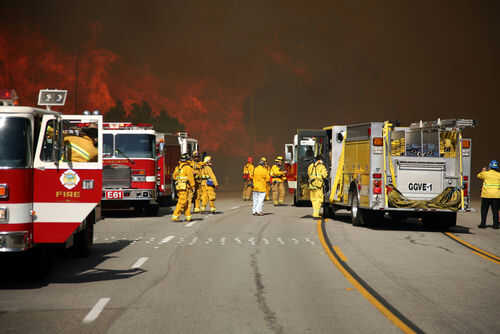
CAL FIRE and the California Department of Water Resources have prioritized defensible space creation and dead vegetation removal as mitigation strategies, building on the Governor’s 2019 State of Emergency declaration that expedited forest management projects. Fire crews remain on high alert guarding active fires smoldering across Los Angeles County amid ongoing red flag wind warnings. State agencies hold regulatory authority to issue waivers for emergency fuel reduction projects, though tensions persist between rapid response needs and environmental protection protocols. The Orange County Fire Authority’s public information officer confirmed fuel moisture levels have dropped below critical thresholds, designating dry canyons near residential areas at “extreme” danger levels as wind conditions threaten to drive fires into populated wildland-urban interface zones.
Economic and Health Impacts Mount
Short-term consequences include massive fire suppression costs, property losses, and mandatory evacuations displacing thousands of residents from homes near wildland areas. Health risks intensify through smoke exposure and dehydration threats as heat combines with poor air quality during active fire events. Long-term implications extend to forest degradation, tree mortality from prolonged drought stress, and water scarcity affecting agricultural and industrial operations. Insurance companies face mounting losses in wildland-urban interface areas where housing expansion continues despite escalating risks. The forestry sector confronts increased vulnerability as climate change extends fire seasons and reduces recovery periods between drought cycles, fundamentally altering ecosystem dynamics across California’s diverse landscapes.
The convergence of record-low snowpack, extreme vegetation dryness, and climate-driven weather whiplash represents a dangerous new normal for California. Scientists emphasize that wet years no longer erase the cumulative stress from decades of drought intensification, leaving the state perpetually vulnerable to rapid fuel drying when heat returns. As 2026 progresses under the Trump administration’s second term, questions emerge about federal wildfire management funding and climate policy priorities that directly impact California’s ability to address these compounding environmental challenges threatening lives, property, and essential water resources.
Sources:
California Department of Fish and Wildlife – Wildfire Impacts
CalMatters – Dry Danger Zone California Fires Climate Change
Yale School of Public Health – When Climate and Health Collide
Wildfire Task Force – Water Security Northern California
USDA Climate Hubs – Drought and Forests in California
Ready for Wildfire – Defensible Space Drought
Drought.gov – Wildfire Management
UCLA Luskin – Californians Concern About Climate Change Hazards