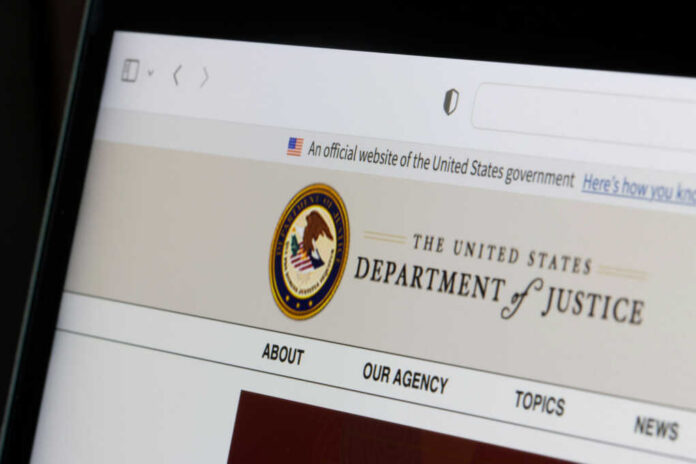
The Justice Department’s warning that state election officials can be criminally charged over noncitizen voting is less a response to a demonstrated crisis than the latest move in a long-running political struggle over who controls election rules and how aggressively rare violations should be policed.
Key Points
- Federal law already makes noncitizen voting and false claims of citizenship a crime; the DOJ’s letters restate those rules and extend liability to election officials who “knowingly” keep noncitizens on voter rolls.
- Empirical studies and state audits consistently find noncitizen voting to be exceedingly rare, often attributable to data errors rather than intentional fraud.
- The Trump-era DOJ is demanding rapid state responses and access to unredacted voter registration databases, triggering lawsuits, court pushback, and accusations of political intimidation.
- The clash is less about whether noncitizen voting is illegal—it plainly is—and more about whether federal threats and mass data sweeps improve election integrity or primarily serve a broader political narrative.
The DOJ Letters: What They Say and What They Threaten
The starting point is straightforward: noncitizens cannot legally vote in U.S. federal elections, and federal statutes make both illegal voting and fraudulent registration criminal offenses. The Illegal Immigration Reform and Immigrant Responsibility Act of 1996, together with 18 U.S.C. § 611 and 52 U.S.C. § 20511, authorizes fines and up to one year of imprisonment for a noncitizen who votes in a federal election and criminalizes knowingly false claims of citizenship to vote. Those provisions have been on the books for decades.
What is new is the Department of Justice’s decision to send formal, three‑page letters to election officials in all 50 states and Washington, D.C., warning that not only voters but also election officers can face criminal liability. The letters, signed by Assistant Attorney General Harmeet Dhillon of the Civil Rights Division, declare that any election officer who “knowingly retains noncitizens” on the statewide voter registration list or assists them in voting could be prosecuted. They demand that states respond within five days explaining how they will ensure compliance with federal eligibility rules, both at the state and local level.
In parallel, the DOJ has sued multiple states for access to complete, unredacted voter registration databases, arguing it needs this data to verify that only citizens are on the rolls. Illinois and several other states have confirmed they are reviewing these demands and related litigation. In short, the department is trying to pair legal threats with large‑scale data collection, backed by the possibility of criminal charges against public officials.
How Election Law Normally Handles Noncitizen Voting
To understand what is at stake, it helps to separate the legal baseline from the current rhetoric. Under federal law and virtually all state constitutions, only U.S. citizens may vote in federal and most state elections; a handful of local jurisdictions permit lawful permanent residents to vote in certain municipal contests, but those carve‑outs are narrow and well‑defined. The National Voter Registration Act of 1993 (NVRA) requires states to maintain accurate, single statewide voter registration lists and to remove ineligible voters through systematic programs—but also imposes a “quiet period” in the 90 days before a federal election, during which mass purges are forbidden to prevent eligible voters from being wrongly removed.
States already run routine list maintenance programs, drawing on motor vehicle records, death registries, and immigration data where permitted. Many allow challenges to individual voter eligibility, and some—notably Arizona—require proof of citizenship for registration in state and local elections. Federal prosecutions for noncitizen voting do occur, but they are typically small‑scale—individual cases where someone voted while still an alien or made false statements during naturalization. The Bipartisan Policy Center and Migration Policy Institute both emphasize that there is no evidence noncitizen voting has ever altered the outcome of a U.S. election.
In that landscape, the DOJ letters do not change the underlying law; they change the enforcement posture. They signal that prosecutors are willing to treat election administrators themselves as potential criminal defendants if those administrators are deemed to have “knowingly” allowed noncitizens to remain on the rolls.
What the Evidence Shows About Noncitizen Voting
The core factual point in dispute is not whether noncitizen voting is legal—it is not—but whether it is occurring at a scale that warrants an aggressive federal crackdown. On that question, the empirical record is remarkably consistent across ideologically diverse sources.
A Brennan Center review of 42 jurisdictions after the 2016 election identified just 30 suspected instances of noncitizen voting—roughly 0.0001 percent of ballots cast. The Bipartisan Policy Center describes noncitizen registration as rare and actual noncitizen voting as even less common. A compilation by the Heritage Foundation, which advocates stricter enforcement, found on the order of 100 proven noncitizen voting cases across more than four decades. State audits align with these findings: Utah’s review found zero noncitizen ballots; Louisiana’s examination of 74 million ballots over 40 years yielded only 79 potential cases, many of which turned out to be misclassifications.
One reason apparent “noncitizen” records often evaporate on closer inspection is data matching error. The SAVE program—a federal system used to verify immigration status—has repeatedly generated false positives when used for voter roll checks, flagging naturalized citizens who registered to vote at their own naturalization ceremonies as potential noncitizens. St. Louis County, Missouri reported that roughly 35 percent of voters flagged as noncitizens by such matching were, in fact, newly naturalized citizens. When large datasets are cross‑referenced—DMV records, Social Security, immigration databases—small discrepancies, typographical errors, and timing issues can easily misidentify eligible voters as ineligible.
Even DOJ’s own civil filings under other administrations have acknowledged this reality. When the department sued Virginia and Alabama over pre‑election list maintenance practices, its complaint explicitly stated that “there is no evidence of widespread noncitizen voting in the United States,” while still insisting that only citizens may vote. That admission is important: it comes from the same institution now warning of criminal exposure for election officials.
Federal Demands, State Resistance, and the Courts
The Trump‑era DOJ campaign sits atop this empirical foundation but moves in a different direction. Rather than treating noncitizen voting as an occasional, serious but limited problem, the department has framed it as a significant risk to election integrity and has sought expansive tools to address it. That includes lawsuits demanding unredacted voter rolls containing sensitive information such as partial Social Security numbers and immigration status, and letters that hint at future criminal prosecutions if states do not comply.
States have pushed back. Many have refused to provide unredacted databases, citing privacy obligations and the risk that federal data sweeps will produce inaccurate lists, leading to eligible voters being wrongfully removed. Several federal courts have rejected DOJ efforts to compel disclosure, with at least 11 lawsuits dismissed, including cases against Arizona and other states. In Georgia, a federal judge blocked a DOJ attempt to obtain personal information on county election workers as part of a broader investigation.
This judicial resistance underscores an important structural point: elections in the United States are primarily administered by states and local governments, not by the federal apparatus. The NVRA gives the DOJ some supervisory authority, but it does not grant carte blanche access to all underlying data or authorize federal officials to dictate every aspect of list maintenance. The current standoff is, at bottom, a federalism dispute about how far the Justice Department can go in imposing its preferred enforcement agenda on state systems designed with different priorities.
Intimidation, Burnout, and the Human Factor in Election Administration
Beyond law and statistics, the DOJ letters land in a human context. Local election officials—often career administrators or county clerks rather than politicians—are managing complex operations under tight timelines. They are already bound by state and federal law to prevent ineligible voting, yet they operate in an environment of shrinking budgets, volatile public expectations, and heightened threats.
Interviews compiled by Votebeat, PBS NewsHour, and Democracy Docket show many administrators describing the DOJ letters as intimidation rather than helpful guidance. They stress that they are already committed to ensuring only eligible voters cast ballots and that they see no evidence of widespread noncitizen voting in their jurisdictions. Some note the practical difficulty of even locating the letters, which in several states were sent to generic inboxes rather than to named officials, underscoring the disconnect between Washington’s demands and local realities.
These officials also report profound fatigue and burnout. Each new round of federal data requests and short‑fused demands for compliance plans adds work that is tangential to their core mission of administering elections, particularly when it arrives in the middle of an election calendar. They worry that the threat of personal criminal liability—tied to ambiguous standards of what counts as “knowing” retention of a noncitizen on the rolls—will discourage qualified people from serving in election roles or push experienced administrators into early retirement.
Politics, Perception, and the Battle Over Election Narratives
None of this happens in a vacuum. The Trump administration has repeatedly framed noncitizen voting and voter fraud more broadly as a central threat to American democracy, despite the lack of evidence of large‑scale violations. Homeland Security has been directed to re‑examine immigrant‑related voter fraud cases and even explore revoking citizenship for those who voted before naturalization. Legislative efforts like the SAVE Act, which applies immigration verification tools to voting, are championed by allies as necessary safeguards and criticized by opponents as voter suppression mechanisms aimed at naturalized citizens and minority communities.
The DOJ letters therefore serve a dual function. Legally, they restate existing prohibitions and signal a willingness to pursue new classes of defendants—election administrators—for alleged laxity. Politically, they reinforce a narrative that current election systems are dangerously porous and that only aggressive federal intervention can restore “confidence” in results. That narrative can shape public perception even if prosecutions never materialize or if courts continue to limit the department’s access to data.
Critics—including major media outlets and voting rights organizations—argue that the campaign targets a problem that empirical research shows does not exist at any significant scale. They warn that mass data sweeps, aggressive list maintenance, and threats of criminal charges will likely have a more pronounced effect on eligible voters wrongly flagged, and on the administrators tasked with sorting those flags, than on the tiny number of genuine noncitizen voters. Supporters respond that even rare violations are unacceptable, that federal law must be enforced, and that the mere possibility of unlawful votes justifies stringent precaution.
What Integrity Looks Like When the Problem Is Rare but Real
For an informed observer, the most responsible stance sits between complacency and alarmism. Noncitizen voting is both illegal and, in documented cases, real; the statutes DOJ cites exist for good reason, and occasional prosecutions under those laws are appropriate. At the same time, the best available evidence shows that the incidence of such voting is vanishingly small, and that aggressive, poorly calibrated enforcement—especially using error‑prone databases—poses a greater risk to eligible voters and to the functioning of election administration than to the integrity of vote counts themselves.
In practice, election integrity depends less on sweeping federal campaigns than on careful, ongoing work: states maintaining accurate lists using high‑quality data; robust procedures for correcting errors; targeted investigations of credible allegations; and clear, stable rules for administrators to follow. Where federal oversight is necessary, it works best when grounded in transparent evidence, cooperative relationships, and respect for the limits of data matching technologies, rather than broad threats issued on short deadlines.
The DOJ’s warnings to state election officials highlight a genuine legal boundary—only citizens may vote—but they also reveal how quickly questions of enforcement can become entangled with political aims and public narratives. For citizens concerned about both the integrity and accessibility of elections, the task is to scrutinize not just the laws on the books, but the methods and motives behind how those laws are enforced.
The DOJ has warned state election officials about potential criminal charges over alleged noncitizen voting. Letters sent to all states demand compliance with federal voter laws. Despite rare instances of noncitizen voting, the DOJ's actions have … https://t.co/pVO0AJQnVj pic.twitter.com/OPY0BT1Ek9
— NewsRadio WKCY – 107.9 FM (@newsradiowkcy) July 9, 2026
Further Questions for a Durable Election System
Two sets of questions will determine whether this episode leads to more durable, trusted election systems or simply to another cycle of controversy. First, can independent audits of unredacted voter rolls, conducted with rigorous methodology and appropriate privacy safeguards, validate or refute claims about noncitizen registration without inflating error‑driven numbers? Second, can policymakers and courts clarify the threshold for “knowing” retention of noncitizens on voter lists in a way that is fair to election officials who must work through imperfect data?
Answers rooted in evidence rather than rhetoric would go a long way toward lowering the temperature of the debate. They would also help ensure that efforts to enforce the law do what they are supposed to do: deter and punish real violations without eroding the participation of the citizens the system is meant to serve.
Sources:
zerohedge.com, capitolnewsillinois.com, nytimes.com, democracydocket.com, facebook.com, youtube.com, opb.org, fairelectionscenter.org, sciencedirect.com, bipartisanpolicy.org, migrationpolicy.org, brennancenter.org, ballotpedia.org, votebeat.org