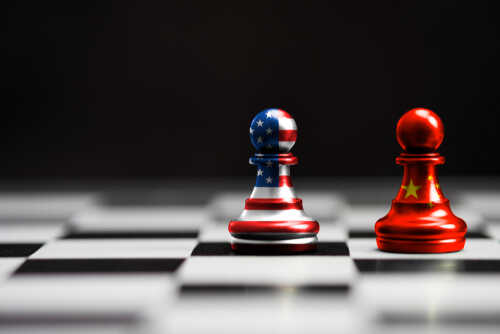
While Americans celebrate a renewed sense of global respect under President Trump, survey data reveals a troubling paradox that exposes the true state of America’s standing in a world where China exploits every opportunity to expand its influence.
Story Highlights
- 56% of Americans believe the U.S. is respected worldwide, yet 52% simultaneously say American influence is declining
- Republicans shifted dramatically from only 10% believing U.S. influence was growing in 2024 to 34% by May 2025
- China emerged as the clear winner from Trump administration’s tariff policies, pushing India and Brazil closer to Beijing
- 76% of Americans still recognize the U.S. as the world’s leading military power despite concerns about declining influence
Republicans See Turnaround While Democrats Fear Decline
Republican optimism about America’s global standing has surged under President Trump’s leadership. In 2024, a mere 10% of Republicans believed U.S. influence was growing, but by May 2025, that number jumped to 34%. Meanwhile, the percentage of Republicans who believed influence was declining plummeted from 67% to 37%. Democrats moved in precisely the opposite direction, increasingly convinced that American influence was waning. This partisan divide reflects fundamentally different assessments of Trump’s foreign policy approach and whether transactional relationships serve American interests better than the alliance-building framework of previous administrations.
Military Strength Remains Unquestioned Despite Influence Concerns
Americans overwhelmingly recognize U.S. military superiority, with 76% identifying America as the world’s leading military power. Economic power perceptions reveal partisan differences: 80% of Republicans view the U.S. as the top military power compared to 73% of Democrats, while 58% of Republicans say America leads economically versus only 40% of Democrats. These numbers matter because they show conservatives understand what truly undergirds American power—military strength and economic vitality. The disconnect between perceived respect and perceived influence suggests Americans grasp that soft power and hard power operate differently on the global stage.
Trump’s Tariff Strategy Backfires as China Gains Ground
The Trump administration’s punitive tariffs on India and Brazil inadvertently pushed both nations closer to China, handing Beijing strategic victories it couldn’t have achieved alone. China has exploited U.S. trade brinkmanship to expand influence in clean technology and strategic sectors, positioning itself as an alternative partner for nations alienated by American tariff policies. The December 2025 National Security Strategy abandoned the previous focus on strengthening democracy and alliance-building, instead emphasizing Western Hemisphere leadership and criticizing European allies. This shift from cooperation to transaction represents a fundamental change in how America exercises power, but the question remains whether it actually strengthens American influence or merely creates opportunities for adversaries.
Shifting Trade Patterns Reveal Economic Realignment
U.S. tariff policies are dramatically reshaping global trade, with countries exploring new relationships to reduce tariff exposure. Mexico is attracting nearshoring investment with growth projected at 1.6%, while Vietnam and India absorb manufacturing capacity diverted from higher-tariff markets. The EU is negotiating free-trade agreements, and Western nations show greater willingness to engage Asian countries economically. Global economic growth is projected at 2.8% for 2026, with U.S. growth at 2.6% and China at 4.8%. American growth concentrates in AI infrastructure, automation, and productivity-driven investment, but the broader global economy experiences more distributed growth as manufacturing relocates away from the United States.
"…and America is RESPECTED again all over the world. 🇺🇸" pic.twitter.com/fpsZdWB9zm
— Whistleblower (@RClinto57113970) January 28, 2026
The fundamental challenge facing American foreign policy in 2026 is whether perceived respect translates into actual influence. While 91% of Americans say it’s important for the U.S. to be respected globally, perception doesn’t equal reality when strategic competitors like China capitalize on policy missteps. The record arms sale to Taiwan in December 2025 triggered Chinese sanctions and escalated tensions, yet concerns persist that Trump’s desire for trade deals with China may lead to abandoning Taiwan’s security. Conservative Americans who value strength and strategic clarity should demand policies that translate military and economic power into genuine influence, not just the appearance of respect while adversaries gain ground.
Sources:
Pew Research Center: The United States’ Standing in the World
Issues in Perspective: Global Trends for 2026
Council on Foreign Relations: How the World Is Seeing the United States as 2026 Begins
International Banker: Three Key Factors Influencing the Global Economy in 2026
WGI: The US Economic Outlook and Transition for 2026
Deloitte: Global Economic Outlook 2026
UNCTAD: Global Growth Expected to Slow to 2.6% Through 2026