
A Florida congresswoman just tied voter ID requirements directly to stopping mass amnesty, framing election security as the ultimate weapon against demographic transformation.
Story Snapshot
- Rep. Anna Paulina Luna argues voter ID laws are essential to preventing non-citizen voting influence tied to Democratic amnesty pushes
- The Air Force veteran and Florida representative positions election integrity as a generational security measure within her America First platform
- Luna’s recent controversial invitation to sanctioned Russian officials for Ukraine peace talks has drawn criticism from foreign policy analysts
- Her voting record shows consistent opposition to Ukraine aid and alignment with MAGA isolationism since taking office in 2023
Election Security Meets Immigration Policy
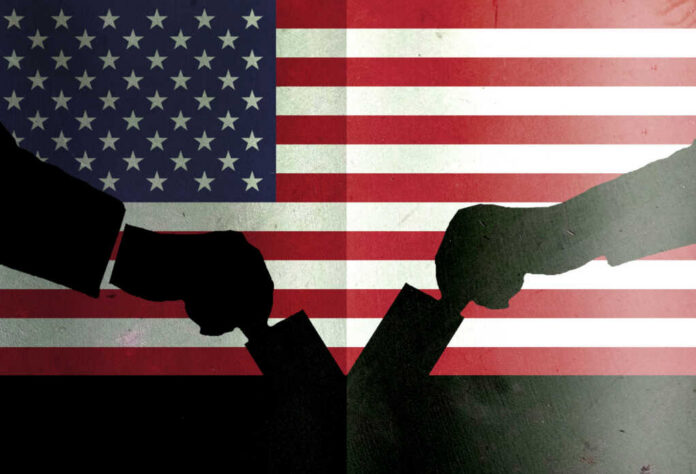
Rep. Anna Paulina Luna frames voter identification requirements as more than procedural safeguards. The Florida Republican connects mandatory voter ID to blocking what she characterizes as Democratic efforts toward mass amnesty for undocumented immigrants. Her argument centers on a simple premise: Americans must trust their electoral system, and that trust evaporates when citizenship verification becomes optional. Luna positions this intersection of immigration and election policy as a generational imperative, arguing that preventing non-citizen electoral influence determines whether future Americans inherit a secure republic or a compromised democracy. The Gateway Pundit amplified her video message to conservative audiences already primed on election integrity concerns.
The Unconventional Congresswoman’s Track Record
Luna’s biography reads like a departure from traditional congressional paths. Born in 1989, the Air Force veteran claimed Florida’s 13th District in 2023, bringing Trump-era priorities into sharp legislative focus. Her America First ideology manifests in concrete votes: consistent opposition to Ukraine aid packages totaling billions, including the $60 billion H.R. 8035 measure. She cosponsored the Ukraine Fatigue Resolution demanding immediate peace negotiations. In 2022, she advocated banning U.S. oil exports to prioritize domestic supply and lower gas prices. Her 2023 Oversight Committee participation featured allegations of government-Twitter censorship collusion during the 2020 election cycle. These positions resonate with her Florida base, where anti-interventionism polls strongly among MAGA-aligned voters heading into 2026 midterms.
The Russia Controversy That Won’t Fade
Luna’s early 2026 invitation to sanctioned Russian State Duma deputies for Washington talks on Ukraine, trade, and bilateral relations sparked immediate backlash. She claimed State Department approval for the initiative, a claim that remains unverified by official sources. The Lansing Institute characterized the move as Moscow-exploitable, driven by electoral incentives rather than conspiracy but potentially legitimizing Russian narratives. Analysts predict the gambit marginalizes Luna within GOP leadership circles while boosting her credibility with America First voters who prioritize ending foreign conflicts over maintaining Cold War-style containment strategies. The deputies selected carry minimal sanction risk for Moscow, making Luna’s outreach low-cost propaganda for the Kremlin. No confirmed meetings materialized, leaving the initiative stalled as what critics label an electoral stunt lacking tangible diplomatic substance.
Freedom Caucus Friction and Party Positioning
Luna’s March 2025 resignation from the House Freedom Caucus followed clashes over her proxy voting discharge petition push. The move revealed her willingness to break from hardline conservative factions when tactical calculations demand flexibility. She operates as a freelance influencer outside traditional GOP leadership structures, prioritizing direct constituent appeal over committee advancement or leadership favor. This positioning carries costs: alienation from centrists and moderates who view her Russia outreach as reckless, potential blockage from premium committee assignments, and the “useful radical” label from foreign policy establishment voices. Yet her independence delivers electoral dividends in a district where voters reward anti-establishment posturing and skepticism toward bipartisan foreign policy consensus. The tension between party marginalization and base enthusiasm defines her political trajectory.
What Voter ID Actually Accomplishes
Luna’s voter ID advocacy taps into post-2020 Republican election integrity campaigns, where fraud allegations fueled state-level legislative action nationwide. The argument connects citizenship verification to preventing illegal voting by undocumented immigrants who might gain status through Democratic amnesty proposals. Proponents claim such measures restore faith in electoral outcomes, addressing polls showing Republican voters harbor deep distrust in ballot counting accuracy. Critics counter that voter impersonation remains statistically negligible, making ID requirements solutions searching for problems while creating barriers for elderly, minority, and low-income citizens lacking documentation. No specific Luna-sponsored voter ID legislation appears in congressional records, leaving her position rhetorical rather than legislative. The discourse serves political messaging more than policy crafting, reinforcing partisan divisions on election administration at a moment when both parties claim to defend democratic legitimacy.
The Broader America First Implications
Luna represents a congressional faction prioritizing domestic concerns over international obligations, a worldview reshaping Republican foreign policy orthodoxy. Her votes against Ukraine aid, opposition to the EATS Act over Chinese influence fears, and energy export ban advocacy form a coherent isolationist philosophy. This America First framework treats voter ID, immigration restriction, and non-interventionism as interconnected pillars preventing external forces from diluting American sovereignty. The approach resonates with voters exhausted by decades of Middle Eastern conflicts and skeptical of NATO expansion justifications. Long-term implications include potential weakening of U.S. diplomatic leverage as allies question commitment reliability, emboldening of adversaries testing resolve, and acceleration of multipolar global order emergence. Domestically, it cements partisan realignment where Republicans embrace populist nationalism while Democrats defend internationalist institutions, a divide unlikely to narrow before 2026 midterms conclude.
Sources:
Rep Anna Paulina Luna on America First Policies, Includes Voter ID – The Gateway Pundit
Rep. Anna Paulina Luna – Congress.gov