Republicans Demand Apology for Meme Gaffe
President Trump refused to apologize for a controversial meme shared on his Truth Social account, standing firm against hostile media interrogation while the White House blamed an unnamed staffer for the post that ignited bipartisan criticism.
Story Snapshot
- Trump’s Truth Social account posted a video Thursday night highlighting 2020 election fraud claims that ended with a controversial 2-second meme clip depicting the Obamas
- The White House deleted the post Friday noon and blamed an “erroneous” staffer action after Republican senators demanded removal
- Trump told reporters on Air Force One he shared the video for its election fraud content without fully reviewing it and stated “I didn’t make a mistake”
- Press Secretary Karoline Leavitt dismissed media criticism as “fake outrage” while no staffer has been identified or fired
White House Attributes Post to Unnamed Staffer
Trump’s Truth Social account shared a 62-second video late Thursday night, February 5, 2026, focusing on allegations of 2020 election irregularities in battleground states. The video concluded with a brief clip from a conservative internet meme showing Trump as “King of the Jungle” with Democrats depicted as animals. The White House removed the post by Friday noon, attributing it to an unnamed staffer’s error. This represents a rare admission of mistake from the administration, though questions remain about social media account access controls and vetting procedures for content shared on official channels.
Trump Rejects Apology Demands from Media
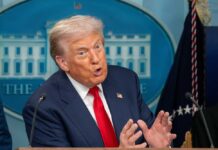
Speaking to reporters on Air Force One Friday afternoon, President Trump addressed the controversy directly, explaining he appreciated the video’s opening content regarding election fraud claims and shared it without watching the ending segment. Trump stated he condemns racism but refused to apologize, saying “I didn’t make a mistake.” His response came after Press Secretary Karoline Leavitt dismissed the backlash as “fake outrage” over an “internet meme” and urged focus on substantive policy issues. The president’s refusal to bow to media pressure demonstrates his consistent approach to hostile press coverage, prioritizing his messaging on election integrity concerns over manufactured controversies.
Bipartisan Criticism Emerges from Capitol Hill
Several Republican senators publicly condemned the post Friday morning, including Sen. Tim Scott of South Carolina, who chairs the GOP Senate campaign arm, calling it “totally unacceptable.” Sens. Roger Wicker of Mississippi and Pete Ricketts of Nebraska joined Representatives Mike Lawler of New York and Mike Turner of Ohio in demanding removal and apology. The swift Republican criticism during Black History Month’s first week created political complications for the administration. However, supporters including Pastor Mark Burns, a Black Trump ally, urged the president to identify and fire the responsible staffer while maintaining that Trump himself opposes racism.
Context of Election Integrity and Social Media Strategy
The video’s primary content focused on Trump’s longstanding concerns about 2020 election irregularities, claims that courts and his former Attorney General disputed but that resonate with millions of Americans who witnessed unprecedented mail-in ballot procedures and extended counting periods. Trump has consistently used Truth Social for direct communication with supporters, bypassing mainstream media filters to address policy positions, political threats, and criticism of opponents. The meme in question originated from a larger conservative internet creation satirizing political figures across party lines, with the controversial segment representing a 2-second excerpt attached to election-focused content. This incident raises legitimate questions about staff access to presidential accounts and content review protocols.
The NAACP’s Derrick Johnson characterized the post as “despicable” and suggested it served as distraction from economic issues and other matters. The organization’s response fits a pattern of activist groups leveraging controversial moments to advance broader political narratives. No response came from Barack or Michelle Obama’s representatives regarding the incident. The controversy unfolded during the fifth day of Black History Month, which Trump formally proclaimed with statements praising Black Americans’ contributions to liberty and national progress.
President Trump Walks Away As Shrill Reporters Ask Him to Apologize Over Meme (VIDEO) | The Gateway Pundit | by Cristina Laila https://t.co/hA3qiDXJ8b
— DLW 🔥#MAGA (@Dlw20161950) February 7, 2026
Media Amplification Versus Substantive Governance
The intense media focus on a brief meme segment attached to election fraud content reflects the establishment press’s ongoing strategy to generate controversy around Trump’s social media activity rather than engage his policy positions. Leavitt’s characterization of “fake outrage” resonates with conservatives frustrated by disproportionate coverage of Trump’s communication style while substantive issues like border security, inflation, and constitutional protections receive less attention. The swift deletion and staffer blame represent standard crisis management, though Trump’s refusal to personally apologize maintains his political brand of refusing to capitulate to hostile media narratives. As the administration continues using social media for direct voter communication, this incident highlights the tension between unfiltered presidential messaging and institutional content controls.
Sources:
Trump’s racist post about Obamas deleted after backlash; President says he won’t apologize
Trump deletes racist post after rare Republican rebukes
Trump shares a racist video that depicts the Obamas as primates
LA Times: Trump racist video – what comes next