

Construction workers building a Czech highway uncovered four mass graves containing over 40 soldiers from battles fought 121 years apart, revealing how European wars literally shaped the landscape beneath our modern infrastructure.
Story Highlights
- Archaeologists discovered four mass graves during D11 motorway construction in Czech Republic
- Remains of 40+ soldiers from 1745 and 1866 battles span two different European conflicts
- Metal detector surveys revealed bullets, weapons, and personal items including mirrors and coffee grinders
- Highway route follows exact historical battle lines where soldiers fell over a century ago
Archaeological Discovery Preserves Forgotten Military History
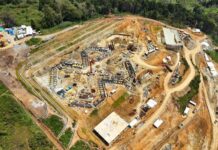
The Archaeological Centre Olomouc uncovered the graves during routine surveys before D11 motorway construction between Jaroměř and Trutnov in eastern Bohemia. Metal detectors identified clusters of bullets, shell fragments, and uniform parts along a 2.2-mile highway corridor, prompting immediate excavation. The discovery demonstrates how rescue archaeology prevents infrastructure development from erasing historical evidence, transforming a routine highway project into a significant military archaeology operation.
The graves contain casualties from two distinct conflicts: twelve soldiers from the 1745 Battle of Zdar during the Second Silesian War, and over 30 soldiers from the 1866 Austro-Prussian War. Forensic analysis revealed several skulls with entry wounds from close-range gunshots, providing stark evidence of battlefield executions. The exceptional preservation includes more than 10 boxes of textile materials, buttons, weapon fragments, and personal items like mirrors and pocket coffee grinders carried by Prussian soldiers.
Highway Route Follows Historical Battle Lines
Museum researcher Matous Holas noted that the future motorway route “practically follows” the historical battle line where soldiers fell. This alignment explains why graves were discovered directly beneath the planned highway corridor. The 1745 grave lies within the battle line where Prussian forces attacked Austrian-Saxon troops manning the old imperial road, while the 1866 graves mark positions from the larger Austro-Prussian conflict that reshaped European power dynamics.
Archaeologist Michaela Bartos Dvorakova’s team has not yet determined which side the 1745 soldiers belonged to, highlighting the challenges of identifying individual combatants without written records. The largest Austrian grave from 1866 contained 23 soldiers, with the count determined by counting boots still attached to lower limbs due to skeletal deterioration. Anthropologist Slawomir Antonik recovered unprecedented textile preservation, enabling detailed reconstruction of 18th and 19th-century military uniforms and equipment.
Modern Infrastructure Reveals European Military Legacy
The discovery reinforces how European infrastructure development routinely encounters evidence of centuries-old conflicts. Battlefield archaeology in this region relies on physical evidence mapping rather than written reports, making metal detector surveys essential for identifying unmarked graves. The Archaeological Centre Olomouc specializes in rescue excavations before construction projects, preventing building development from destroying historical sites that document European military history.
Workers Were Building a Roadway—and Discovered Four Mass Graves Filled With Bodies https://t.co/wYWUNUVkHl
— Popular Mechanics (@PopMech) December 30, 2025
Following analysis by the Archaeological Center Olomouc and Museum of Eastern Bohemia, the soldiers’ remains will receive proper reburial. This respectful treatment ensures scientific study while honoring the fallen warriors whose deaths shaped European boundaries. The discovery provides unprecedented insight into two separate military conflicts, preserving evidence that connects modern Czech communities to regional history spanning multiple centuries of warfare and political transformation.
Sources:
Four Mass Graves Discovered During Czech Highway Construction
Grave Discovered Containing 12 Soldiers Bodies from 1745 and 1866