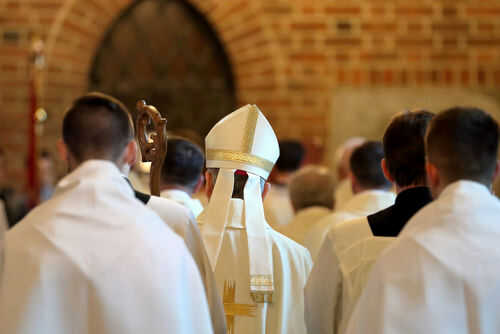
The San Francisco Archdiocese settlement matters because it combines two things that rarely appear together at this scale: extraordinary money for survivors and a forced institutional rewrite of how a diocese handles children, records, and secrecy. It is not merely a payment; it is a bankruptcy-era settlement architecture designed to compensate, expose, and constrain.
Intro Header
- The deal covers roughly 530 survivors and totals $395 million, making the average recovery about $745,000 per claimant.
- It pairs compensation with a 14-point child protection plan, public disclosure measures, and a ban on future mandatory nondisclosure agreements.
- The agreement still depends on survivor approval and bankruptcy court signoff, so the final legal chapter is not closed yet.
- The Archdiocese acknowledges harm and frames the settlement as healing, but it does not function as a criminal finding or an explicit civil admission of liability.
Why This Settlement Is Structurally Different
The headline number is the wrong place to stop. In clergy-abuse litigation, the real significance often lies in the architecture around the payout: who gets access to documents, whether survivors remain bound by secrecy, whether the institution must change its internal rules, and whether the process creates a public record that outlives the settlement itself. Here, the Archdiocese agreed not only to pay, but also to submit to a broad reform package that includes independent review, archival disclosure, and child-safety restrictions. ABC7 reported that the plan includes an independent child protection consultant with access to all files, publication of the consultant’s report, a partial list of credibly accused offenders, and a prohibition on one-on-one digital communications between adults and children.
That matters because diocesan abuse cases have long followed a grim pattern: claims are resolved through confidential bargains, institutional records stay hidden, and the public learns too little, too late. This settlement pushes in the opposite direction. Survivors are to be released from existing mandatory nondisclosure agreements, and future settlements are not supposed to use them. In practical terms, that turns a compensation deal into a transparency mechanism. It does not erase the past, but it does force the institution to expose more of its own history than most church settlements ever have.
The Money Is Large; the Per-Victim Recovery Is the More Revealing Figure
The $395 million figure is striking on its own, yet the average recovery is the more telling number. Plaintiffs’ attorneys said the settlement covers approximately 530 civil claims and works out to roughly $745,000 per survivor, which they described as the highest per-survivor amount in any clerical bankruptcy case. That claim sits well above the broad national averages often cited in clergy-abuse litigation, where published estimates are far lower, and it explains why observers are calling this a structural outlier rather than just another large diocesan payout.
Still, averages conceal the actual machinery of distribution. The research package indicates that individual awards will vary and will be determined by a protocol rather than being identical across claimants. That is standard in large abuse trusts, where severity, corroboration, age, duration, and the evidentiary record often influence compensation. The point is not equal checks; it is calibrated compensation inside a court-supervised framework. The settlement’s moral force comes from scale, but its legal logic comes from differentiation.
What the Archdiocese Acknowledges, and What It Does Not
Archbishop Salvatore Cordileone’s public statement is carefully worded. He says no financial settlement can erase the “painful legacy of past actions,” and in his letter to the faithful the Archdiocese describes the deal as resolving “all lawsuits related to child sexual abuse brought against the Archdiocese under California Assembly Bill 218.” That language acknowledges harm without using the vocabulary of explicit legal fault. It is an important distinction. Civil settlements almost never equal confessions, and this one is no exception.
At the same time, the absence of an admission does not make the settlement meaningless. The Archdiocese agreed to a package that presumes serious institutional failure: personal apology letters from the archbishop to each survivor, a public archive that includes survivor voices and personnel files of accused clergy, and survivor representation on the Archdiocese Independent Review Board. Institutions do not voluntarily accept those terms when they believe the record is trivial. The settlement signals that the cost of continuing to litigate, morally and financially, exceeded the cost of formal acknowledgment.
More than 500 survivors of clergy sexual abuse in the Archdiocese of San Francisco reached a $395 million settlement that was announced Monday, with church leaders agreeing to an additional 14-point plan for protecting children. https://t.co/i7JWsCjTa5
— FOX 5 DC (@fox5dc) July 1, 2026
The Bankruptcy Strategy Is Part of the Story
The Archdiocese filed for Chapter 11 bankruptcy in August 2023, a move that froze civil litigation and forced claims into a centralized process. That step is now familiar in church-abuse litigation. Dioceses use bankruptcy to aggregate claims, cap uncertainty, and preserve assets; survivors often view it as a mechanism that delays justice while narrowing leverage. The San Francisco case fits squarely into that modern pattern, even if the final settlement is unusually generous per claimant.
The counter-case from the Archdiocese is not that the abuse claims are fabricated; it is that the settlement resolves claims without conceding liability and should be understood as a restorative step. Cordileone’s “Letter to the Faithful” emphasizes fair compensation and healing rather than punishment. That position is legally coherent, but it does not materially weaken the significance of the payout or the reforms. In this setting, a formal admission is less important than what the institution agreed to do, what it agreed to disclose, and what it agreed never again to require of survivors.
The Bigger Pattern: Compensation Is Now Being Tied to Reform
This settlement belongs to a broader national evolution. Recent Catholic diocesan cases have increasingly combined money with document disclosure, monitoring, and policy changes; the Los Angeles archdiocese’s $880 million settlement, for example, also involved disclosure of additional files and pushed its total payout above $1.5 billion. Across the country, dioceses have paid billions in abuse-related settlements, and the era when secrecy alone could contain scandal has plainly ended.
What makes San Francisco notable is the balance it struck. The deal is not the largest ever by raw dollar amount, but it may be one of the most consequential in terms of per-victim value and institutional conditions. That combination tells you where the legal pressure now lies: survivors are no longer accepting money as the sole remedy, and churches can no longer assume that a bankruptcy court will let them buy peace without opening files and altering behavior. The settlement’s practical legacy will depend on implementation, not announcement. The real test is whether the 14-point plan is enforced with the same seriousness as the payment schedule.
Sources:
zerohedge.com, helpingsurvivors.org, foxnews.com, nytimes.com, instagram.com, abcnews.com, sokolovelaw.com, abuselawsuit.com, salon.com, facebook.com