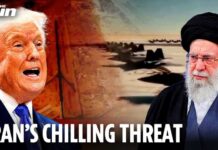
Senator Lindsey Graham just revealed that the Trump administration’s decision on military action against Iran is weeks away, signaling the most significant moment in U.S.-Iran relations since the 1979 Islamic Revolution.
Story Highlights
- Graham confirms military planning underway with decision imminent in 30 days, not months
- Senator declares Iran’s regime at its “weakest point since 1979” following internal protests and proxy losses
- US aircraft carriers deploy to Arabian Gulf as diplomatic talks stall over nuclear weapons and terror proxies
- Trump administration faces critical choice between regime change opportunity or risking collapse of Abraham Accords
Graham Signals Imminent Military Decision
Senator Lindsey Graham disclosed during a February 19 interview in Abu Dhabi that the United States faces an inflection point on Iran within weeks, not months. Following meetings with Israeli Prime Minister Benjamin Netanyahu and participation in anti-regime rallies, Graham revealed active military planning is underway. The South Carolina Republican emphasized a 30-day diplomatic window, stating he hasn’t slept due to the urgency of the situation. US aircraft carriers USS Abraham Lincoln and USS Gerald R. Ford have deployed to the Arabian Gulf, underscoring the seriousness of preparations for potential strikes against the Iranian regime.
Historic Opportunity for Regime Change
Graham characterized Iran’s current position as its weakest since the 1979 Islamic Revolution, citing internal protests and the degradation of Tehran’s proxy forces following Israel’s response to the October 7, 2023 Hamas attacks. The senator unveiled a “Make Iran Great Again” hat during his Israel press conference, signaling tight coordination between the Trump administration and Netanyahu’s government. Graham likened the Iranian regime to 1930s fascism, arguing that regime change represents “not even a close call” for American interests. Trump has publicly encouraged Iranian protesters with promises that “help is on the way,” backing his words with increased military presence in the region.
Stalled Diplomacy and Strategic Stakes
Geneva nuclear negotiations have reached an impasse, with Iran refusing to address its ballistic missile programs and support for Hezbollah, Hamas, and Houthi militants beyond narrow nuclear enrichment discussions. This diplomatic deadlock occurs as Iranian security forces violently suppress domestic protests demanding governmental change. Graham warned that allowing the ayatollah regime to survive would prove “worse than Afghanistan” for American credibility, potentially collapsing the Abraham Accords that normalized UAE-Israel relations. The senator urged Saudi Arabia and the United Arab Emirates to resolve their tensions over Yemen and Sudan, emphasizing regional unity is essential for confronting Tehran’s destabilizing influence across the Middle East.
Trump’s Maximum Pressure Redux
President Trump’s approach mirrors his first-term “maximum pressure” campaign that withdrew from the failed Iran nuclear deal in 2018 and eliminated terrorist leader Qasem Soleimani in 2020. Graham expressed confidence in Trump’s strategy of projecting strength without entanglement, though he voiced frustration at the Munich Security Conference over perceived delays in decisive action against both Iran and Russia. Senate Republicans are advancing sanctions legislation to further isolate Tehran economically. The administration faces a critical juncture where inaction risks emboldening Iran’s nuclear ambitions and regional terror networks, while decisive intervention could finally end decades of Iranian aggression that has destabilized the entire Middle East and threatened American allies.
Sources:
Iran’s inflection point is weeks, not months away, says Lindsey Graham – The National News
Lindsey Graham Interview on Iran and Israel – The Jerusalem Post