A ceasefire meant to end hostilities has instead exposed how fragile peace becomes when critical global chokepoints turn into bargaining chips and conflicting interpretations of truces collide with regional proxy wars.
Story Snapshot
- Iran keeps the Strait of Hormuz effectively closed despite April 7, 2026 ceasefire, citing Israeli strikes on Hezbollah in Lebanon as violations
- The closure disrupts roughly 20 percent of global oil flow through the 21-mile-wide chokepoint, triggering renewed price volatility
- President Trump demands unconditional reopening without tolls while threatening resumed military action, calling reports of closure “false”
- Iran’s Supreme Leader Khamenei declares victory and insists on coordinated passage only, creating unprecedented toll precedent for international waters
- Peace talks scheduled for Islamabad face immediate crisis as conflicting ceasefire terms threaten to unravel the two-week truce before it begins
When Peace Terms Become Combat Zones
The ink barely dried on the April 7 ceasefire agreement before the fundamental dispute emerged. Trump declared the Strait of Hormuz must open completely, immediately, and safely. Iran’s Foreign Minister Abbas Araghchi confirmed the ceasefire but tied compliance directly to halting all U.S. and Israeli attacks. The devil materialized in details neither side had clarified: whether Israeli operations against Hezbollah in Lebanon fell under the truce. Israel answered emphatically by continuing airstrikes on April 8, treating Lebanon as a separate theater entirely outside the U.S.-Iran framework.
The Chokepoint That Commands Attention
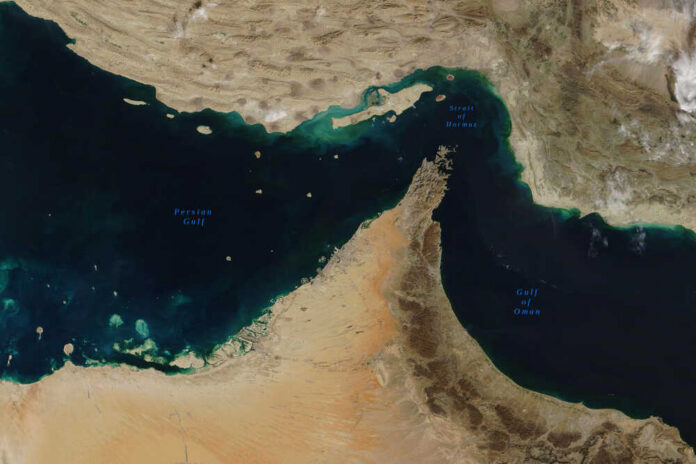
The Strait of Hormuz earned its reputation as the world’s most critical oil artery over decades. This narrow passage between Iran and Oman funnels approximately one-fifth of global petroleum supplies to markets across Asia, Europe, and beyond. Iran has threatened closure since the 1979 Revolution, occasionally seizing tankers during the 2019 sanctions standoff and engaging in the 1980s Tanker War. Yet no previous conflict produced a complete shutdown during an active ceasefire with the United States. The current closure represents an entirely new escalation pattern, blending direct superpower confrontation with proxy warfare spillover effects.
Conflicting Narratives From Washington and Tehran
White House officials flatly denied closure reports on April 9, calling them false and insisting U.S. forces would manage traffic through the strait. Press Secretary Karoline Leavitt emphasized American readiness to enforce freedom of navigation. Meanwhile, Iranian state media outlet Fars declared complete closure, with Supreme Leader Ayatollah Khamenei proclaiming Iran the victor and establishing that passage would occur only via coordination with Iranian authorities. General Dan Caine of the Joint Chiefs acknowledged the ceasefire as merely a pause, confirming forces remained fully prepared for combat resumption. The gap between these positions reveals not mere disagreement but fundamentally incompatible understandings of what the ceasefire actually accomplished.
Israel’s Independent Action Strains the Framework
Israeli Defense Minister Israel Katz accepted the U.S. ceasefire with Iran while explicitly excluding Hezbollah operations from any pause. Israel views its Lebanese campaign as existential work neutralizing Iranian proxies, not optional activity subject to American diplomatic timelines. This independent posture creates impossible dynamics for the ceasefire. Iran backs Hezbollah financially and ideologically, considering attacks on the militia as attacks on Iranian interests. Trump characterized Lebanon as a separate skirmish, but Iran sees no such distinction. The result places the strait reopening hostage to conflicts the ceasefire architects apparently never resolved or possibly deliberately left ambiguous.
Economic Leverage Meets Military Superiority
The United States demonstrated clear military dominance during six weeks of direct combat from late February through early April 2026. Trump’s threat to wipe Iranian civilization off the map preceded the ceasefire, and the 38-day campaign evidently convinced Iranian leadership to accept terms including no uranium enrichment and strait reopening. Yet Iran retains asymmetric leverage through geography. Controlling the Strait of Hormuz coastline grants Tehran the ability to inflict economic pain globally regardless of battlefield outcomes. Oil prices briefly dipped below one hundred dollars per barrel after the ceasefire announcement, then climbed as closure reports emerged. The whipsaw effect demonstrates how Iran can weaponize energy markets even from a position of conventional military weakness.
The Toll Precedent That Rewrites Maritime Law
Iran’s insistence on coordinated passage and potential tolls represents a radical departure from established international maritime practice. The strait has operated as a critical international waterway for decades, with passage considered a fundamental right under freedom of navigation principles. Iran’s Supreme National Security Council now demands that ships coordinate transit, effectively converting international waters into controlled Iranian territory. Kevin Hassett of the National Economic Council observed that Iran tightens its grip despite the deal, not because of it. This precedent, if accepted, fundamentally alters global shipping norms and grants Iran permanent leverage over a fifth of the world’s oil supply regardless of any future diplomatic agreements.
Peace talks scheduled for Islamabad face a crisis of interpretation before delegates even convene. The Council on Foreign Relations notes uncertainty over whether closure actually breaks the truce, given fragile coordination clauses embedded in the agreement. Trump warned that if talking stops, shooting starts, yet talking becomes nearly impossible when parties cannot agree on basic facts like whether the strait remains open. Tanker traffic stands largely frozen, with only a handful of vessels passing compared to normal operations. The backlog threatens supply disruptions across importing nations in Asia and Europe, potentially forcing the global economy to absorb shortages or route changes that increase costs and delivery times substantially.
Sources:
Iran US war latest: Trump ceasefire Strait of Hormuz
Iran Trump ceasefire Strait Hormuz Israel war Hezbollah continues
Iran US Strait of Hormuz Khamenei
As a Strait of Hormuz standoff grows will Trumps fragile Iran ceasefire hold
Strait of Hormuz reopens but US remains ready for combat