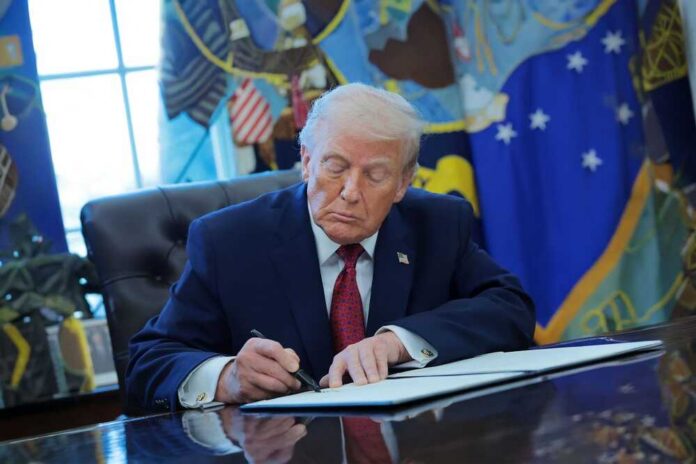
President Trump’s latest ultimatum to Iran threatens civilian infrastructure strikes by Tuesday evening, marking another escalation in a dangerous standoff that risks dragging America into the very kind of Middle East war he promised to avoid.
Story Snapshot
- Trump issued profanity-laden threats to bomb Iran’s power plants and bridges unless the Strait of Hormuz opens by Tuesday 8 p.m. Eastern
- Iran has already retaliated by striking power plants and oil facilities in Kuwait and Bahrain, escalating regional conflict
- The threatened attacks on civilian infrastructure may violate international humanitarian law and constitute potential war crimes
- This marks a pattern of repeated threats with postponed deadlines, raising questions about strategy versus reckless brinkmanship
Trump Sets Tuesday Deadline for Iran Strikes
President Trump posted an expletive-laden ultimatum on Truth Social Sunday, demanding Iran open the Strait of Hormuz by Tuesday at 8 p.m. Eastern or face devastating attacks. The post declared Tuesday would be “Power Plant Day, and Bridge Day, all wrapped up in one, in Iran” and warned Iranian leaders to “Open the F–kin’ Strait, you crazy b-stards, or you’ll be living in Hell.” The crude language in official presidential communications represents a departure from traditional diplomatic norms, while the threatened targets—civilian power plants and bridges—raise serious legal and moral concerns for many Americans who expected Trump to keep us out of new conflicts.
Iran Responds With Regional Infrastructure Strikes
Iran answered Trump’s threats with immediate military action, striking power plants and a petrochemical facility in Kuwait on Sunday. Kuwait’s Ministry of Electricity confirmed a water desalination plant was also targeted, while Bahrain’s official news agency reported an Iranian drone attack ignited fires at national oil storage facilities. Iran’s joint military command issued a stark warning that “if you commit aggression again and strike civilian facilities, our responses will be more forceful.” An Iranian official posted on X that “the flow of global energy and trade can be disrupted with a single signal,” demonstrating Tehran’s willingness to escalate rather than capitulate.
Pattern of Threats Raises Strategic Questions
This marks the latest in a series of similar threats from Trump to bomb Iran’s power plants, each followed by postponed deadlines after claiming progress in negotiations. Trump told Fox News on Sunday there was a “good chance” of reaching a deal by Monday, even as he set Tuesday’s military deadline. The contradictory messaging suggests either a deliberate negotiating tactic using military threats as leverage, or a concerning lack of coherent strategy. For Trump supporters who voted against endless regime change wars, this escalating cycle of threats and counter-strikes toward civilian infrastructure looks disturbingly like the neoconservative playbook they rejected at the ballot box.
Legal and Strategic Concerns Mount
International humanitarian law explicitly prohibits attacks on objects “indispensable to the survival of the civilian population,” making strikes on power plants and water facilities potential war crimes. The Strait of Hormuz carries approximately one-third of global maritime petroleum trade, meaning any conflict threatens worldwide energy markets and American consumers already struggling with high fuel costs. Trump has stated he is “considering blowing everything up and taking over the oil” if Iran refuses a quick deal, raising questions about whether this confrontation serves American national interests or risks American lives and treasure in another Middle East quagmire. The conflict has already expanded beyond U.S.-Iran tensions to involve Kuwait and Bahrain, demonstrating how quickly regional escalation can spiral.
America First or Another Foreign War
Many MAGA supporters find themselves torn between loyalty to Trump and deep skepticism about Middle East military interventions. The president campaigned on keeping America out of new wars and prioritizing domestic concerns over foreign entanglements. Yet here we stand on the brink of strikes against civilian infrastructure that could trigger a broader regional conflict, threatening American service members and economic stability. The pattern of bellicose threats followed by deadline extensions suggests this may be negotiating theater rather than serious military planning, but Iran’s willingness to strike regional allies proves the strategy carries real risks of unintended consequences that could trap America in exactly the kind of conflict Trump promised to avoid.
Sources:
Trump Again Threatens to Bomb Iran’s Power Plants If Strait of Hormuz Not Opened – TIME Magazine
Iran War: Trump Deadline, Power Plants, Bridges, Ceasefire Push – CBS News