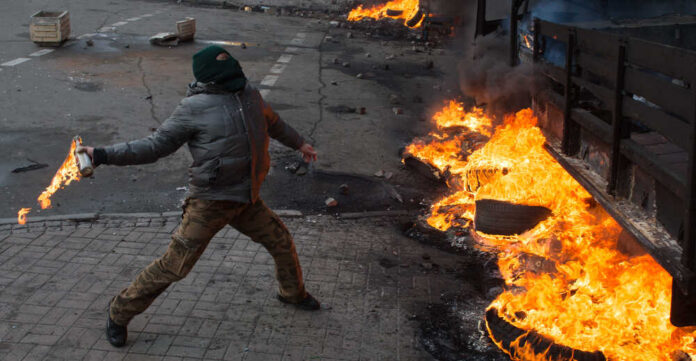
As chaos erupts in Albania’s capital, images of Molotov cocktails and clashing factions offer a stark warning of what happens when corrupt elites lose touch with their people and ignore the rule of law.
Story Snapshot
- Supporters of Albania’s Democratic Party hurled Molotov cocktails outside Prime Minister Edi Rama’s offices in Tirana as police tried to hold them back.
- The fiery clashes highlight deep anger over perceived corruption and authoritarianism in a small NATO ally.
- The unrest underscores why strong borders, accountable leaders, and respect for law and order matter to American conservatives.
- The scenes from Tirana are a reminder of the instability that globalist-style misrule can unleash when citizens feel ignored.
Molotovs in Tirana: A Small Nation’s Anger on Full Display
Supporters of Albania’s Democratic Party poured into the streets of Tirana on Monday evening, confronting police outside the official offices of Prime Minister Edi Rama as tensions boiled over into open violence. According to on-the-ground video, protesters threw Molotov cocktails that ignited flames near the government complex, while officers formed tight lines and tried to push demonstrators back. The standoff turned the symbolic heart of Albania’s government into a literal flashpoint for public rage.
Footage from the protest shows a combustible mix of frustration and determination, as opposition supporters press toward barriers despite police shields and batons. The Molotov cocktails are not simply random acts of vandalism; they signal a belief among demonstrators that normal political channels no longer work, and that those in power will only respond to raw pressure. In a region historically scarred by unrest, such images raise questions about how long simmering resentments can remain contained.
What Albanian Unrest Reveals About Distrust in Political Elites
Albania’s turmoil may seem distant, but the underlying story is familiar: citizens who feel shut out from decision-making, suspect rigged systems, and see entrenched leaders preserving their own power first. Protesters aligned with the Democratic Party clearly view Prime Minister Rama’s government as unresponsive and self-serving, and the willingness to confront riot police reflects a conviction that institutional checks have failed. When people cease to trust elections, courts, and watchdogs, street confrontation becomes the tool of last resort.
For conservative Americans, this kind of unrest reinforces long-standing concerns about elite arrogance and globalist priorities. Many see in Albania’s conflict a smaller-scale version of what can happen when ruling classes grow comfortable, dismiss dissent as “extremism,” and weaponize institutions against political opponents. The protests show what it looks like when frustration jumps from talk to action, and when citizens, convinced their leaders ignore them, decide to escalate. That pattern offers a cautionary tale for every democratic society, including our own.
Why Law, Order, and Sovereignty Matter to Conservatives
Scenes of firebombs outside a prime minister’s office underscore why conservatives emphasize law, order, and strong but accountable leadership. Stability does not come from censoring opponents or hollowing out institutions; it comes from governments that respect constitutional limits, protect free expression, and enforce laws consistently rather than selectively. When citizens believe the state protects insiders while ignoring ordinary people, they begin to see the government complex, not foreign enemies, as the target of their anger.
American conservatives have watched similar dynamics at home, where politicized agencies, porous borders, and double standards in prosecution erode faith in fair governance. The images from Tirana show the endgame if that erosion continues unchecked. Instead of peaceful debate and orderly transition, politics turns into direct confrontation with security forces guarding a political class. Such outcomes validate calls for limited government, transparent institutions, and leaders who answer to voters rather than to global forums or party machines.
Lessons for America in the Trump Era
In 2025, with President Trump back in the White House and the Biden era over, many on the right see his policies as a course correction away from the very instability now rocking Albania. A renewed focus on secure borders, national sovereignty, and cutting off foreign entanglements contrasts sharply with the kind of detached, elite-driven politics that often fuels unrest abroad. The Albanian protests highlight how fragile order becomes when people believe outsiders and insiders collude while citizens carry the costs.
Molotov cocktails were thrown at government buildings in Albania's capital amid anti corruption protests. pic.twitter.com/vfIkeJpwLR
— Daily Mail (@DailyMail) December 23, 2025
For a conservative audience that endured years of “woke” priorities, runaway spending, and disregard for middle-class concerns, Tirana’s flames are a reminder of what they want to avoid at home. They want leaders who listen before anger hardens into revolt, who defend constitutional freedoms while maintaining public safety, and who never forget that legitimacy flows from the people, not from bureaucrats or international elites. Albania’s crisis is thousands of miles away, but the warning it sends is unmistakable.