

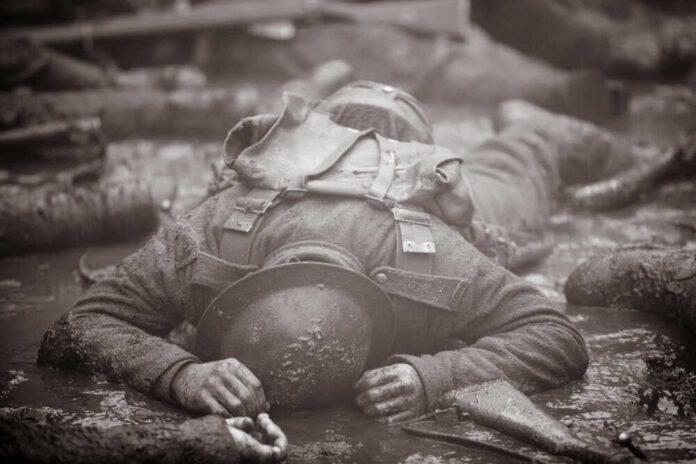
A wounded Ukrainian soldier’s five-day crawl through a drone-infested kill zone exposes the terrifying evolution of modern warfare that threatens American troops who could face similar technology in future conflicts.
Story Highlights
- Ukrainian soldier Surovyi survived five days crawling through hostile territory after drone attack
- Suicide drones create new battlefield dangers that isolate and target individual soldiers
- Eastern Ukraine frontlines demonstrate how low-cost drone technology shifts combat dynamics
- Military experts warn of urgent need for counter-drone defenses and tactical adaptations
Drone Warfare Transforms Battlefield Survival
Forty-year-old Ukrainian soldier Surovyi faced a nightmare scenario that highlights modern warfare’s deadly evolution. After a suicide drone struck his leg on the Donetsk region frontlines, he found himself trapped in hostile territory with no immediate rescue possible. The proliferation of loitering munitions has created kill zones where traditional evacuation methods fail, forcing wounded soldiers into desperate survival situations that previous generations never encountered.
Five Days of Crawling Through Enemy Territory
Surovyi’s ordeal began when the drone attack left him wounded and isolated from his unit. Despite his leg injury, he spent five grueling days crawling through drone-patrolled territory, constantly evading additional attacks while seeking safety. His survival required extraordinary endurance and tactical awareness, as any movement could trigger another drone strike. The incident demonstrates how modern technology has made battlefield recovery operations exponentially more dangerous and complex.
Technology Shifts Military Power Dynamics
The widespread deployment of suicide drones represents a fundamental shift in warfare that military analysts describe as democratizing lethal capability. These relatively inexpensive weapons can loiter over battlefields, targeting individual soldiers with unprecedented precision while requiring minimal operator training. Ukrainian and Russian forces have both embraced this technology, creating psychological warfare effects that extend beyond physical casualties. The constant threat of unseen drones overhead fundamentally alters soldier behavior and tactical decision-making processes.
Ukrainian soldier crawled for days through drone kill-zone | REUTERS https://t.co/JFojnTN5ye – @YouTube
— eggry (@eggry) September 9, 2025
Experts such as Franz-Stefan Gady from the International Institute for Strategic Studies emphasize that Surovyi’s experience illustrates the new realities facing ground forces worldwide. Traditional battlefield medical evacuation protocols become nearly impossible when drones can track and eliminate rescue attempts. This technological shift demands rapid development of counter-drone systems and revised tactical doctrines that account for persistent aerial surveillance threats.
Implications for American Military Preparedness
Defense analysts including Seth Jones from Center for Strategic and International Studies warn that U.S. forces must prepare for drone-saturated environments in potential future conflicts. The Ukraine experience demonstrates how adversaries can deploy swarms of low-cost drones to neutralize traditional military advantages, potentially isolating American soldiers in comparable survival scenarios. Experts such as Jack Watling from RUSI suggest that current military aid discussions should prioritize counter-drone technologies and training programs tailored to evolving threats.
Surovyi’s remarkable survival story serves as both inspiration and warning for military planners who must adapt to warfare’s technological transformation. His five-day ordeal through a drone kill zone illustrates the individual courage required when modern technology fails to provide traditional support systems, demanding new approaches to battlefield medicine and tactical operations.
Sources:
Five days to get out: An injured Ukrainian soldier’s remarkable escape