

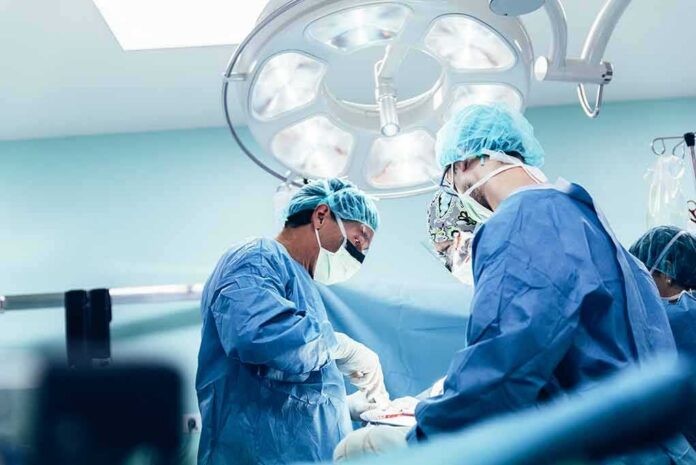
What matters most in the “first spinal cord transplant” story is not the headline but the difference between performing a technically audacious graft and proving restored human function; the former is surgery, the latter is neuroscience and clinical evidence, and they are not the same achievement.
The Short Version
- Russian officials and the Sklifosovsky Institute reported a 12-hour donor spinal-cord transplantation using polyethylene glycol (PEG) as a fusogen; immediate graft viability was claimed, functional recovery was not.
- The operation reportedly involved a large multidisciplinary Russian–Chinese team and followed a regulatory expansion that newly allowed transplantation of spinal-cord tissues in Russia.
- Independent experts long critical of the underlying PEG-based fusion evidence argue that preclinical data do not justify human efficacy claims.
- Historically, human spinal repair trials (cell grafts, glia, progenitors) have shown feasibility and safety, but consistent, reproducible motor recovery remains unproven.
What was reportedly done — and what that does and does not show
Public statements from Moscow’s mayor and the Sklifosovsky Research Institute described a 12-hour operation in which surgeons removed a damaged spinal-cord segment and implanted donor cord tissue, using microsurgical fusion and polyethylene glycol to bridge the cut ends. The Institute’s director said the transplanted tissues were viable postoperatively and emphasized that it was too early to judge functional prospects — a crucial caveat, because tissue viability is a biological precondition, not evidence of restored neural signaling. Multiple outlets repeated the framing as a first for Russia and described a multidisciplinary team that included Chinese collaborators. None of these reports provided operative diagrams, level or length of cord replaced, preservation and vascularization details, or standardized neurological outcomes.
For readers accustomed to organ transplantation, this distinction is nontrivial. In kidney or liver grafts, reestablishing blood flow and secretory function can be assessed rapidly. The spinal cord is different: what counts is axonal continuity, synaptic integration, remyelination, and coordinated activity across long tracts. Those phenomena unfold over weeks to months, if they occur at all, and require objective, serial measurements rather than post-op reassurance. Immediate survival of the graft simply confirms that something living was implanted and perfused; it does not demonstrate that ascending sensory or descending motor pathways can carry signals through the transplanted segment.
Mechanism claimed: PEG fusion and microsurgical apposition
The technical centerpiece reported here — and in prior head-and-spinal fusion claims — is polyethylene glycol. PEG is a membrane fusogen: at high local concentrations it dehydrates lipid bilayers and can promote their coalescence, which in theory could help align and reseal cut axonal membranes. In small-animal models and anecdotal large-animal reports, investigators have argued that “clean” transections treated promptly might allow some conduction across a repaired interface. However, independent neuroscientists have criticized the published record as methodologically thin: single-animal case reports without controls, inadequate lesion verification, and a lack of histology to confirm the severity and continuity of injury. As Jerry Silver put it, the papers cited by proponents “do not support moving forward in humans,” and even supportive Texas PEG work has been labeled too sparse to underwrite clinical claims.
Translating a fusogen from bench to bedside adds layers of complexity beyond membrane biophysics. Severed central axons retract; growth cones falter in an inhibitory matrix; oligodendrocytes die back; microglia and astrocytes reorganize the lesion into a glial–fibrotic scar; and long-tract axons must find precisely matched targets to restore meaningful function. Fusion at a millimetric plane does not solve pathfinding, remyelination, synaptic specificity, or the systemic risks of immunosuppression required for allogeneic tissue. Critics further question PEG’s safety profile in the proposed doses and settings. Transplant surgeon Mark Hardy has argued that PEG toxicity and species differences undercut the leap to human efficacy.
“World first” versus first in Russia — and what the record can actually support
Officials described the Moscow case as a first in Russia, and some reports echoed proponents’ “world first” language. The “first ever” label is hard to adjudicate without a public protocol, operative report, and independent audit, especially because “transplant” has been used imprecisely to describe whole-cord replacement, segmental grafting, and cellular implants. Historically, even heterologous cord grafting has precedents in the surgical literature, though not with durable functional success by modern standards. The strongest claim grounded in the public record is narrow: a 12-hour donor spinal-cord tissue implantation was reported at Sklifosovsky; early viability was observed; functional outcomes were explicitly not yet assessable. Anything broader — especially global priority and clinical benefit — requires documentation that has not been released.
The regulatory backdrop matters. Russian rules reportedly expanded in September 2026 to include transplantation of nerves and spinal-cord fragments, creating a legal frame for experimental grafting. That explains how such an operation could proceed institutionally; it does not speak to its clinical value. In surgical innovation, legality and feasibility are prerequisites, not endpoints.
Where the real scientific dispute lies
The sharp disagreement is not about whether a complex operation occurred; it is about biological plausibility and standards of proof. Bioethics analyses responding to earlier head-and-spinal fusion proposals concluded that proponents lacked credible, peer-reviewed evidence showing robust restoration of function in non-rodent mammals, let alone humans. They stressed the absence of long-term animal data, unclear reporting of which functions (motor, sensory, autonomic) return, and acknowledgments that only a small fraction of severed fibers might reconnect — insufficient for meaningful recovery in high cervical injuries. That critique predates the Russian case but applies directly to any claim that a fusogen-bridged graft restores human function.
Independent validation is straightforward in principle: publish a full operative report and protocol; register the clinical investigation; disclose donor procurement, cold-ischemia times, histocompatibility, and immunosuppression; and, most importantly, release blinded neurological outcomes at prespecified intervals. The gold-standard instrument set includes the International Standards for Neurological Classification of Spinal Cord Injury (ISNCSCI) motor and sensory scores, autonomic function assessments, electrophysiology (SSEPs, MEPs), and MRI—including diffusion metrics—documenting continuity across the graft. Without these, neither peers nor patients can distinguish a technical tour de force from a therapeutic breakthrough.
What the broader field has (and has not) achieved
Over three decades, human spinal-cord repair research has tested olfactory-ensheathing cells, Schwann cells, mesenchymal stromal cells, and neural progenitors. Early-phase studies have largely established procedural feasibility and long-term safety in carefully selected patients. Yet across reviews and meta-analyses, functional outcomes remain heterogeneous and modest; no approach has delivered large, reproducible motor recovery at scale. That base rate should temper expectations for any single, publicity-forward case — even one performed at a renowned emergency medicine institute with international participation.
This context does not foreclose progress. It sets the evidentiary bar: durable neurological gains, independently verified, in a defined population, beating appropriate controls or historical baselines. If a segmental transplant with PEG-assisted fusion can do that, it will show up in serial ISNCSCI scores, imaging correlations, and improved function that outpaces intensive rehabilitation alone.
🔴 Surgeons test spinal-cord fusion in pigs; head-transplant debate persists
Neurosurgeon Sergio Canavero and researchers at Moscow's Sklifosovsky Institute severed spinal cords in three pigs midway along their backs, then fused the severed nerve tissue using surgical sealant.… pic.twitter.com/oMuyeN3Vhf
— NewsTongue (@NewsTongueX) October 15, 2026
How to read the next announcement wisely
Patients and clinicians should ask four questions of any future update. First, is there a peer-reviewed case report or trial protocol with clear inclusion criteria and ethics approval? Second, are outcomes quantified with standard instruments by independent examiners over months, not days? Third, do imaging and electrophysiology corroborate clinical change across the grafted level? Fourth, is there a plausible immunological and vascular plan explaining how donor neural tissue survives and integrates over time? A “yes” to all four does not guarantee success, but it separates science from spectacle.
Sources:
cj.sina.cn, spinalsurgerynews.com, pcnews.ru, qazinform.com, vestnikramn.spr-journal.ru, kazanfirst.ru, businessinsider.com, chicagotribune.com, popularmechanics.com, newscientist.com, heraldmailmedia.com, pmc.ncbi.nlm.nih.gov