When a former president confers his “complete and total endorsement” on a polarizing business figure running for governor, he is not just picking a favorite; he is engineering the primary, testing the general electorate’s tolerance for grievance-driven politics, and signaling how loyalty, litigation, and media spectacle now intersect to shape candidate viability.
At a Glance
- Donald Trump formally endorsed MyPillow CEO Mike Lindell for Minnesota governor, a move poised to reshape the Republican primary.
- Lindell casts himself as a problem-solving business leader with a personal redemption arc and claims strong internal polling momentum after the endorsement.
- His candidacy is inseparable from years of unsupported election-fraud allegations and resulting defamation liabilities, part of a broader wave of politicized libel litigation.
- The endorsement consolidates the GOP base but heightens electability questions with independents; Democrats appear eager to face him.
What Trump’s Endorsement Actually Does
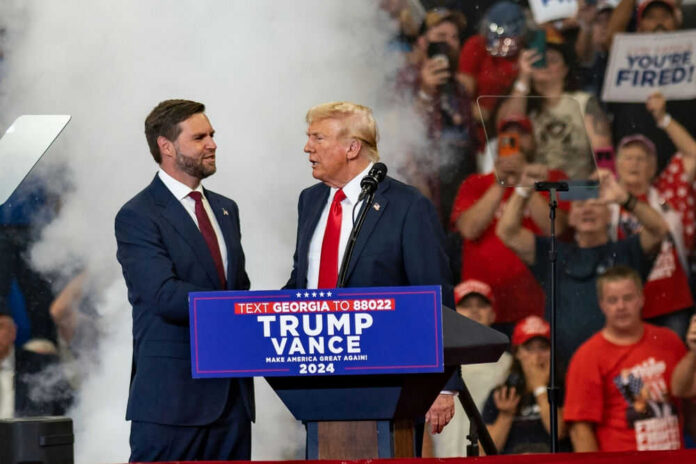
Donald Trump’s endorsement of Mike Lindell for Minnesota governor arrived with the same maximalist phrasing he reserves for loyalists: “one of America’s greatest and most hardworking patriots,” paired with a “complete and total endorsement.” In Republican primaries, particularly those dominated by high-information base voters and low turnout, such endorsements can function less as persuasion than as sorting mechanisms—clarifying who carries the party’s populist banner and activating a reliable slice of the electorate to deliver a decisive plurality. Coverage across mainstream outlets captured the fact pattern: a formal Truth Social blessing, effusive language, and timing close enough to the primary to matter operationally.
Lindell’s immediate posture was equal parts gratitude and momentum narrative. In a local CBS Minnesota interview, he touted an internal Big Data Poll showing him above 40% and credited Trump’s backing for a double-digit advantage over Republican rivals Lisa Demuth and Kendall Qualls; internal polls warrant healthy skepticism, but they do explain strategic decisions—like why campaigns lean into national surrogates when they believe the base is aligned and the calendar is short.
The Candidate Lindell Is Selling: Operator, Redeemed, Problem-Solver
Every outsider candidacy rides on a theory of the case. Lindell’s is that executive competence transfers from a private Minnesota company to state government, and that lived experience with addiction and recovery encodes resilience under pressure. In interviews, he frames himself as a pragmatic fix-it governor-in-waiting: promising line-item rigor on budgets, talking up affordability, and previewing policy packages he says will land before the primary. This is time-tested insurgent positioning—contrast a builder’s bias-for-action with what he portrays as career politicians’ drift and delay, then weld that contrast to a culture-war credential that galvanizes the right.
On immigration, he floated conditional work authorizations for undocumented residents without serious criminal records, alongside firm removal for felony offenders. Even supporters will want to see the implementation scaffolding: statutory authorities invoked, interaction with federal enforcement, fiscal scoring, and administrative capacity. Lindell promised detailed budgets and plans; as with any executive pitch, the proof lives in the line items and the legal pathway, not the sound bite.
The Baggage He Cannot Shed: Election Claims and the Defamation Era
Lindell’s brand is inseparable from his post-2020 crusade over voting technology—claims that did not withstand judicial scrutiny and spawned a cascade of litigation. A Colorado jury found him liable for defamation against a former Dominion employee, awarding more than $2 million; he is appealing, but the verdict stands unless and until reversed. Dominion Voting Systems, rebranded after a 2023 acquisition, later dropped its separate $1.3 billion suit against him—resolution by dismissal does not retroactively validate the underlying allegations, but it removes an existential exposure from his legal ledger.
Smartmatic’s defamation suit remains active, with the company signaling nine-figure damages; even if that number is negotiating posture, it represents real tail risk for a candidate whose finances and media attention are already absorbed by court fights. This is not merely personal history; it locates Lindell inside a durable structural trend. Defamation litigation has become a primary referee for contested truth-claims in politics—what media lawyers and scholars have described as a “defamation renaissance”—with cases multiplying in scope, stakes, and visibility as both deterrent and remedy in the disinformation battlespace.
How We Got Here: Loyalty Economics and Litigation as Political Gravity
Trump’s endorsements operate on a loyalty axis more than an ideology axis: candidates who echo the former president’s narratives, defend his grievances, and keep his coalition emotionally engaged tend to receive his imprimatur. For those candidates, the endorsement delivers three concrete assets: earned media, small-dollar activation, and a presumptive claim to base voters in a splintered primary field. For Lindell, who has poured money and time into a cause aligned with Trump’s account of 2020 and who weathered retail boycotts and device seizures as public drama, the exchange is straightforward: loyalty in, legitimacy out.
Overlay that with the litigation cycle and you get the new political economy of controversy. Companies at the center of conspiracy narratives increasingly pursue aggressive defamation strategies, both to protect commercial reputation and to reestablish factual baselines. Verdicts against high-profile figures and outlets have grown more frequent and consequential, driven by the ubiquity of viral claims and the documentary trail those claims leave behind. The First Amendment standard for public-figure defamation remains demanding—actual malice, proven by clear and convincing evidence—but juries are demonstrating that the standard is not insurmountable when the record is strong.
Primary Mechanics vs. General-Election Math
Endorsements of this intensity tend to reshape primaries first and general elections later. In Minnesota, local analysts argued that Trump’s nod likely vaults Lindell to the top in a low-turnout August contest. The base is efficient: it votes consistently, absorbs elite cues, and can overwhelm better-funded but less polarizing rivals in a compressed window. By contrast, general elections are decided at the margins, where independents’ negative partisanship and fatigue with conflict-heavy candidates grow costly. Early commentary from Democratic strategists suggests they relish facing Lindell—he is vivid, but vividness cuts both ways in statewide races decided by persuasion rather than mobilization.
This split-screen—dominant in the primary, exposed in the general—is not unique to Minnesota. It is the recurrent paradox of celebrity-politics fusion: the same properties that amplify a message online (outrage, certainty, omnipresence) can alienate the hinge voters who decide November.
“Equally as Incompetent as Walz, and Probably Equally as Corrupt” – Trump Slams Amy Klobuchar, Urges Minnesota to Elect Mike Lindell for Governor of Minnesotahttps://t.co/xfB9yVfJJR
— Siboney Peltier (@NitaPeltier) July 16, 2026
Policy Substance: What Will Be Scrutinized
Three buckets will determine whether Lindell’s executive pitch graduates beyond spectacle. First, fiscal realism: he promises detailed budgets and affordability gains; the examination will center on baselines, tradeoffs, and constraints. Anyone can decry “waste”; governing is about deciding which constituency absorbs the cut or the tax. Second, legal feasibility: proposals like state-managed conditional visas collide with federal supremacy in immigration; successful state-level innovation here tends to operate through workforce permitting and public-safety prioritization, not status changes. Clear statutory hooks and intergovernmental MOUs separate implementable policy from rhetoric.
Third, governance temperament: litigation saturation is more than a distraction; it affects talent recruitment, donor confidence, and message discipline. Candidates with ongoing defamation exposure must allocate both time and legal budget—an invisible opportunity cost that campaigns inevitably pay in diminished field operations and earned-media flexibility. Lindell’s own estimate that he has spent millions advancing his election claims underscores the scale of his personal commitment; in electoral terms, the question is whether that commitment translates to competence or simply to continued controversy.
What It Means Going Forward
Trump’s endorsement clarifies the Republican primary: if history holds, it significantly increases Lindell’s probability of nomination. It also clarifies the general-election challenge: a nominee defined by loyalty to contested narratives will face a Democratic apparatus eager to prosecute the electability case. In a political era where defamation courts now stand in for civic referees, candidates who build brands atop factual assertions that cannot survive discovery and cross-examination are taking on liabilities that follow them to the ballot.
For voters, the evaluation is simpler than the noise suggests. If you buy the operator story, demand the spreadsheets, statutory cites, and implementation calendars now, before the primary. If you worry about electability, pay attention to cross-tabs among independents, not the applause lines at base events. And if you think litigation is just background hum, look at the verdict forms and docket calendars; in 21st-century politics, they are part of the job description.
Sources:
zerohedge.com, people.com, the-independent.com, pbs.org, nbcnews.com, businessinsider.com, justia.com, newsweek.com, abajournal.com, medialaw.org