

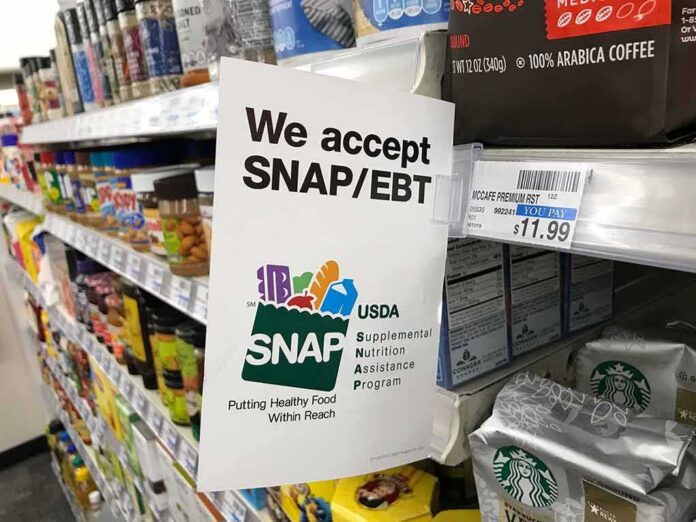
Florida’s move to bar soda, energy drinks, candy, and ultra‑processed prepared desserts from SNAP is not a culture‑war flourish; it is a live test of whether a large public benefit can be steered toward healthier purchases without backfiring on the very households it serves.
At a Glance
- USDA approved Florida’s two‑year demonstration to redefine which items count as “food” in SNAP, excluding soda, energy drinks, candy, and certain prepared desserts.
- The policy phases in during 2026, with state materials detailing product categories and retailer obligations.
- Evidence is split: restrictions reliably cut soda purchases, but comprehensive gains in diet quality are far from settled.
- The test sits inside a national clash over SNAP’s purpose: unconditional anti‑hunger support versus a lever for nutrition policy.
What Florida actually changed — and on what authority
Florida sought, and received, federal approval to run a time‑limited SNAP demonstration that amends what counts as an eligible “food” purchase. The waiver authorizes the state to exclude four categories: soda, energy drinks, candy, and ultra‑processed, shelf‑stable prepared desserts. USDA’s Food and Nutrition Service approved Florida’s request as a two‑year project beginning in 2026, explicitly as a novel test rather than a permanent rewrite of federal law. Florida’s implementation materials to recipients and retailers specify the banned categories, definitions, and dates, with consumer‑facing notices making clear that checkout denials will apply to these item types once the policy is active.
In other words, Florida is not freelancing; it is operating under a federally sanctioned demonstration that narrows what EBT cards can buy within the state’s borders for a fixed period. The mechanics are prosaic but consequential: item eligibility tables are updated, retailers reconfigure point‑of‑sale (POS) flags, and SNAP transactions are filtered accordingly. That plumbing, not rhetoric, will determine whether the experiment runs smoothly or generates costly friction at checkout.
How the restriction logic works at the register
SNAP checkout is adjudicated at the UPC level. Retailers maintain product files that mark each barcode as SNAP‑eligible or not; when program rules shift, those files must be updated, tested, and synchronized to every terminal. Florida’s carve‑outs target clearly commercial categories with relatively tight labeling conventions—sodas with added sweeteners; energy drinks defined in part by caffeine content; candies and confections; and a defined subset of shelf‑stable desserts—making UPC classification more tractable than, say, a nutrient‑threshold test would be. The cleaner the definition, the fewer edge‑cases at the scanner, the less conflict on the sales floor, and the lower the administrative burden on both the state and small grocers who run on thin margins.
Still, misflags and gray areas happen. Multi‑ingredient beverages that straddle categories, or seasonal confectionery tied to produce displays, can trigger disputes. Florida’s choice to target a handful of high‑sugar discretionary items, rather than attempt a broad “healthy versus unhealthy” standard, is the administrative hedge: limit the surface area of contention while testing whether removing obvious sugar bombs shifts baskets in a meaningful way.
What the evidence actually says about outcomes
Three strands of research matter here. First, short‑run purchasing effects: reviews of simulated and field restrictions on sugar‑sweetened beverages (SSBs) consistently find that banning SSBs from SNAP reduces their purchase or consumption among participants—an unsurprising, but policy‑relevant, result. Second, whole‑diet and health outcomes: higher‑quality trials and reviews are more cautious. A University of Michigan synthesis argues that while SSB purchases fall under restrictions, overall diet quality shows no meaningful improvement, and unintended consequences can surface, such as substitution to other calorie‑dense items or increased stress around food access. A 2024 American Journal of Public Health analysis likewise concludes that evidence does not support the claim that nutrition standards in SNAP, by themselves, improve diet quality or health, and warns of stressors that may worsen disparities if poorly implemented.
Third, modeling the long‑term: microsimulation work has projected sizable reductions in diabetes and cardiovascular events from SSB bans within SNAP, implying large population health gains if sustained over time. But models live or die on assumptions—elasticities, substitution patterns, and adherence—and Florida’s demonstration exists precisely because policymakers want observed, not hypothetical, effects in a real retail system. The most credible expectation from the current literature is modest, category‑specific purchase declines; anything beyond that must be earned with data and careful evaluation design.
The argument for the policy — and its limits
Proponents emphasize two principles. First, public dollars should not subsidize products that are, in nutrition terms, negative utility—calories with no compensating nutrient value and clear links to metabolic disease. Second, small, administratively clean nudges at the point of purchase can shape behavior at scale through default effects, even without changing household cash income. Florida’s design hews to that logic by aiming at a narrow set of discretionary items whose exclusion is easiest to implement and explain. And because the waiver is time‑bounded and evaluated, the state argues it is learning, not legislating a permanent moral code onto grocery carts.
The limits are just as pragmatic. SNAP is a benefit layered atop household cash; families can still buy soda with non‑SNAP dollars, so the net effect depends on budgets, preferences, and substitution. If restrictions increase checkout friction or stigma, participation could fall or shopping shifts could increase logistical burdens. If participants replace soda with sweetened coffees, juices, or cheaper snacks still eligible, total sugar and calorie intake may barely budge. These are not hypotheticals—reviewed evaluations highlight exactly such patterns and caution against over‑promising health gains from item bans alone.
The counter‑case: dignity, burden, and efficacy
Critics frame Florida’s trial as a paternalistic turn that singles out low‑income shoppers for surveillance and constraint. Anti‑hunger advocates warn that restrictions are burdensome to administer, stigmatizing at the register, and, at best, weak levers for changing entrenched dietary patterns; at worst, they risk harming participation and compounding stress for households already navigating scarcity. Academic reviews echo the efficacy concern: randomized and quasi‑experimental evidence to date does not show durable improvements in overall diet quality from restrictions, even when targeted categories like soda decline.
Those critiques deserve weight. SNAP’s statutory mission has been to reduce hunger; layering in disease prevention goals without strong implementation support can create conflicts on the ground. The most serious version of the counter‑case is not ideological; it is operational: if the administrative costs, retailer disputes, and participant confusion are nontrivial, then the net social benefit of a narrow item ban may be small relative to the friction it introduces.
How to judge Florida’s demonstration on its merits
Two tests will decide whether this approach is policy‑worthy beyond 2026. First, operational fidelity: clean UPC taxonomies, low error rates at checkout, minimal retailer burden, and high participant understanding. If the system runs smoothly, the stigma and friction arguments lose force. Second, net outcomes: not just fewer soda UPCs, but measurable improvements—however modest—in diet quality proxies without offsetting harms in participation or food security. That requires a credible evaluation plan with pre‑specified metrics, transparent methods, and public reporting. Given the split literature, a fair reading is that category bans can work as one instrument if paired with positive incentives and education; on their own, they rarely transform diets.
Florida’s wager is disciplined: a narrow target, a finite window, and federal cover to measure. Advocates’ cautions are equally grounded: without attention to dignity, clarity, and supports that expand good choices rather than merely close off bad ones, the policy can miss its mark. The right yardstick is neither outrage nor cheerleading, but whether the demonstration delivers reliable operational performance and demonstrable, participant‑centered benefits at acceptable cost.
Sources:
fna.usda.gov, wusf.org, healthysnap.myflfamilies.com, news-journalonline.com