Story Snapshot
• Trump orders deployment of submarines after Medvedev’s nuclear threats.
• Medvedev’s statements reference Russia’s “Dead Hand” system.
• US–Russia tensions heighten amid ongoing global crises.
• Diplomatic channels remain strained but open.
Escalating Tensions Between the US and Russia
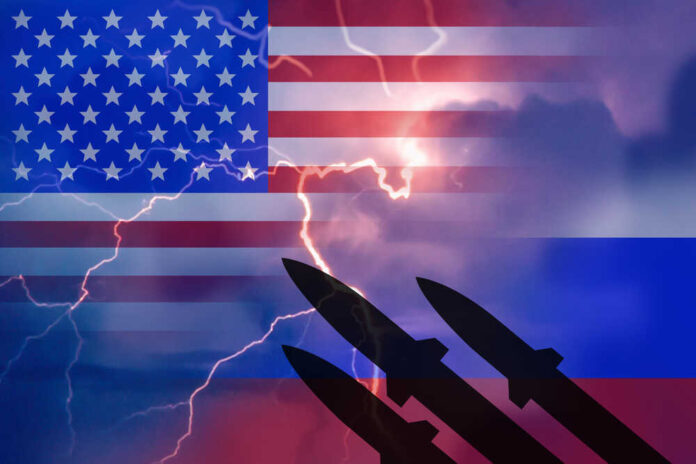
On August 1, 2025, President Donald Trump announced via Truth Social that he had ordered two U.S. nuclear submarines to be repositioned to “appropriate regions” closer to Russia, citing comments by Dmitry Medvedev, former Russian president and now Deputy Chairman of Russia’s Security Council, as “highly provocative” and a potential trigger for “unintended consequences.” Trump wrote: “Words are very important, and can often lead to unintended consequences, I hope this will not be one of those instances.”
On July 31, Medvedev posted on Telegram referencing Russia’s Cold War‑era “Dead Hand” automatic nuclear retaliation system. He accused Trump of “playing the ultimatum game” and warned that each new ultimatum was a step closer to war. According to news reports, Trump’s announcement came one day after Medvedev’s comments—suggesting a deliberate and rapid response. U.S. officials, including Secretary of State Marco Rubio, described the exchange as serious and illustrative of rising tensions.
Historical Context and Current Developments
Post‑Cold War U.S.–Russia relations remain heavily influenced by nuclear deterrence. Medvedev, once considered relatively moderate, has increasingly adopted hawkish rhetoric since Russia’s 2022 invasion of Ukraine. Meanwhile, the Trump administration has taken a more confrontational approach toward Russian influence, including recent U.S. airstrikes on Iranian nuclear facilities in June 2025.
Though no direct military engagements have been reported, the submarine deployment signals a heightened level of alert. U.S. submarines are regularly deployed, creating ambiguity over whether this represented a shift in posture or a symbolic escalation.
Stakeholder Dynamics and Reactions
Key figures include President Trump and Dmitry Medvedev. Trump’s positioning aims to demonstrate U.S. resolve and deter further Russian escalation. Medvedev’s public comments appear consistent with his strategy of asserting deterrence capability and staying politically relevant within Kremlin circles.
Kremlin spokesperson Dmitry Peskov responded on August 4, urging “extreme caution” in nuclear rhetoric and characterizing the U.S. submarines as “already on combat duty,” implying that Trump’s announcement reflected routine deployment rather than a substantive strategic shift.
Implications and Expert Perspectives
Short‑term, the development has increased global alertness and raised the risk of miscalculation. Long‑term, it could erode trust between the U.S. and Russia and normalize public nuclear signaling as a diplomatic tool. Ongoing communication and clear channels will be essential to manage escalation risk.
Hans M. Kristensen, director of the Nuclear Information Project at the Federation of American Scientists, described the move as “an escalation of rhetoric” rather than a change in posture, noting that nuclear assets are typically maintained as background deterrents and seldom announced publicly.
Looking Forward
Trump has set a ceasefire deadline of August 8 2025 for Russia to begin negotiations on Ukraine, threatening additional economic sanctions or secondary tariffs if no progress is made. Special Envoy Steve Witkoff is scheduled to visit Moscow amid these tensions, indicating diplomatic avenues remain active.
Russia has offered no sign it will meet Trump’s terms. The Kremlin continues to call for caution in public nuclear discourse even as it withstands mounting international pressure.
This situation underlines the precarious nature of nuclear signaling, where strategic deterrence and public diplomacy intersect. Continued diplomatic engagement and careful messaging will be essential to avoid missteps with global security consequences.
Sources
Institute for the Study of War