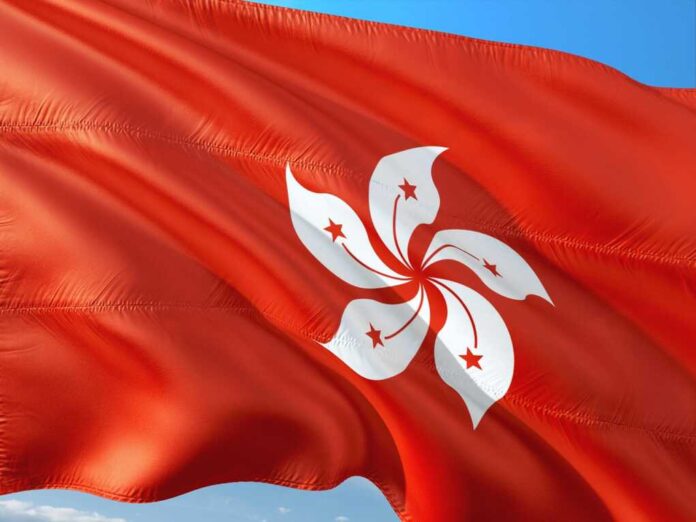
The disbandment of Hong Kong’s last pro-democracy party symbolizes the end of an era of public dissent.
Story Highlights
- League of Social Democrats disbands due to political pressure.
- National Security Law continues to stifle opposition.
- Beijing’s influence erodes Hong Kong’s autonomy.
- Human rights organizations decry the crackdown.
Disbandment of Hong Kong’s Last Pro-Democracy Party
In June 2025, the League of Social Democrats (LSD), Hong Kong’s last pro-democracy party, announced its disbandment.
This decision was attributed to immense political pressure and the threat to its members. The disbandment signals the effective end of organized public opposition in Hong Kong, following years of escalating crackdowns, which began with the mass protests of 2019 and the subsequent imposition of the National Security Law in 2020.
Hong Kong’s opposition Democratic Party to hold disbandment vote, sell office in December. In full: https://t.co/icpleoYT8U
— Hong Kong Free Press HKFP (@hkfp) August 29, 2025
The National Security Law, enacted in 2020 by Beijing, established broad offenses including secession, subversion, terrorism, and collusion with foreign forces, according to China’s official Xinhua News Agency. This law has been instrumental in dismantling Hong Kong’s pro-democracy movement. International observers, including Amnesty International, have argued that these actions undermined freedoms once guaranteed under the “one country, two systems” framework.
The Systematic Erosion of Freedoms
Hong Kong, once a beacon of autonomy and civil liberties, has seen its unique political status steadily undermined by Beijing’s interventions. Dr. Michael Davis, a former law professor at the University of Hong Kong, says the LSD’s disbandment illustrates the shrinking space for dissent as pro-democracy groups face increasing marginalization. Key figures and activists have been jailed or exiled, leaving no room for organized opposition in the city.
Reporters Without Borders notes that Beijing’s policies since 2020 have contributed to the closure of both political groups and independent media outlets. At least 14 outlets have been closed since the National Security Law came into effect. The media sector has been decimated, contributing to a chilling effect on public discourse and a pervasive atmosphere of fear and self-censorship among journalists and activists.
Global Implications and Reactions
The recent developments in Hong Kong have significant implications both locally and internationally. Human Rights Watch stated in a July 2025 report that Hong Kong has become a “patriots-only” city, with independent media and mass protests effectively eliminated. The erosion of freedoms is seen as a significant blow to Hong Kong’s international reputation and business confidence.
As Hong Kong faces a brain drain due to the emigration of professionals, activists, and youth, the long-term effects on the city’s socio-political fabric are profound. According to Professor Steve Tsang of SOAS University of London, the “patriots-only” governance model has removed meaningful opposition, leaving civil society weakened and further reducing Hong Kong’s autonomy.
Sources:
Wikipedia: 2019–2020 Hong Kong protests
Council on Foreign Relations: Hong Kong’s Freedoms and Security Law
Los Angeles Times/Associated Press: Disbandment of LSD
Human Rights Watch: Crackdown and “Patriots Only” Hong Kong