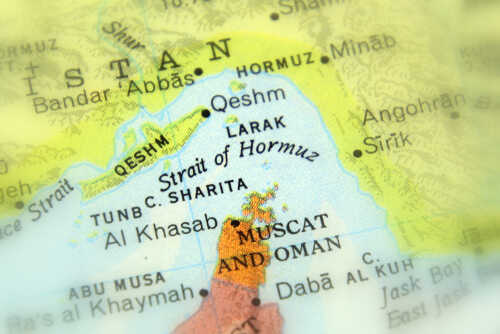
In the latest U.S.–Iran confrontation in the Strait of Hormuz, the core reality is not a single “broken ceasefire” but a pattern: Washington is using repeated, “self‑defense” strikes to enforce its view of maritime freedom while Tehran invokes sovereignty and retaliation—each side claiming to uphold a ceasefire even as it systematically erodes it.
Key Points
- The U.S. Central Command says its newest strikes on Iran are retaliatory “self-defense” actions after Iranian attacks on warships and commercial vessels in and around the Strait of Hormuz.
- Iran denies some of the specific U.S. allegations, accuses Washington of grave ceasefire violations, and has responded with its own strikes across the Gulf and by tightening control over Hormuz.
- President Trump oscillates between declaring the ceasefire “over” and insisting it is “still going,” reflecting a political strategy that separates rhetorical posture from on‑the‑ground escalation.
- The crisis fits a long-running pattern in which ambiguous maritime incidents in Hormuz trigger U.S. strikes, Iranian counterstrikes, and mutual claims of legality—without robust independent verification.
- Beyond the legal arguments, the stakes are global: energy markets, alliance cohesion, and the durability of any mechanism that tries to freeze conflict while warships still contest a narrow shipping lane.
From “Love Tap” to Multiple Nights of Strikes: What Is Actually Happening?
To understand this round of escalation, start with how the U.S. military is framing its actions. Central Command (CENTCOM) has repeatedly described recent operations as “self-defense strikes” aimed at neutralizing Iranian missile, drone, and naval threats to U.S. forces and commercial shipping. In several episodes over spring and early summer 2026, CENTCOM says Iran has launched projectiles, drones, or small boats against warships or cargo vessels transiting or approaching the Strait of Hormuz, prompting U.S. strikes on the facilities from which those attacks were launched.
These are not pinpricks: reporting from U.S. outlets and regional broadcasters describes strike packages hitting air defense systems, radar and command-and-control nodes, anti-ship missile sites, ports, and small boat fleets—often dozens of targets in a single night. In parallel, the Trump administration has leaned on economic tools, revoking or tightening waivers that allowed Iran to sell oil and petrochemicals under interim arrangements and re-emphasizing that access to the global economy is contingent on Tehran’s behavior.
Yet the president’s own language is strikingly casual. In one interview he labeled renewed bombings “just a love tap” and insisted the ceasefire was still holding, even as air defenses in Tehran were activating and explosions were reported in southern Iran. In other settings he has called Iran “vicious, violent people,” suggested that if Tehran had nuclear weapons it would use them, and alternated between saying the ceasefire was “over” and asserting, “The ceasefire is going. It’s in effect.” The gap between military escalation and rhetorical reassurance is part of the story.
How the Ceasefire Was Supposed to Work—and Why It Keeps Fraying
The ceasefire at issue is not a comprehensive peace treaty but a set of temporary arrangements designed to pause large-scale combat while reopening Hormuz to shipping and keeping Iran’s nuclear program constrained. In practice, it has four pillars: limited sanctions relief—especially for oil exports—conditional on Iranian restraint; mutual commitments to avoid attacks on commercial vessels; rules of engagement around U.S. and Iranian military assets in and near Hormuz; and an expectation that any violations would trigger contained, proportional responses, not a return to full war.
That architecture is fragile by design. It assumes that both sides will accept some level of friction—surveillance flights, naval escorts, political theater—without translating every incident into a justification for major strikes. In reality, both Washington and Tehran have treated the ceasefire clauses as levers: each cites the other’s breach to justify new action, but rarely concedes that its own “response” also chips away at the truce. Iran’s foreign ministry, for example, has accused the U.S. of “grave violation” of the ceasefire after overnight strikes on southern Iran and boats in Hormuz, claiming several naval personnel killed. Tehran has also warned that fresh strikes render the ceasefire “practically meaningless,” arguing that the legal framework cannot survive repeated U.S. attacks on its territory.
The U.S. position is the mirror image. Officials stress that strikes are measured and deliberate, conducted to protect forces or shipping after what they describe as unprovoked Iranian actions—such as the shootdown of a U.S. MQ‑1 drone over international waters or a drone attack on a cargo ship near Oman. In this framing, it is Iran that has violated the ceasefire, and U.S. strikes are the enforcement mechanism that keeps the agreement credible. Both narratives depend heavily on each side’s intelligence claims, which are not fully shared with the public or with neutral authorities.
Iran’s Counter-Narrative: Sovereignty, Retaliation, and Control of Hormuz
Iran’s messaging channels tell a different story. Tehran has consistently denied some of the specific U.S. allegations about targeting commercial ships, while emphasizing its own strikes as lawful retaliation. In one episode, Iranian officials said a projectile struck near a pier in Sirik in southern Iran and that naval forces then responded by attacking U.S. military targets in the region; in another, the Islamic Revolutionary Guard Corps claimed to have struck a U.S. air base used for launching attacks on Iranian infrastructure.
Simultaneously, Iran has moved to leverage its geographic advantage. Iranian statements to the United Nations and public declarations have asserted a right to control shipping through the Strait of Hormuz, including levying transit fees and distinguishing between “hostile” and “non-hostile” vessels. At points in 2026, Tehran announced the strait closed to maritime traffic, then narrowed that position to allow “non-hostile” ships to transit, effectively turning shipping access into a tool of coercive diplomacy.
This strategy carries reputational costs. When IRGC gunboats fire on or harass commercial vessels, or when Iranian drones and missiles threaten ships near the strait, international maritime reporting tends to see Iranian aggression rather than lawful enforcement. Yet Iran’s argument is that the U.S.–Israeli blockade itself is a breach of law—a “belligerent” act of war that justifies countermeasures in and around Hormuz. As Chatham House’s legal analysis has noted, once a blockade is in place, the strait effectively becomes a belligerent zone in an armed conflict; that changes the legal rules for both sides.
Evidence Gaps and the Problem of Ambiguous Maritime Incidents
What is conspicuously missing from this picture is robust, independent verification of many of the triggering incidents. In earlier tanker crises—in 2019, 2018, and 2019—investigations struggled to conclusively prove responsibility for attacks on specific vessels, and the pattern has repeated. The current conflict relies heavily on statements from U.S. officials, CENTCOM press releases, Iranian ministries, and state media. Technical details that could ground public assessment—weapon debris analyses, radar tracks, surveillance video from the ships themselves, and authenticated crew testimonies—are either classified or absent from open sources.
There are a few exceptions. British and maritime security reporting has confirmed that at least one vessel was hit by a projectile off Oman in the recent period, and the UK Maritime Trade Operations Center has logged incidents of gunfire directed at tankers without warning. But even here, attribution to a specific Iranian unit or chain of command is based on intelligence assessments, not publicly shared forensic evidence. When CNN, for instance, aired Iranian state media video allegedly showing attacks on a U.S. base, it explicitly noted that it could not verify where or when the footage was shot.
That ambiguity matters. In a narrow, contested waterway with multiple militaries and irregular actors, the “base rate” of unclear responsibility is high; analysts of the Gulf of Oman and Hormuz incidents have long emphasized how quickly states move from allegation to retaliation. This does not mean the U.S. or Iran is necessarily misrepresenting events, but it does mean outside observers must treat both sides’ claims as partly opaque. The ceasefire’s health is being judged on incidents the public cannot rigorously audit.
Trump’s Ceasefire Talk: Strategy or Contradiction?
President Trump’s shifting language about the ceasefire—calling it violated in one breath and intact in the next—is best understood as a political instrument rather than a legal verdict. On one axis, he uses strong rhetoric about Iranian “scum” and nuclear intentions to signal toughness to domestic and allied audiences.[User social package summary; 3rd MS NOW video] On another, he downplays the scale of U.S. strikes as a “love tap” and insists the ceasefire is “going,” framing escalations as manageable bumps on a road to a “good deal or no deal.”
This dual posture serves several purposes. It protects negotiation space by avoiding a formal declaration that the ceasefire has collapsed, which would trigger pressure for either a larger war or a full withdrawal. It also allows Washington to characterize its operations as enforcement or self-defense inside a still‑valid framework, rather than as a unilateral abandonment of diplomacy. For allies, however, the message is mixed: European governments and NATO partners hear both that the U.S. is engaged in serious combat operations and that the underlying agreement is somehow intact.
Tehran, unsurprisingly, reads these statements differently. When Iran’s foreign ministry says fresh U.S. strikes make the ceasefire “practically meaningless,” it is not only invoking legal language; it is signaling that Trump’s words about progress and restraint are, in its view, disconnected from battlefield realities. That disconnect complicates any attempt to use presidential assurances as a gauge of risk.
Global Consequences: Energy, Alliances, and the Future of Maritime Conflict in Hormuz
The immediate consequences of these cycles are visible in energy markets and alliance dynamics. Oil prices have repeatedly spiked during each round of U.S.–Iran strikes and shipping incidents, with benchmarks jumping several percentage points in single sessions as traders reprice the risk of disrupted Gulf exports. For major consumers, from Europe to Asia, the fragility of Hormuz access is not an abstract strategic question; it translates into inflation, budget stress, and political pressure at home.
Alliance politics are equally strained. NATO leaders have voiced varying degrees of support for U.S. operations; some, like the secretary general, publicly underscore the necessity of responding to Iranian attacks, while others worry about being dragged into an escalatory spiral without a clear end-state. Trump’s criticisms of allies’ “relative lack of support,” coupled with his musings about leaving NATO or controlling territories far from Hormuz, such as Greenland, add friction to already complex coordination.[User social package summary; MS NOW & WFAA videos]
Looking forward, the deeper issue is whether any ceasefire framework can hold in a maritime flashpoint that is simultaneously a war zone, a chokepoint for global trade, and a lever of statecraft for both Iran and the U.S. Legal analyses from institutions such as Chatham House and academic observers have emphasized that once blockade, counter-blockade, and repeated “self-defense” strikes are in play, Hormuz ceases to be a neutral shipping lane and becomes part of an ongoing international armed conflict. That reality makes small incidents—an unmanned drone, a misinterpreted radar contact, a single projectile—a potential trigger for actions that reverberate through global politics and markets.
Absent a restructuring of that environment—through clearer, jointly monitored rules of engagement, independent incident investigation mechanisms, and a recalibration of sanctions and blockades—the pattern seen in this episode is likely to persist. The U.S. will continue to launch strikes it describes as necessary and limited; Iran will continue to retaliate and assert control over Hormuz; each will claim the ceasefire, in some form, still exists, even as they steadily hollow it out.
Sources:
cbsnews.com, youtube.com, cfr.org, en.wikipedia.org, cnbc.com, facebook.com, crisisgroup.org, nbcnews.com, reuters.com, aljazeera.com, now.tufts.edu, chathamhouse.org