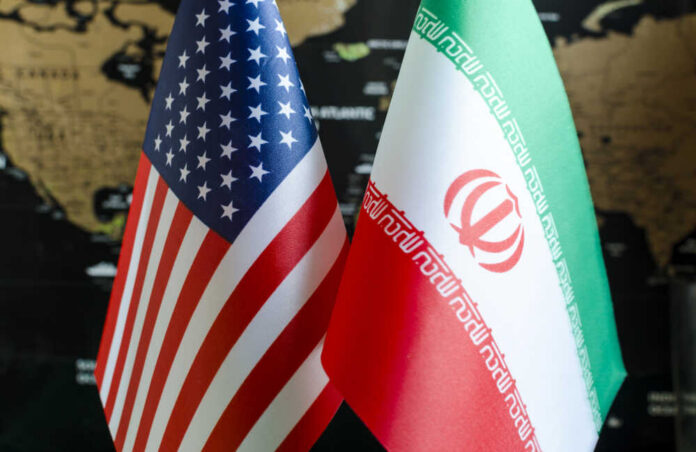
The central fact is not merely that Washington hit Iran again; it is that Trump has turned force itself into the negotiating instrument, using successive strikes, public ultimatums, and claims of destruction to try to compel a political end-state that diplomacy has not produced.
Intro Header
- The strikes on Fordo, Natanz, and Isfahan were presented by Trump as a decisive military success, with the administration saying the sites were “completely and totally obliterated.”
- The strongest factual dispute is not over whether the U.S. struck Iran, but over the trigger events and legal justification that were used to frame the escalation.
- Iran’s counter-case is specific: it denies the helicopter shootdown, contests the MOU-based narrative, and rejects the claim that it requested a halt to bombing.
- The wider pattern is familiar: both sides rely on contested incidents, and both gain politically from describing the conflict in terms that reinforce their own strategic story.
How Trump’s Iran Doctrine Works in Practice
Trump’s Iran strategy is built around a simple theory of coercion: overwhelm the adversary fast enough that it concludes further resistance is futile, then convert that shock into leverage at the bargaining table. That is why the rhetoric matters as much as the ordnance. In the public telling, the U.S. does not merely punish Iran; it “obliterates” nuclear infrastructure, signals that “many targets” remain, and tells Tehran to choose between “peace” and “tragedy.” CBS News reported that Trump described the strikes on Fordo, Natanz, and Isfahan as a “spectacular military success” and said the sites had been “completely and totally obliterated.”
The mechanism is not subtle. It depends on a sequence: military action, public dominance, and controlled ambiguity about what comes next. That ambiguity is part of the pressure. It is also why Trump’s own language repeatedly frames the campaign as unfinished business rather than a closed operation; he is not selling restraint, but momentum. In that sense, the message is not “we have ended the war,” but “we can keep going until you accept our terms.” The policy is designed less to absorb conflict than to manufacture submission.
The Strike Claims Are Strong; the Trigger Narrative Is Much Less Secure
The fact of U.S. strikes is well supported. The more contested matter is the story used to justify them. The research package shows a sharp split between the American account and the Iranian rebuttal over the initial escalation: Trump’s side says Iran downed a U.S. Apache helicopter over the Strait of Hormuz, prompting a “proportional response,” while Iranian media and the IRGC denied that the attack occurred. That is not a minor interpretive disagreement; it is the hinge on which the defensive rationale turns. If the trigger event is disputed, then the claim of necessity becomes much easier to challenge.
The same pattern appears in the diplomatic claims. Trump told Fox News that top Iranian officials directly called him to request a halt to the bombing, but the Iranian side denied making those calls. That leaves the allegation hanging in a familiar gray zone: rhetorically useful, politically potent, but not independently verified in the material provided. In high-stakes crisis messaging, the difference between “asserted” and “substantiated” is everything. Here, the U.S. account is forceful; the evidentiary record surfaced in the package is not.
Why the MOU Argument Matters More Than the Headlines Suggest
Much of the dispute has been routed through the Islamabad Memorandum of Understanding, which Iranian officials invoke as the legal framework governing the Strait of Hormuz. In the Iranian account, Deputy Foreign Minister Garba Body and the Foreign Ministry argue that the United States violated Articles 1, 2, and 10 by revoking Iran’s oil-sales license and by using military force in a zone the agreement assigns to Iran, Oman, and Arab states rather than U.S. supervision. That is a specific legal claim, not a slogan. It gives Iran a coherent sovereignty-based argument rather than a merely emotional protest.
But legal coherence is not the same as dispositive proof. The research package also makes clear that the MOU text and any authoritative legal brief remain key missing documents. Until the underlying text is available and independently analyzed, both sides are arguing from partial public records and selectively quoted provisions. That is precisely how modern crisis disputes function: the side with the louder megaphone tries to define the agreement, while the side with the narrower channel insists the agreement has been violated. The legal fight is real, but the public can only judge the fragments it is shown.
The Nuclear-Destruction Claim Is Politically Powerful, but Not the Final Word
Trump’s claim that the Iranian nuclear sites were “obliterated” should be read as a political and strategic statement before it is read as a technical assessment. The package includes a later CNN-reported intelligence assessment, echoed in other coverage, saying early U.S. analysis found only a setback of months rather than total destruction; it also notes that key components such as centrifuges and enriched uranium were not clearly destroyed. That matters because public declarations of total success often outrun what post-strike intelligence can actually prove so early. In other words, a president can announce victory before the evidence has fully matured.
This does not mean the strikes were insignificant. Even the more cautious assessments in the research concede meaningful damage, and the CFR material describes the attack as designed to stunt, if not destroy, Iran’s nuclear program. The more precise conclusion is that the U.S. struck a serious blow, but the claim of complete elimination is still a claim, not a settled forensic finding. That distinction matters because it shapes whether the operation is remembered as a crippling setback, a temporary delay, or the opening move in a longer campaign.
What Makes the Regional Picture So Volatile
The deeper danger is that every actor in the system has incentives to keep the crisis alive, at least long enough to force concessions. The neutral context in the research package describes a decades-long pattern in which both sides rely on contested trigger events to justify retaliation, and it notes that the broader U.S.-Iran relationship has been marked by recurring confrontation since the late 20th century. That history is not decorative background; it is the operating environment. When force becomes routine, each new strike is interpreted through old grievances and preexisting suspicion.
Regional spillover makes the whole arrangement harder to control. The package points to retaliation against U.S. bases in Bahrain and Kuwait, continued Israeli operations in Lebanon, and the broader oil-market shock that follows every new exchange. Once shipping, energy, and alliance politics are entangled, the conflict stops being a bilateral duel and becomes a regional stress test. That is why claims about escorting oil through the Strait, destroying radar networks, or denying access to air corridors are not side notes; they are the infrastructure of escalation.
Oil prices rose more than 1% on Thursday after the US carried out fresh strikes on Iran, denting hopes for talks to end their war and for the full reopening of the Strait of Hormuz, a chokepoint for one-fifth of pre-war global oil supplies.
Brent crude futures rose 86 cents, or… pic.twitter.com/HeCtvlnA5J
— The Express Tribune (@etribune) July 9, 2026
What the Evidence Ultimately Supports
The strongest reading of the package is that Trump has embraced a maximalist coercive model: hit hard, claim decisive success, and force the other side to absorb the message before it can regroup. Iran, meanwhile, answers with sovereignty language, legal objections, and denials of the specific trigger events that Washington uses to justify the attacks. That is why the dispute remains so hard to settle cleanly. Each side is not just contesting facts; it is contesting the legitimacy of the entire framework through which those facts are being interpreted.
For that reason, the most defensible evergreen judgment is straightforward. The U.S. strikes are real and politically consequential. The claim that they have already resolved the nuclear problem is much less secure, and the legal and factual predicates used to justify the escalation remain actively disputed in the record surfaced here. In strategic terms, the campaign has demonstrated reach and resolve. It has not demonstrated closure.
Sources:
redstate.com, youtube.com, foxnews.com, cnn.com