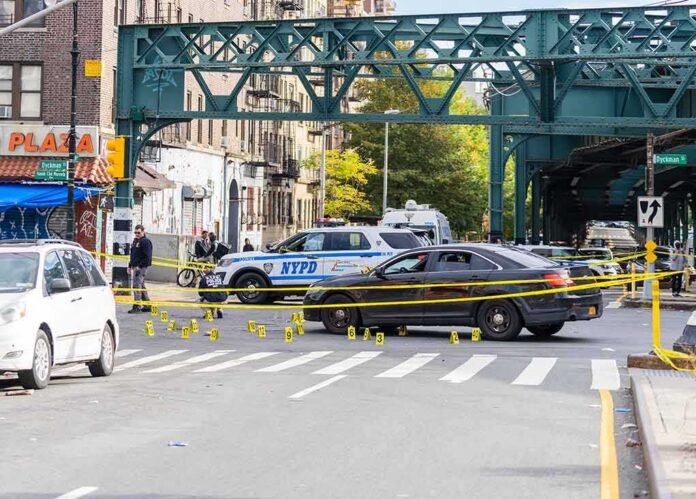
When a city arrests a 12-year-old for a gun killing, the headline can eclipse the facts; here, the facts are stark enough on their own, and they sit inside a juvenile-justice system designed for rehabilitation even as it absorbs conduct ordinarily policed as adult crime.
The Short Version
- Police arrested a 12-year-old boy in Northeast D.C. and charged him with voluntary manslaughter while armed in the July 11 killing of 13-year-old Ahmad Mims.
- Officers found Mims fatally shot on the sidewalk in the 1600 block of Rosedale Street NE; he was pronounced dead at the scene.
- Reporting describes a search-warrant affidavit citing witnesses who said the shooting followed an incident involving the suspect’s sister, aligning with a manslaughter theory rather than premeditated murder.
- D.C.’s juvenile system and Supreme Court precedent require children be treated and sentenced differently than adults, even for serious violence.
What investigators say happened on Rosedale Street
Metropolitan Police and the Capital Area Regional Fugitive Task Force located and arrested a 12-year-old boy from Northeast D.C. on August 19, charging him with voluntary manslaughter while armed in connection with the shooting death of 13-year-old Ahmad Mims. The charging announcement ties the child directly to a July 11 incident in Kingman Park on the 1600 block of Rosedale Street NE. Responding to calls just after 8:20 p.m., officers found Mims on the sidewalk with a gunshot wound; D.C. Fire and EMS pronounced him dead at the scene. The arrest is anchored in a homicide case file that, according to local reporting, includes witness accounts and video that helped reconstruct movements before the gunfire.
Several outlets report details consistent with a voluntary manslaughter charge—an offense that in D.C. law captures an unlawful killing committed in the heat of passion or under adequate provocation, as opposed to a calculated, premeditated act. NBC Washington described a search-warrant affidavit stating that witnesses told detectives Mims was killed for hitting the suspected shooter’s sister, an account that, if credited, would explain prosecutors’ selection of a manslaughter while armed charge over first-degree murder. FOX 5 reported that investigators obtained video showing two teens waiting in a hallway before the killing, material that can be pivotal in establishing presence, sequence, and identification.
Why the charge is voluntary manslaughter while armed
Voluntary manslaughter occupies a narrow but consequential lane between murder and excusable homicide. Prosecutors reach for it when they believe they can prove an intentional killing but also that the defendant acted in a sudden quarrel or heat of passion provoked by the victim in a way an ordinary person might find overwhelming. The presence of a firearm adds the “while armed” enhancement, reflecting the elevated risk to the public and the lethality of the conduct. In practice, the line a prosecutor draws turns on discrete facts: what the witnesses saw and heard, any contemporaneous video or audio, the trajectory and number of shots, and statements made before, during, or after the incident. The charging decision here—voluntary manslaughter rather than premeditated murder—signals a theory anchored less in planning than in rapid escalation.
This does not minimize the gravity of what occurred. A 13-year-old is dead, and a 12-year-old faces a serious felony. It does, however, frame the state’s burden: to show, beyond a reasonable doubt at adjudication, that the child intentionally caused the fatal shooting and did so in circumstances fitting the law’s provocation rubric. Early reporting suggests investigators collected witness accounts and obtained video consistent with that rubric.
Juvenile process and the limits of public detail
Because the accused is 12, the case proceeds inside a juvenile legal architecture that presumes diminished culpability and prioritizes rehabilitation. That has two immediate implications. First, records and filings often remain sealed or redacted, which is why much of the charging narrative in public view arrives through police announcements and secondary reporting rather than the petition and affidavit themselves. Second, disposition—juvenile law’s term for outcome—cannot mirror adult sentencing: federal constitutional law requires individualized treatment of children that meaningfully accounts for youth and its attendant characteristics.
This structure is not a loophole; it is the system responding to the settled developmental science that undergirded the Supreme Court’s juvenile-sentencing decisions, including Miller v. Alabama, which barred mandatory life without parole for juveniles. In D.C., that means even serious violent offenses by very young defendants are handled with a heavy emphasis on services, supervision, and, where appropriate, secure placement—measures tailored to public safety and the child’s prospects rather than retribution alone.
Evidence building in a juvenile homicide case
In shootings that occur in or near residences, detectives look for a predictable suite of proof: scene processing for projectiles and casings; trajectory analysis; autopsy findings on range and angle; latent fingerprints or touch DNA on firearms or magazines if recovered; and the increasingly decisive layer of digital evidence from cameras inside homes, doorbells, and nearby streets. Equally important are statements—911 calls, immediate utterances preserved on body-worn cameras, and formal interviews with witnesses who place individuals and weapons in rooms and hallways at particular times. The reported existence of video showing teens in a hallway before the killing suggests detectives were able to establish a timeline preceding the gunfire; the described witness accounts, if admitted and credited, would supply motive and provocation consistent with the charging theory.
When the defendant is 12, capacity and competency assessments can also come into play. Courts must ensure a child can understand proceedings and assist counsel; if not, the law provides pathways for treatment and education aimed at restoration rather than a rush to adjudication. Those questions are routine in very-young-offender cases and operate alongside the evidentiary issues more familiar to adult homicide prosecutions.
How this fits— and doesn’t—within youth-violence narratives
Cases like this travel fast because the ages shock. Yet they exist against a countervailing statistical backdrop: D.C. recorded a sharp decline in total violent crime in 2024—down 35% from 2023 to a 30-year low, according to MPD data cited by the Criminal Justice Coordinating Council—and juvenile arrests constituted 29% of arrests for violent crime that year. That context does not soften the reality of a single homicide; it locates it accurately inside a broader trend line. Public safety is not served by minimizing the case, nor is it served by treating an extreme event as typical of youth behavior writ large.
The better frame is institutional: can the juvenile system credibly manage extreme youth cases without abandoning its rehabilitative core, and can police and prosecutors build cases that are both swift and sound? The arrest by a regional fugitive task force and the selection of a legally precise charge suggest coordinated seriousness. The juvenile court’s confidentiality rules, while frustrating to those seeking full narratives, protect the developmental stakes that Supreme Court doctrine and decades of research recognize as real.
What to watch next
From here, the case will turn on evidence that is routine in homicide work but unusually sensitive given the defendant’s age: corroborated witness accounts; any forensic bridge between a recovered weapon and the fatal round; and digital timelines that fix who was where, when. In adjudication, the government must prove identity and intent beyond a reasonable doubt and square those facts with the provocation elements that distinguish manslaughter from murder. Separately, the court will navigate capacity, services, and, if needed, secure placement calibrated to both safety and rehabilitation. One sobering constant remains: accountability in juvenile court can be firm and real—especially in firearm homicides—but it is structured to leave space for a child to reenter life with a future.
Sources:
washingtontimes.com, wusa9.com, dcchroniclenews.com, abcnews4.com, dccourts.gov