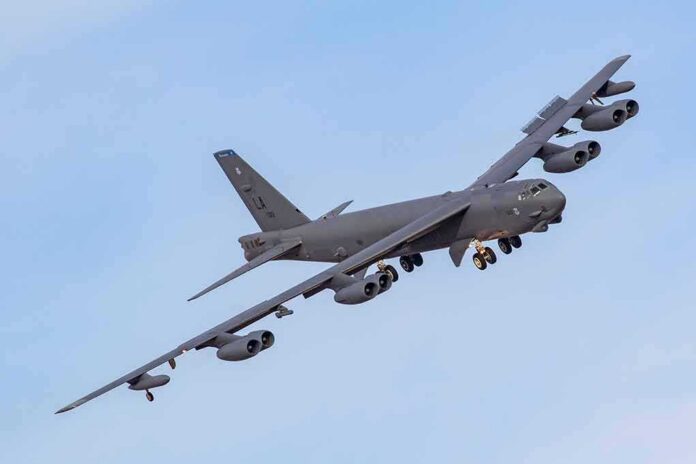
Russia’s aging Tu-95 “Bear” bomber crashed during a training flight in the Amur region, killing six crew and injuring one, highlighting the risks of flying Cold War-era aircraft that Russia can no longer replace.
Story Snapshot
- Russian Defense Ministry reported six dead, one injured after a Tu-95 crash in Amur.
- The bomber went down in an unpopulated area near Krasnoyarovo on the Zeya River.
- Officials said the aircraft was unarmed and on a training mission.
- Investigators were sent to find the cause; no official reason yet.
Confirmed Crash And Casualties In Russia’s Far East
Russian defense officials said a Tu-95 strategic bomber crashed during a training flight in the Amur region on September 29, killing six crew members and injuring one survivor who was evacuated for treatment. Local authorities described the site as near the village of Krasnoyarovo along the Zeya River, close to the border with China. The ministry said the crash occurred in an unpopulated area, limiting the risk to civilians on the ground. The reported figures were consistent across several independent outlets.
The ministry stated the bomber was not carrying weapons when it went down. Multiple reports noted that a team of investigators was dispatched to determine what happened. Early public posts briefly misidentified the aircraft type, but later updates aligned on the Tu-95 or Tu-95MS variant used for long-range missions. Officials have not released the names of the crew or unit details. Authorities have not given a timeline for preliminary findings.
Why This Loss Matters For Russia’s Air Power
The Tu-95 is a Cold War-era platform that Russia still uses for long-range cruise missile launches. Russia stopped building these bombers decades ago, so each loss strains a fleet that is hard to sustain and cannot be easily replaced. Past incidents show a pattern of engine and maintenance problems over many years, including serious mishaps in 2015 that led to fatalities and a temporary grounding of the fleet. That history makes every crash a readiness problem even before a cause is known.
Published reporting tied this event to that broader history rather than to combat. Outlets emphasized the training flight status, the unarmed condition of the aircraft, and the remote crash site. The steady message across sources was clear: a strategic bomber went down, the casualties were heavy, and investigators were on scene. The core facts did not vary across major wires and regional reports, supporting the baseline account shared by authorities.
What We Know And What Comes Next
Authorities have stated four key points so far: the flight was a training mission, the location was remote, the aircraft was unarmed, and six service members died while one survived with injuries. Officials have not identified a cause. Some outlets referenced possible technical malfunction in general terms, but no official report has confirmed a specific failure path. Investigators will likely review engine health, maintenance logs, and takeoff performance based on prior Tu-95 incidents.
BREAKING: A Russian Tu-95 strategic bomber has crashed in the Amur region during a training flight, killing six crew members, according to Russia’s Defense Ministry.
One crew member survived and was hospitalized. The aircraft was flying without ammunition.
The cause of the… https://t.co/kx5P2ekui7
— New World Times (@realnwtimes) September 29, 2026
This crash will draw attention from both sides of the political aisle in the United States. Conservatives often see it as proof that great-power militaries can falter when maintenance and supply chains lag. Liberals often focus on the human cost and the risk that old weapons systems pose when safety takes a back seat. For Americans who distrust entrenched bureaucracies, the through-line is familiar: when institutions delay fixes, people pay the price. The facts here point to aging hardware and heavy loss of life.
Sources:
aerotime.aero, aljazeera.com, themoscowtimes.com, independent.co.uk