When investigators seize more than a million digital files from a single address and then start finding bones in the yard, the center of gravity in a missing-persons probe shifts: this is no longer a search for people who drifted off the grid, but a forensic reconstruction of what happened at a specific house, to specific women, over specific years.
At a Glance
- Police and the FBI focused on 417 West Chew Avenue in Philadelphia after recovering an unprecedented cache of images, videos, and writings from the property.
- Investigators have linked at least seven missing or unidentified women to the house through digital media recovered on-site.
- Bones recovered from the yard have been sent for analysis to determine whether they are human and whether they connect to the missing women.
- The inquiry relies on two tracks: large-scale digital forensics and painstaking physical excavation, each governed by chain-of-custody standards.
What investigators found, and why it matters
Philadelphia police and federal agents have executed repeated searches at 417 West Chew Avenue, the former home of Raymond “R.C.” Horsch, in an investigation now tied to at least seven missing women. From that address, authorities seized an extraordinary quantity of digital material—news conferences and on-record briefings describe roughly 600,000 images, 70,000 videos, and more than 10,000 pages of writings and drawings, a subset of a trove exceeding one million files. Investigators say women depicted in the media have been identified as missing or otherwise unaccounted for, providing a concrete nexus between the property and the disappearances.
Search teams have also uncovered bones in the yard; the Philadelphia Medical Examiner’s Office responded on scene and took custody for laboratory analysis to determine whether the remains are human and, if so, whether they match any of the women connected to the case. The physical search has been intricate—layers of earth sifted like an archaeological dig, with attention to pits and disturbed soil—because investigators must distinguish relevant remains from animal bones and other debris often found on older urban lots.
How a digital evidence case becomes a homicide case—if the facts support it
Large digital troves can suggest a narrative long before forensic pathology closes the loop. Experienced investigators separate three questions: Are specific women depicted? Are they shown harmed, dead, or incapacitated? And can a depicted crime be anchored to time, place, and actor well enough to meet prosecutorial standards? That is why analysts have been methodically cataloging and hashing files, attributing devices, and mapping file timelines, while parallel teams excavate the property and collect biological samples for DNA testing and comparison lists that include known associates.
The craft here is chain of custody and reproducibility. Best-practice guides from European and U.S. forensic bodies emphasize imaging devices with write-blockers, computing cryptographic hashes, and documenting every transfer, derivative, and analytic step so evidentiary integrity is defensible in court. NIST guidance underscores the same point: digital data are easily altered, so preservation protocols and contemporaneous documentation are not bureaucratic niceties; they are what makes a terabyte meaningful in a courtroom.
The house, the people, the timeline
Public reporting places the property’s control with the Horsch family for years; Raymond Horsch died in 2025. Investigative sources have described him as central to the media cache, appearing in videos and writings recovered at the home, including material depicting women in states that suggested unconsciousness or worse. The current investigation intensified after police actions in mid-2026 led authorities back to the Olney address and to the file trove now under forensic review.
As analysts processed the media, detectives cross-referenced missing-persons reports, outreach from families, and tips from people who had passed through the house. That work, combined with on-site discoveries—such as a hidden safe uncovered behind interior walls during structural removal—has guided subsequent search warrants and prioritized areas for excavation and sampling. The hidden safe’s contents, once opened, may help resolve chronology or identity questions; for now, it is another container requiring meticulous, documented opening procedures to preserve latent fingerprints, trace residues, and paper integrity if present.
Physical excavation: slow on purpose
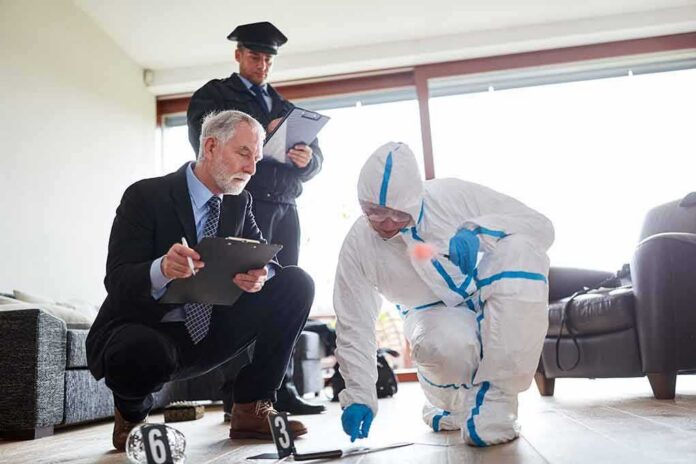
Backyard digs look plodding to the uninitiated because they have to be. Teams document each horizon of soil, screen for small elements like phalanges and teeth, and call in forensic anthropologists when bone fragments surface to triage human versus animal quickly and correctly. In this case, law enforcement has described features like a brick-lined pit and the presence of animal remains, both of which complicate the search geometry and require careful mapping to avoid commingling evidence. The medical examiner’s participation signals that any candidate human material will be routed immediately into the laboratory workflow for anthropological assessment, histology, and DNA.
Excavation is paired with interior luminol and alternative light source sweeps to locate latent blood or bodily fluids in floorboards and subfloors; when positive, swabs are collected for DNA profiling against an exclusion list that includes known residents and associates. The aim is coherence across modalities: do digital timestamps, interior biological traces, and exterior recoveries reinforce one another into a usable evidentiary chain, or do they diverge?
The women at the center of the case
The heart of this story is seven women—some named in missing-persons bulletins, others still being identified—who appear across the recovered files. Authorities have said that at least five are believed to be deceased, a working assessment drawn from depictions in videos and photographs and the absence of contact with families or services over extended periods. That belief remains an investigative posture until confirmed by remains and DNA; nonetheless, it has oriented resource allocation, including return searches and expanded digs at the address.
Several accounts describe a pattern of targeting vulnerability: women struggling with addiction recruited for paid photo or video sessions that then escalated into coercion and harm. Whether every depicted act constitutes a chargeable crime—consent, context, and chronology matter—will be decided case by case. But the sheer scale of the recovered media, the recurring appearance of the same women, and the discovery of bones on site collectively justify the intensity of the response.
Bones have been unearthed in the backyard of a Philadelphia ‘house of horrors’ linked to seven missing women, while FBI investigators have uncovered a hidden safe concealed beneath the floorboards of the notorious property https://t.co/sbdvVU6H6v 🔗 pic.twitter.com/Jl7xfbefAY
— Daily Mail US (@Daily_MailUS) October 19, 2026
How to read sensational cases without losing the plot
Properties labeled “houses of horrors” attract attention because they combine missing people, disturbing imagery, and a single, evocative scene. That coverage can outpace forensic proof. Responsible investigators counterbalance narrative momentum with disciplined process, especially in digital-heavy cases: attribute devices, validate hashes, preserve context, and correlate with physical evidence before drawing homicidal conclusions. Academic work on news values has long shown that statistically deviant, lurid homicides are overrepresented in coverage; the antidote is method, not denial of public interest.
Here, the balance is straightforward. The public record supports three uncontested facts: a vast cache of digital media recovered from 417 West Chew Avenue; confirmed links between that media and at least seven missing or unidentified women; and bones recovered from the yard now undergoing analysis. One cautious caveat remains appropriate until laboratory reports are complete: not all bones recovered in urban digs are human, and not all disturbing images depict a homicide. The investigation is designed to determine which do—which is precisely why the work is being done the way it is.
Sources:
nypost.com, abcnews.com, nbcphiladelphia.com, ground.news, phillyburbs.com, cbsnews.com, um.edu.mt, enisa.europa.eu, thesis.eur.nl, swgde.org