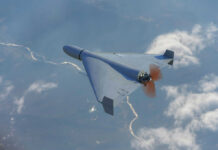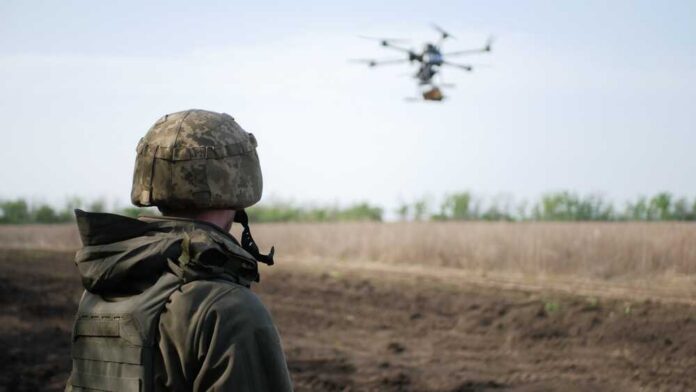
America’s digital backbone is being told to defend itself like a war zone—because cheap, AI-guided kamikaze drones can turn a civilian data center into a national emergency in minutes.
Quick Take
- Analysts are warning that large data centers are becoming high-value targets as drones get faster, smarter, and more disposable.
- Counter-drone “layered defense” concepts now include AI-enabled sentry turrets, radar, RF detection, and electro-optical/infrared tracking.
- Battlefield-proven systems in Ukraine and new U.S. modular turrets show how quickly autonomous defense tech is advancing.
- No public evidence confirms widespread deployment of AI sentry guns at U.S. civilian data centers yet, but vendors are actively marketing the idea.
Why Data Centers Are Becoming the Next Critical-Infra Target
Data centers look boring from the road, but they concentrate massive compute power, storage, and network connectivity into facilities that cannot be moved when threats change. Research circulating in the defense-tech space argues that “cloud” trends do not eliminate physical risk; they concentrate it. The warning is straightforward: as AI-guided drones improve in speed, payload, and navigation, even a small strike could cause outages, cascading economic impacts, or prolonged service disruption for industries that depend on always-on systems.
The core push is for operators to stop assuming the military will be there to protect civilian infrastructure in a fast-moving crisis. That point resonates with voters who are tired of Washington promising competence and delivering slow response, jurisdictional confusion, and “somebody else’s problem” accountability. The same public that has watched years of energy-price pain, overspending, and foreign-policy drift is now seeing warnings that private infrastructure may need to finance its own hard defenses as threats proliferate.
What “Layered Defense” Means When the Threat Is a Drone Swarm
Defense vendors and analysts describe a layered approach because no single sensor or interceptor works in every environment. The recommended stack typically includes radar to spot small aerial objects, radio-frequency sensors to detect drone control links, and electro-optical/infrared cameras to track and classify targets. From there, operators can choose “soft kill” options like electronic warfare or “hard kill” options like kinetic interceptors. The more autonomous the threat becomes, the less time humans have to sort out real targets from decoys.
Several systems highlighted in the research emphasize speed and integration. Onyx Industries markets its SENTRY remote weapon system as an all-in-one AI-enabled platform designed to detect and classify unmanned aerial threats and report them in real time through ATAK-style situational awareness tooling. Meanwhile, Allen Control Systems has promoted modular AI turret concepts that fuse sensors, prioritize targets, and can be remotely operated and upgraded as drone tactics change—an approach aimed at keeping per-intercept costs low enough to handle mass attacks.
Ukraine’s Battlefield Lessons Are Shaping the Tech—Including “Zero Human in the Loop” Claims
Ukraine’s experience has accelerated counter-drone innovation because it faces persistent attacks from drones and missiles, forcing rapid adaptation under pressure. Research cited here points to systems described as AI-driven turrets, including “Sky Sentinel,” reportedly using a heavy machine gun configuration to detect and engage aerial threats with minimal human input. Ukrainian officials have also described AI-enabled processes that compress detection-to-response timelines into seconds, which is the difference between a stopped drone and a successful strike.
That said, civilian adoption raises immediate governance questions. Even supporters of strong defense and self-reliance should demand clarity on rules of engagement, liability, and fail-safes when autonomous systems are deployed near populated areas or critical services. A separate arms-control analysis cited in the research argues autonomous weapons challenge rigid regulation because real-world scenarios are messy, and systems may not generalize well in novel conditions. Those concerns do not “ban” the tech, but they do argue for tight oversight before deployment.
The Real Policy Flashpoint: Self-Defense, Private Security, and Government Overreach Risks
For conservative readers, the big issue is not whether critical infrastructure should be defended—it should. The question is how to defend it without creating a new pathway for federal overreach, backdoor surveillance, or regulatory capture that squeezes smaller operators. A layered defense model often depends on sensors that watch airspace, log RF activity, and integrate with command networks. If Washington uses that as an excuse to expand centralized monitoring, it could collide with constitutional instincts and public distrust.
Another political reality is that 2026 voters are less patient with “forever war” logic and more skeptical of security commitments that always seem to expand. If drone threats to U.S. infrastructure are rising, the solution needs to focus on protecting the homeland and keeping the lights on—without sliding into open-ended foreign entanglements or blank-check programs. The research does not show confirmed, large-scale deployments of AI sentry guns at data centers today, but it does show vendors, military contracts, and battlefield precedent pushing the concept toward civilian use.
Sources:
Micro AI Sentry Guns May Be Next Layer Of Defense For Data Centers Against Kamikaze Drones
The US Marines’ New Anti-Drone Turret
Autonomous weapons systems defy rigid attempts at arms control
Ukraine’s Future Vision and Current Capabilities for Waging AI-Enabled Autonomous Warfare