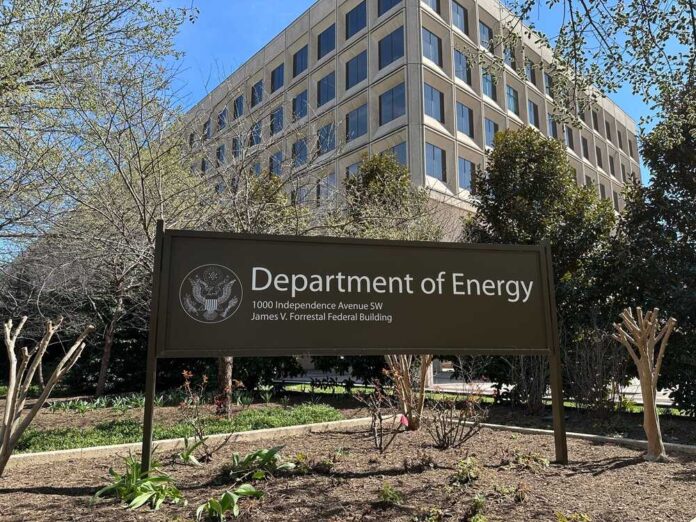
DOE pours millions into breakthrough batteries to slash U.S. dependence on China’s stranglehold, powering Trump’s vision for American energy dominance and military superiority.
Story Highlights
- ARPA-E funds six top teams with $15 million for prototypes boasting 4x the energy density of current lithium-ion batteries, targeting military drones and robots.
- Program counters China’s battery supply chain monopoly, bolstering national security under President Trump’s America First agenda.
- Phase 2 launches in early 2026, aiming for manufacturable systems by 2028 after rigorous Phase 1 vetting of 13 competitors.
- Top universities and innovators like Johns Hopkins, Georgia Tech, and Precision Combustion lead the charge for scalable U.S. tech.
JOULES-1K Program Advances to Phase 2
ARPA-E selected six teams in early 2026 for Phase 2 of the JOULES-1K program. These teams received up to $15 million to build working prototypes of next-generation energy storage systems. The goal stands at four times the energy density of today’s lithium-ion batteries, around 1,000 Wh/kg. Program Director James Seaba oversees development for applications in military drones, robots, and aircraft. This initiative addresses critical supply chain weaknesses tied to Chinese dominance. Phase 1, launched around July 2024, involved 13 teams proving chemistries and systems with $16.9 million total funding. Success here promises leapfrog innovation beyond incremental gains.
Teams Tackle Scalability for National Security
Johns Hopkins University, University of Maryland–College Park, Illinois Institute of Technology, Georgia Institute of Technology, Precision Combustion, and one unnamed prior ARPA-E winner advance to prototype phase. These groups focus on manufacturable designs ready for real-world deployment within 24 months, through early 2028. Experts like prior winner Viswanathan highlight scaling to first demonstration flights as the real hurdle after past 25% density improvements reached drones. Pentagon and DoD stand as key end-users, seeking enhanced battlefield endurance with homegrown technology. This effort builds on ARPA-E’s track record of turning lab breakthroughs into deployable systems.
Reducing Reliance on Chinese Battery Supply Chains
U.S. battery research traces back to early 2000s DOE partnerships with USABC, targeting higher density for vehicles through materials like lithium alloys and advanced electrolytes. Programs evolved into Vehicle Technologies Office efforts and recent Energy Storage Grand Challenge with Federal Consortium for Advanced Batteries. China leads in battery materials, prompting $200 million DOE investments over five years for domestic supply chains from mining to recycling. JOULES-1K accelerates this by prioritizing rapid scalability over pure research. Transportation accounts for 29% of U.S. greenhouse gases, but conservatives prioritize security over green mandates. Trump’s administration welcomes tech that empowers American jobs and defense without globalist overreach.
Potential Impacts on Military and Economy
Short-term prototypes by 2028 enable extended drone missions, cutting logistics needs for troops. Long-term, 4x density transforms aviation, electric vehicles, and grids while creating thousands of U.S. manufacturing jobs. Economic boosts counter past fiscal mismanagement under Biden-era spending sprees. Political wins strengthen energy independence and federal-industry partnerships via FCAB. Broader effects influence the global battery race, including recycling and mining. Military gains align with conservative values of strong defense and self-reliance, free from foreign vulnerabilities that weaken America.
Today, ARPA-E announced $30M in funding across 3 programs that will help Americans save on energy costs, develop ultra-high-density energy storage systems, and support America’s next generation of energy innovators.
Learn more here: https://t.co/dOKqDRlrFA. pic.twitter.com/AT59QIdfH6
— ARPA-E (@ARPAE) January 22, 2026
Expert Views and Historical Context
Seaba stresses 24-month manufacturability for practical systems, not just lab science. DOE national labs tackle challenges like anode dendrite growth and cold-temperature performance through applied research. Past efforts promised 2-3x density gains by 2016, underscoring scaling risks yet showing steady progress. Optimism surrounds military applications, tempered by commercialization hurdles. This program leapfrogs incremental DOE work, fitting Trump’s push for bold American innovation. Uncertainties remain on exact team technologies, but funding leverage ensures focus on national priorities.
Sources:
DOE Materials Research for Ion Batteries
DOE Seeks Batteries with Four Times the Juice – Defense One
Will Adding $200 Million to Battery Research Help the US Make Progress in Energy Storage?
Battery Materials Research (BMR) Program