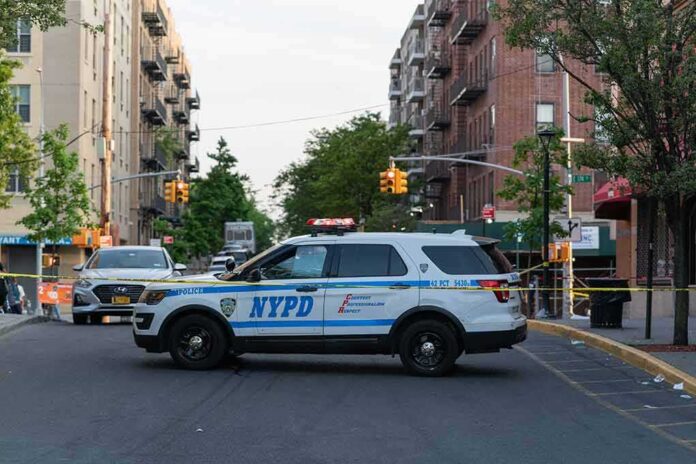
The central issue in the Syria-Lebanon security dispute is not whether a mayor’s family can ever receive protection; it is whether City Hall announced a police escort before the NYPD had actually agreed to provide one. The public record shows a sharp announcement-and-denial clash, followed by Mamdani’s own description of the mismatch as a miscommunication.
Intro Header
- City Hall said Rama Duwaji’s security detail would travel with her to Syria and Lebanon, citing the NYPD’s recommendation.
- The NYPD publicly denied that it would send officers for the trip, saying discretionary travel to Level 4 countries is not covered for non-investigative reasons.
- Mamdani later said the discrepancy came from a miscommunication and that the trip would proceed without any NYPD detail.
- The fight is as much about process and credibility as it is about security policy, because the evidence in public is mostly conflicting statements rather than internal documents.
A Routine Security Question Turned Into a Public Contradiction
The dispute began with a straightforward but politically combustible question: would Rama Duwaji, Mamdani’s wife, receive taxpayer-funded police protection on a planned trip to Syria and Lebanon? City Hall spokesperson Dora Pekec said the detail would accompany her, and contemporaneous reporting framed the matter as a disagreement between City Hall and the NYPD over whether officers would travel at all. The NYPD then issued its own categorical denial, saying it does not send officers to countries under Level 4 travel advisories for discretionary, non-investigative reasons. That is what turned a standard executive-protection question into a front-page controversy.
The timing mattered. Reports placed the planned departure around September 20 and described the City Hall statement and the NYPD denial as emerging within hours of one another. That sequencing suggests an operational issue had been moving through the system before the public contradiction surfaced. In other words, this was not merely a rhetorical dispute about abstract policy; it was a fight over whether a real protection arrangement had been contemplated, then reversed, or whether City Hall spoke too early. Publicly, only one thing is settled: the two institutions gave incompatible answers.
What Mamdani Said After the Clash
Mamdani later tried to collapse the controversy into a communication failure. According to reporting summarized by VINnews, he said the conflicting statements resulted from a “miscommunication” and added that Duwaji would travel “without any NYPD detail.” That clarification is important because it narrows the claim. It does not establish that the NYPD had approved an escort and then withdrew it; it only shows that, by Mamdani’s own account, no detail would actually accompany the trip. In practical terms, that means the public controversy was about the status of the plan, not about an escort that was ultimately deployed.
That distinction is the difference between a procedural embarrassment and a policy scandal. City Hall’s statement, as reported, implied that the police had strongly recommended protection; the NYPD’s statement rejected the premise that such a discretionary escort would be sent. Mamdani’s “miscommunication” explanation does not resolve which version first reached the public in error, and the available reporting does not include an internal timeline, memo, or assignment record showing who said what to whom. So the record supports a blunt conclusion: there was a contradiction, and the mayor later treated it as a misunderstanding rather than an approved deployment gone public.
The Policy Logic Behind the NYPD’s Denial
The NYPD’s denial rested on a familiar security principle: discretionary overseas protection is treated differently from protection tied to official investigative work. According to the quoted NYPD position, the department does not send officers to countries with Level 4 advisories for discretionary reasons unrelated to investigations, and Syria and Lebanon were described in the reporting as Level 4 “Do Not Travel” destinations. That policy logic is not unusual. Protective details exist to mitigate risk, but a city police department does not customarily project personnel into high-risk foreign environments for private travel unless some formal governmental rationale justifies it.
That is why the debate immediately became a referendum on administrative discipline. If City Hall’s spokesperson spoke accurately, then the trip had already cleared at least part of the security chain. If the NYPD’s denial was complete, then City Hall either overstated the arrangement or prematurely described an internal conversation as a settled plan. The strongest public evidence available points toward the second explanation being at least plausible, because no public document has surfaced showing actual approval by the department. The absence of that documentation does not prove City Hall was wrong, but it does mean the public case for an established escort remains thin.
Why the Story Landed So Hard Politically
The dispute was never going to remain a narrow procedural matter. Once the phrase “taxpayer-funded police protection” entered the coverage, the story folded into a larger political frame about privilege, hypocrisy, and public spending. That framing is especially potent because it intersects with Mamdani’s broader political profile, which has already made policing, public order, and institutional trust unusually sensitive subjects in his administration. In that environment, a family travel security question is never read neutrally; it is interpreted as a proxy argument about who gets protection, on what terms, and under whose authority.
That is also why unnamed sourcing mattered. Several reports relied on a source familiar with the trip who said Duwaji had requested protection, and on media paraphrases of the City Hall-NYPD clash rather than on released internal records. Anonymous sourcing is common in security reporting, but it leaves a durable credibility gap when the public dispute is over whether any official recommendation or approval existed at all. The louder the rhetoric around “bodyguards” and a “war-zone” trip, the less room there is for the bureaucratic nuance that often defines protective-detail decisions.
🚨 JUST IN: NYPD has DENIED giving Ugandan Mayor Mamdani's wife a security detail when she visits Syria and Lebanon
NO taxpayer-funded "escort" despite her asking for it! 💯
Mamdani tried announcing she'd have a detail but never checked in with the NYPD commissioner pic.twitter.com/JNEW7bi3oK
— Jean Daniel (@JeanDaniel47) August 12, 2026
What Can and Cannot Be Concluded
What can be concluded is narrow but firm. City Hall publicly said Duwaji’s detail would join her; the NYPD publicly said it would not send officers for that trip; and Mamdani later said the disagreement was a miscommunication and that she would travel without an NYPD detail. Those are the facts that survive contact with the available reporting. What cannot be concluded from the public record alone is that a formal NYPD approval ever existed, because no internal authorization, assignment sheet, or contemporaneous written recommendation has been produced.
That leaves this episode as a case study in how quickly executive-security questions become political weapons. In the public arena, a protective detail is never just a protective detail; it is read through ideology, class, institutional trust, and symbolic consistency. Here, the administration’s own messaging gave critics an opening, while the NYPD’s flat denial hardened the impression that City Hall had moved ahead of the facts. The result is a dispute that is less about a single trip than about the fragile authority of official statements when security, family, and politics collide.
Sources:
twitchy.com, thejewishedition.com, youtube.com, vinnews.com, townhall.com