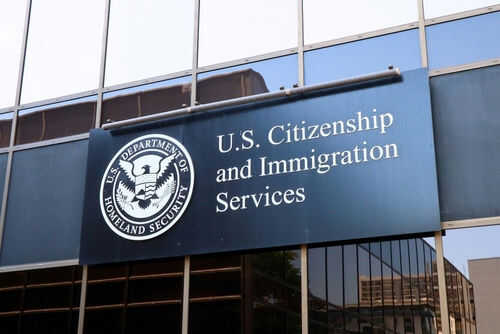
America’s green card system has been quietly flipped on its head, forcing many legal immigrants to leave the country mid‑journey while Washington insists it is merely “following the law.”
Story Snapshot
- Most applicants must now leave the United States and apply for green cards through consular offices abroad, ending a decades‑old in‑country path.[1][2]
- United States Citizenship and Immigration Services (USCIS) frames the shift as restoring congressional intent and closing “loopholes,” not eliminating adjustment of status.[1][2]
- Exceptions exist for “extraordinary circumstances,” economic benefit, or national interest, but there is no clear public standard for who qualifies.[1][3]
- Families, employers, and attorneys warn of confusion, forced separations, and lawsuits, deepening public distrust of a system seen as serving insiders, not ordinary people.[1][2]
What Exactly Changed In The Green Card Process?
United States Citizenship and Immigration Services issued new guidance declaring that people in the United States on temporary visas who want green cards are generally expected to leave and apply abroad through the State Department, rather than adjust status inside the country.[1][2] The Department of Homeland Security publicly argued that visitors and temporary workers were never meant to treat short‑term stays as the first step toward permanent residency.[1][2] For most nonimmigrants, consular processing is now treated as the default path.[1][3]
Law firms and university advisories describe this as a major break from long‑standing practice, not a minor clarification.[1][2][3] For roughly six decades, adjustment of status allowed many workers, students, and spouses to stay in the United States while their green card cases were adjudicated, avoiding costly trips home and long separations.[1][2] USCIS now emphasizes that approving the Form I‑485 application is discretionary, “not guaranteed,” and not intended to replace regular consular processing.[2] The underlying statute did not change; the agency’s interpretation did.[1][2][3]
How USCIS Justifies The Shift — And Where The Gaps Are
USCIS officials say the new policy “allows for our immigration system to function as the law intended instead of incentivizing loopholes,” arguing that Congress designed consular processing as the norm and domestic adjustment as a limited exception.[1] The agency also claims the change will free resources for other priorities, including visas for victims of violent crime and human trafficking and naturalization applications, which many Americans across the spectrum view as under‑served.[1] To the agency, this is about restoring order and reallocating scarce manpower.[1][2]
However, the public record does not yet show the legal analysis behind that claim of “restoring” congressional intent.[1][3] The memo reportedly leans on older language calling adjustment “administrative grace,” but commentators note there is no shared evidence of Congress demanding a broad retreat from in‑country processing.[3] None of the available materials specify whether USCIS used formal notice‑and‑comment rulemaking, a key issue if courts must decide whether this is lawful guidance or an improper end‑run around the legislative process.[2][3] That procedural uncertainty feeds the perception of rule‑by‑memo instead of accountable lawmaking.
Who Can Still Adjust Status Inside The United States?
Despite headlines saying the in‑country pathway is “gone,” the guidance does not abolish adjustment of status outright.[1][2][3] USCIS instructs officers to make case‑by‑case decisions and says adjustment may still be granted in “extraordinary circumstances.”[1] Reporting indicates exceptions may apply where applicants provide significant economic benefit, serve the national interest, or face unusual hardships, leaving room for scientists, investors, key workers, and certain humanitarian cases.[1][3] The agency also says people with pending I‑485 filings do not need to panic or withdraw immediately.[2]
Is it the whole “if ur waiting for a green card, you must wait in your own country and not allowed to stay in the US”
I wasn’t sure if that affects them but it’s the only thing that comes to mind rn that I’ve seen it can be about
— SJC (@zivalagresac) May 27, 2026
The problem is that no one outside the government has a clear definition of “extraordinary circumstances,” “economic benefit,” or “national interest” in this context.[1][3] Immigration lawyers warn that vague standards invite inconsistent and potentially arbitrary decisions, where well‑connected applicants and big employers navigate the system while ordinary families guess in the dark.[1][3] Universities and employers are already fielding questions from students and workers who do not know whether to depart, risking job loss and family disruption, or wait and hope their case is treated as exceptional.[2]
Why Both Left And Right See A Broken System Here
Cable news coverage and local reporting have focused heavily on families who followed the rules, built lives in the United States, and now face the prospect of leaving jobs and schools to restart their green card cases overseas.[1][2] Critics argue that requiring departure converts people who arrived legally into “effectively illegal” overstayers if they remain while applying, further eroding trust that the law is predictable or fair.[2] For many long‑time residents, this reinforces a broader feeling that Washington treats them as numbers, not neighbors.
For conservatives frustrated with abuse of temporary visas and porous enforcement, the policy promises a course correction yet arrives without transparent data showing fraud or overuse of adjustment justified a sweeping reversal.[1][2] For liberals angered by family separations and what they see as discrimination, it looks like another pressure tactic in an already harsh environment, imposed administratively instead of debated in Congress.[1][2] Both camps see powerful institutions making life‑changing decisions through opaque memos, while ordinary workers, students, and families shoulder the risk and cost. That shared frustration—not just over immigration, but over process and power—is why this green card fight resonates far beyond immigration lawyers.
Sources:
[1] YouTube – Green card application process now forces immigrants to return home | …
[2] Web – Top 5 Things to Know about the New USCIS Adjustment of Status …
[3] Web – USCIS Policy Guidance on Adjustment of Status