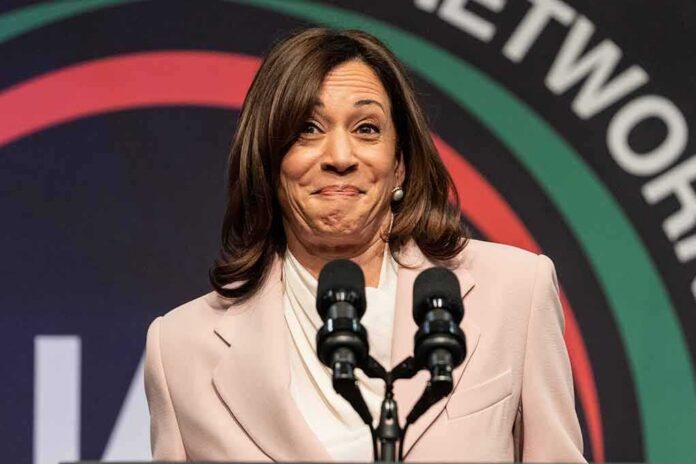
Vice President Kamala Harris will join Michigan Senate nominee Abdul El-Sayed for a roundtable on Black maternal health, turning a routine stop into a high-stakes signal about party priorities in a swing state.
Story Snapshot
- Harris and El-Sayed will hold a Michigan roundtable on Black maternal health next week.
- Campaigns say the event aims to hear directly from Black women and providers.
- This marks their first public appearance together after Harris endorsed El-Sayed.
- Coverage frames the stop as both policy-focused and politically strategic in a tight race.
What Is Confirmed About The Event
Associated Press reporting says Harris plans to campaign with El-Sayed in Michigan next week, and that they will attend a Tuesday roundtable focused on Black maternal health. NBC News reports a Harris spokesperson confirmed the trip and said she will highlight Black maternal health with El-Sayed. El-Sayed’s campaign cited the same topic and the Tuesday date. Some reports add that location, exact time, and access were not yet disclosed by the campaigns at the time of publication.
Spokespeople for both efforts described a listening-focused format. Harris’s team said she looks forward to returning to Michigan to help turn out voters and to spotlight Black maternal health alongside El-Sayed. El-Sayed’s spokesperson said he is “thrilled” to welcome Harris for a conversation about improving Black maternal health and bringing down health costs, and emphasized hearing from Black women and providers at the table. These statements define the policy frame the campaigns want to highlight.
Why Black Maternal Health Is On The Agenda
Campaign messaging ties the discussion to clear racial gaps in outcomes. Reports cite the campaign’s claim that Black women in Michigan are twice as likely to die from pregnancy-related causes as white women, with many deaths considered preventable. Health policy research has treated Black maternal mortality as a structural problem that needs institutional change and accountability, which explains why campaigns use this issue to show focus on family health, fairness, and cost pressures.
For many voters, health gaps connect to wider anger about a system that feels unresponsive. Families want safe births, clear bills, and reliable care. When the topic becomes a campaign stop, people on the right and left may see either needed attention to a serious issue or another round of political branding. That split is common in modern politics, where routine events get recast as fights over ideology and future plans rather than fixes that help patients now.
The Political Stakes In Michigan
The appearance is also notable as the first public event together since Harris endorsed El-Sayed after his primary win, according to coverage citing that sequence. That timing signals party alignment in a state that often decides Senate control. Supporters see national figures bringing spotlight and turnout energy. Skeptics worry that big names talk past daily stresses like rising costs and access to nearby doctors. Both reactions reflect a broader sense that Washington often misses local needs.
🚨 MICHIGAN IS A DEAD HEAT 🚨
Democrats STILL can’t shake Hasan Piker.
Emerson poll: Mike Rogers and Abdul El-Sayed in a STATISTICAL TIE. El-Sayed is running BEHIND the generic Democrat.
So what’s the plan? Fly Kamala Harris into Michigan to lock down the Black vote… while… pic.twitter.com/NH6UhMOLMx— CONSTITUTION X 🇺🇸 (@ConstitustionX) September 19, 2026
Several outlets frame the event as more than policy. They describe it as a strategic step to unify Democratic voters, answer critics, and sharpen contrasts in a close race. Labels from partisan outlets risk drowning out the announced purpose, yet they also show how campaigns must navigate media narratives. The core fact remains: Harris and El-Sayed plan to sit with Black women and providers to discuss maternal health. Whether that talk leads to concrete steps is what many families will watch next.
What We Still Do Not Know
Reports do not list the exact venue, start time, or whether the public can attend. The campaigns have not released a full agenda or confirmed which community leaders or providers will speak. Those details matter if voters want to judge access, transparency, and follow-through. After the roundtable, look for clear next steps, such as policy proposals, timelines, or partnerships with Michigan hospitals and clinics. That is how a campaign stop can move from talk to results.
Sources:
politico.com, thehill.com, nbcnews.com, yahoo.com, breitbart.com, apnews.com, washingtonexaminer.com