
Iran’s proxy war just grew a new front—and it’s aimed straight at Israel while threatening the sea lanes that keep gas prices from exploding back home.
Story Snapshot
- Yemen’s Houthi movement announced it has entered the Iran war after launching ballistic missiles and drones toward southern Israel on March 28, 2026.
- The move widens a conflict that began with U.S.-Israeli strikes on Iran on Feb. 28, 2026, and it undercuts claims that the war is nearing an end.
- Analysts warn the Houthis can pressure the U.S. and Israel indirectly by threatening shipping near the Bab al-Mandab, a key chokepoint linked to global energy flows.
- The Houthis waited about a month to act, with reporting pointing to stockpile limits, resupply problems, and regional diplomacy shaping the timing.
Houthi Missile Barrage Opens a New Front Against Israel
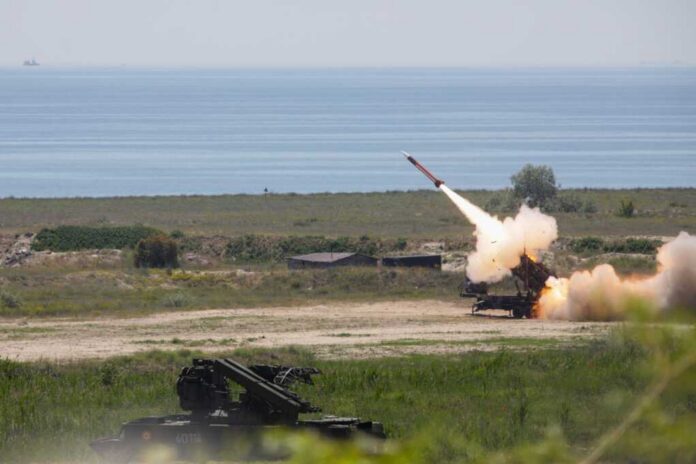
Houthi military spokesman Brigadier-General Yahya Saree said the group fired a barrage of ballistic missiles and drones at “sensitive Israeli military sites” in southern Israel on Saturday, March 28, 2026. Multiple reports described it as the Houthis’ first announced strike on Israel since the U.S.-Israel war with Iran began in late February. The Houthis also signaled the attacks could continue, raising the likelihood that Israel and the U.S. must now divide attention across another front.
The escalation lands in a politically difficult moment in the U.S., where many Trump voters are exhausted by decades of open-ended Middle East interventions and skeptical of mission creep. The available reporting does not show a clear end-state for the conflict, and the addition of a new proxy actor complicates war aims, force protection, and air-defense planning. When the public hears “near the end,” then sees fresh missile salvos, trust becomes harder to sustain.
Why the Houthis Matter: Iran’s Asymmetric Strategy at Sea
The Houthis are a Zaydi Shia movement that controls much of northern Yemen, including Sana’a, and have received Iranian backing for years, including missile and drone capabilities. Analysts have long described the group as part of Iran’s “Axis of Resistance,” alongside Hezbollah and Iraqi militias. In practical terms, the Houthis give Iran a way to impose costs without requiring direct Iranian forces to fight everywhere at once, especially when Tehran wants pressure points far from its own territory.
Two chokepoints dominate the economic risk: the Strait of Hormuz and the Bab al-Mandab near the Red Sea. Reporting and analysis highlighted that Iran has moved to close Hormuz, while the Houthis can threaten shipping transiting the Bab al-Mandab, a corridor tied to a meaningful share of global oil flows. That “twin chokepoint” scenario is why markets and energy consumers pay attention even when the missile launches are aimed at Israel rather than U.S. soil.
Why the Houthis Waited—and What That Signals Now
Research summarized from multiple analysts points to a delayed Houthi entry driven by capability and calculation, not a lack of ideology. Assessments described low stockpiles and resupply constraints, with Iran’s own war needs tightening the pipeline. Other reporting emphasized regional diplomacy, including Saudi considerations, as a factor affecting timing. The result is a key takeaway for Americans trying to judge escalation: proxy groups may hold fire, then surge at moments that maximize leverage.
What This Could Mean for U.S. Strategy and Domestic Politics
U.S. and Israeli air superiority can punish launch sites and ports, and past strikes have targeted Houthi infrastructure such as Hodeidah. Even so, defending against drones and missiles consumes interceptors and attention, and that is precisely the kind of “cost imposition” proxy warfare is designed to achieve. The reporting available up to March 29 offered no major follow-up attack details yet, which limits certainty about pace and sustainability, but analysts warned the trendline points toward broader disruption.
The Houthis Have Entered the Iran War – Here's What That Could Mean
— GuitarMan (@palumb61466) March 29, 2026
For conservatives, the tension is straightforward: protecting Americans and deterring terrorism matters, but so does resisting another blank-check, years-long conflict with shifting goals. The research also underscores a risk to everyday life that voters feel immediately—energy prices and supply-chain shocks—if shipping lanes face sustained threat. The Constitution and Congress’ war powers are part of this debate in principle, but the provided sources focus mainly on battlefield escalation and economic exposure rather than new domestic legal actions.
Sources:
Yemen’s Houthis Have Entered the Iran War. What You Need To Know
The Houthis Must Decide: Join Iran’s War Against the U.S. and Israel, or Abandon Iran
Houthis Attack Israel, Raising Fears Of Energy Crisis As Iran War Widens