A White House push to “cut red tape” in Los Angeles wildfire rebuilding exposed a harder truth: permits aren’t the real bottleneck, and Washington can’t simply override local control.
Story Snapshot
- President Trump signed a January 2026 executive order aimed at speeding rebuilding after the January 2025 Los Angeles-area wildfires by targeting local permitting delays.
- Federal follow-through narrowed to a limited SBA self-certification pathway, and local officials reported little to no real-world use of it.
- By March 2026, the administration effectively backed away from a threatened federal “takeover,” citing improved cooperation with local agencies.
- Even with roughly 2,500 permits issued by early 2026, fewer than a dozen homes had been rebuilt a year after the fires—highlighting costs, insurance, and logistics as ongoing barriers.
Trump’s Order Targeted Local Red Tape—But Local Control Stayed Put
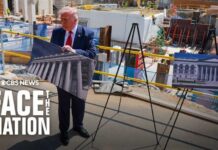
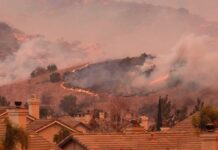
President Trump’s January 2026 executive order directed federal agencies to develop rules intended to cut “burdensome” permitting and accelerate rebuilding after the January 2025 fires that burned nearly 40,000 acres around Pacific Palisades and Eaton Canyon. The administration framed the move as a response to procedural bottlenecks and inconsistent local requirements. California leaders pushed back, arguing Washington cannot legally issue municipal rebuilding permits and urging focus on disaster funding instead.
The clash carried an underlying question many Americans—left, right, and center—recognize: when disaster strikes, which level of government is accountable when progress stalls? Trump’s order leaned into a conservative critique of bureaucracy by highlighting duplicative reviews and administrative delays. At the same time, the episode underscored a reality that frustrates homeowners everywhere: local rules, inspections, and final authorizations still govern most residential rebuilding, regardless of federal messaging.
The SBA “Self-Certification” Option Looked Big on Paper, Small in Practice
Days after the executive order, the Small Business Administration advanced a proposal allowing certain loan recipients—whose permits had been pending for at least 60 days—to self-certify compliance with health and safety codes and begin building. The fine print mattered. The process did not eliminate local authority; local governments still had to conduct inspections and provide final authorization. Reporting indicated Los Angeles had already used similar self-certification tools, raising questions about what materially changed.
Early signals suggested the SBA pathway was barely used. A Los Angeles County Public Works spokesperson said they were unaware of any owner using the SBA process, and builders working in the burn zones reported none of their clients asked to use it. The SBA did not provide public numbers in response to questions about uptake. That gap makes it difficult to claim the new federal tool drove a major surge in permitting, even if it added leverage and attention.
Permits Increased, Yet Rebuilding Stayed Slow for Reasons Beyond Paperwork
By early 2026, about 2,500 of tens of thousands of destroyed homes and businesses had received permits—real movement, but still a fraction of what the region needs. More telling, a year after the fires fewer than a dozen homes had been rebuilt in Los Angeles County, with about 900 reportedly under construction. Permits and finished homes are not the same metric, and the gap indicates that approvals alone don’t solve the practical barriers families face.
Survivor and builder perspectives repeatedly pointed to money and logistics. Fire survivors cited construction costs and insurance payout struggles as central pressures, while permitting help—though welcomed—was not described as the top concern for many trying to rebuild. From a governance standpoint, this is where public frustration often hardens: officials argue over authority and headlines while households are stuck navigating insurer disputes, contractor availability, and price spikes that no single executive order can quickly reverse.
From “Hostile Takeover” to Cooperation—A Retreat That Clarified Federal Limits
By mid-March 2026, reporting indicated the administration’s push to preempt local authority had effectively ended. Federal officials said they would not advance additional regulations to override local permitting, leaving the limited SBA self-certification step as the main formal action. An EPA spokesperson attributed the stand-down to improved cooperation with local officials. Los Angeles Mayor Karen Bass also reported faster approvals in Pacific Palisades compared with pre-fire projects and said many home permit clearances were no longer required.
REPORT: Thousands of People in California Are Finally Getting Permits to Rebuild After the Wildfires – Now That Trump Has Gotten Involved | The Gateway Pundit | by Mike LaChance https://t.co/CUJLBPofwd
— Debbie (@LottaCats454) April 23, 2026
The political lesson cuts both ways. Conservatives will see a familiar pattern: local bureaucracy slows recovery, then resists outside pressure until public scrutiny forces change. Liberals will emphasize local autonomy and warn against federal overreach. What the available facts support is narrower but important: Washington can push, nudge, and assist—especially through agencies like the EPA—but the legal and practical machinery of rebuilding remains local, while the biggest obstacles for families may be financial, not procedural.
Sources:
Trump announced a hostile takeover of LA’s wildfire rebuild. Collaboration ensued.
President Trump signs order to cut red tape, speed up rebuilding after Los Angeles wildfires
Trump announced a hostile takeover of LA’s wildfire rebuild. Collaboration ensued.